


Many people believe that if they’ve gone through alcohol withdrawal before, they already know what to expect the next time.
Unfortunately, that isn’t always true.
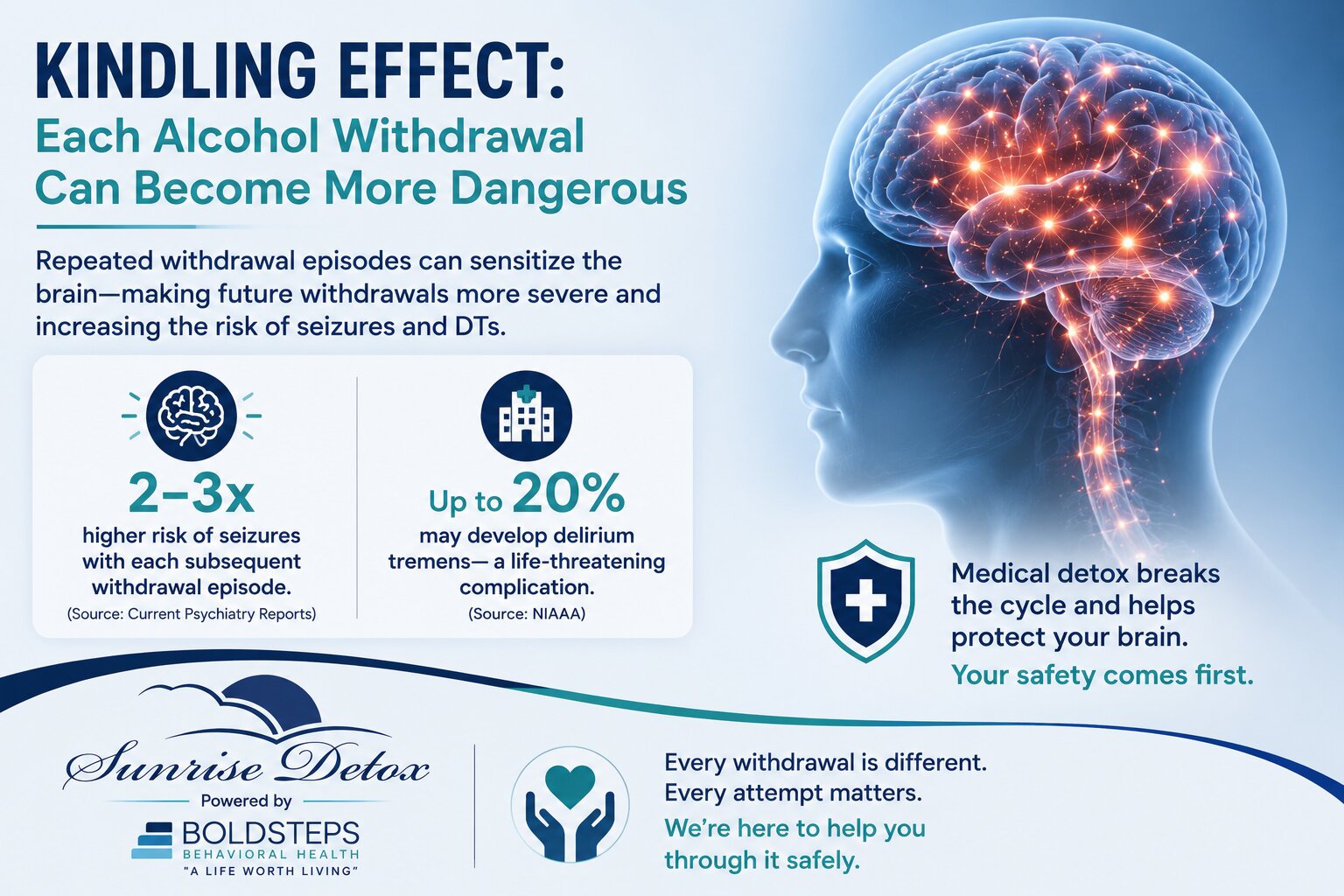
For some individuals, repeated cycles of heavy drinking followed by withdrawal can make future withdrawals more severe. A person who experienced only mild symptoms during an earlier attempt may later develop tremors, hallucinations, seizures, or even delirium tremens (DTs).
This phenomenon is known as the kindling effect.
It is one of the most important—and least understood—concepts in alcohol withdrawal. Understanding it can help explain why quitting “cold turkey” becomes increasingly risky for some people and why professional care becomes even more important after multiple withdrawal episodes.
At Sunrise Detox Cherry Hill, we provide medically supervised care for individuals stopping alcohol use safely. Our medical alcohol detox program is designed to monitor withdrawal closely, reduce the risk of serious complications, and help patients transition into the next stage of recovery.
If you’ve tried to quit drinking before and returned to alcohol, this information may be especially important for your safety.
What the Kindling Effect Is
The kindling effect refers to a process in which repeated episodes of alcohol withdrawal can sensitize the brain, making future withdrawals more severe than previous ones.
Not everyone who stops drinking multiple times will experience kindling, and the severity varies from person to person. However, research has shown that repeated withdrawal episodes can increase the likelihood of more intense neurological symptoms during future attempts.
Rather than “getting used to” withdrawal, the brain may become more reactive with each cycle.
This means that someone who previously experienced:
- Mild anxiety
- Sweating
- Difficulty sleeping
- Shakiness
could eventually develop much more serious symptoms during later withdrawals.
The kindling effect is one reason healthcare providers take a person’s withdrawal history seriously when assessing their risk.
The Neuroscience Behind It
Alcohol affects several neurotransmitter systems in the brain, particularly those involving gamma-aminobutyric acid (GABA) and glutamate.
GABA helps calm brain activity.
Glutamate increases brain activity.
During long-term alcohol use:
- Alcohol enhances GABA’s calming effects.
- The brain compensates by reducing natural GABA activity.
- At the same time, glutamate activity increases to maintain balance.
When alcohol is suddenly removed, this balance is disrupted.
Instead of calming signals, the brain experiences excessive excitatory activity.
This contributes to withdrawal symptoms such as:
- Tremors
- Anxiety
- Rapid heart rate
- High blood pressure
- Hallucinations
- Seizures
With repeated withdrawal episodes, the brain may become increasingly sensitive to these changes.
This neurological sensitization is what researchers describe as the kindling effect.
Although scientists continue studying the exact mechanisms involved, the phenomenon has been well documented in both clinical practice and research.
Why Each Withdrawal Can Become Worse
Many people assume withdrawal will follow the same pattern every time.
That is not always the case.
Repeated cycles of:
- Heavy drinking
- Stopping abruptly
- Experiencing withdrawal
- Returning to alcohol
can gradually increase the brain’s sensitivity to withdrawal.
As a result, later withdrawal episodes may involve:
- More severe tremors
- Greater anxiety
- Increased agitation
- More pronounced confusion
- Stronger autonomic symptoms
- Greater risk of seizures
Importantly, the severity of withdrawal cannot be predicted based solely on how much someone drank during their most recent relapse.
A person with multiple prior withdrawal episodes may face greater risks than someone experiencing withdrawal for the first time, even if both consumed similar amounts of alcohol.
This is why healthcare providers ask detailed questions about previous detox attempts—not just current drinking patterns.
The Risk of Seizures and Delirium Tremens Can Increase Over Time
One of the greatest concerns associated with repeated alcohol withdrawal is the increased potential for serious neurological complications.
Alcohol Withdrawal Seizures
Withdrawal seizures most commonly occur within the first two days after the last drink.
Although not everyone experiences seizures, previous withdrawal episodes can increase the likelihood of seizure activity during future withdrawals.
Seizures require immediate medical attention.
Delirium Tremens (DTs)
Delirium tremens is the most severe form of alcohol withdrawal.
Symptoms may include:
- Severe confusion
- Hallucinations
- Extreme agitation
- Fever
- Rapid heart rate
- High blood pressure
- Heavy sweating
DTs are a medical emergency and require immediate treatment.
Without prompt medical care, they can become life-threatening.
While the kindling effect does not guarantee that someone will develop DTs, repeated withdrawal episodes are recognized as one factor that can increase the risk.
Why Quitting Cold Turkey Becomes More Dangerous
Some individuals have stopped drinking on their own in the past without major complications.
That experience can create a false sense of security.
A common thought is:
“I quit at home before, so I can probably do it again.”
Unfortunately, previous success does not guarantee future safety.
Because withdrawal severity can change over time, especially after repeated episodes, home detox may carry greater risks than expected.
Other factors that can further increase withdrawal risk include:
- Heavy daily alcohol use
- Long-term alcohol dependence
- Previous withdrawal seizures
- Prior delirium tremens
- Older age
- Significant medical conditions
- Co-occurring mental health disorders
A medical evaluation can help determine the safest setting for withdrawal.
Why Medical Detox Matters More with Every Attempt
The kindling effect is one of the strongest reasons healthcare professionals recommend medically supervised withdrawal for individuals with multiple prior attempts to quit drinking.
Medical detox provides:
Continuous Monitoring
Healthcare professionals monitor:
- Blood pressure
- Heart rate
- Temperature
- Neurological status
- Mental status
- Withdrawal severity
Early recognition of worsening symptoms allows treatment to begin quickly.
Medications to Reduce Withdrawal Severity
Evidence-based medications may be used to reduce withdrawal symptoms and lower the risk of serious complications such as seizures.
Treatment plans are individualized based on each person’s medical history and withdrawal risk.
Rapid Response to Emergencies
If complications develop, trained medical staff can intervene immediately.
This level of monitoring is not available during home detox.
Individualized Care
Medical teams consider factors such as:
- Previous withdrawal history
- Number of prior detox attempts
- Current alcohol use
- Medical conditions
- Psychiatric history
- Other substance use
These factors help determine the safest treatment approach.
Planning for Long-Term Recovery
Withdrawal is only the beginning of recovery.
Before discharge, individuals receive recommendations for continued treatment, which may include:
- Residential rehabilitation
- Partial hospitalization (PHP)
- Intensive outpatient programs (IOP)
- Individual therapy
- Group counseling
- Medication-assisted treatment when appropriate
Ongoing care helps reduce the likelihood of returning to the cycle of repeated withdrawal.
Breaking the Cycle
One of the most important goals of treatment is preventing repeated withdrawal episodes altogether.
Each period of sustained recovery reduces the need to repeatedly experience withdrawal.
By combining medically supervised care with ongoing treatment, individuals have the opportunity to interrupt the cycle of:
- Drinking
- Withdrawal
- Relapse
- Another withdrawal
instead of allowing the risks to continue increasing over time.
Recovery is not simply about surviving withdrawal.
It is about creating a safer path forward.
Frequently Asked Questions
What is the kindling effect in alcohol withdrawal?
The kindling effect refers to the tendency for repeated alcohol withdrawal episodes to make the brain more sensitive, increasing the risk that future withdrawals may become more severe. This neurological sensitization can contribute to worsening withdrawal symptoms over time.
Why do withdrawals get worse each time?
Repeated cycles of heavy drinking followed by withdrawal can alter how the brain responds to alcohol. As the brain becomes more sensitive to withdrawal-related changes, some people experience more intense symptoms during later withdrawal episodes. Not everyone develops the same degree of severity, but previous withdrawals are an important risk factor.
Is home detox dangerous if you’ve quit before?
It can be. Even if previous withdrawals were mild, future withdrawal episodes may become more severe, particularly after multiple attempts to quit. A medical evaluation can help determine whether supervised care is the safest option.
Does the kindling effect mean I will definitely have seizures?
No. The kindling effect increases the risk of more severe withdrawal for some individuals, but it does not mean everyone will experience seizures or delirium tremens. Because these complications can occur unpredictably, professional medical assessment is recommended before stopping alcohol after long-term or heavy use.
Can the kindling effect be prevented?
The best way to reduce the risk is to avoid repeated cycles of heavy drinking and withdrawal. Seeking professional treatment, completing withdrawal safely, and engaging in ongoing recovery care can help break the cycle and support long-term sobriety.
Final Thoughts
The kindling effect is a reminder that alcohol withdrawal is not always the same from one attempt to the next. For some people, each episode places greater stress on the brain, increasing the possibility of more serious symptoms and medical complications.
If you have stopped drinking before and relapsed, it is important not to assume your next withdrawal will be similar to the last one. A professional evaluation can help determine the safest way to begin recovery.
At Sunrise Detox Cherry Hill, we provide medically supervised care for individuals experiencing alcohol withdrawal, with close monitoring, evidence-based treatment, and compassionate support throughout the process.
If you or someone you love is considering stopping alcohol after long-term or heavy use, call Sunrise Detox Cherry Hill at 856.276.0873 to learn more about safe, medically supervised treatment options.