


At first, you may have told yourself it wasn’t that serious.
Maybe he was just stressed.
Maybe work had gotten overwhelming.
Maybe drinking had simply become his way of “unwinding.”
Then little things started changing.
The empty bottles hidden deeper in the trash.
The slurred conversations he doesn’t remember the next morning.
The vomiting. The shaking hands. The way he suddenly seems panicked or sick until he starts drinking again.
And somewhere in the middle of trying to protect the family, keep life moving, and avoid another argument, you quietly started wondering:
“Is this dangerous now?”
If you’ve been searching for alcohol detox support, there’s a good chance you’re emotionally exhausted already. Most spouses don’t land here casually. They land here after months — sometimes years — of trying to manage fear silently while hoping things will somehow stabilize on their own.
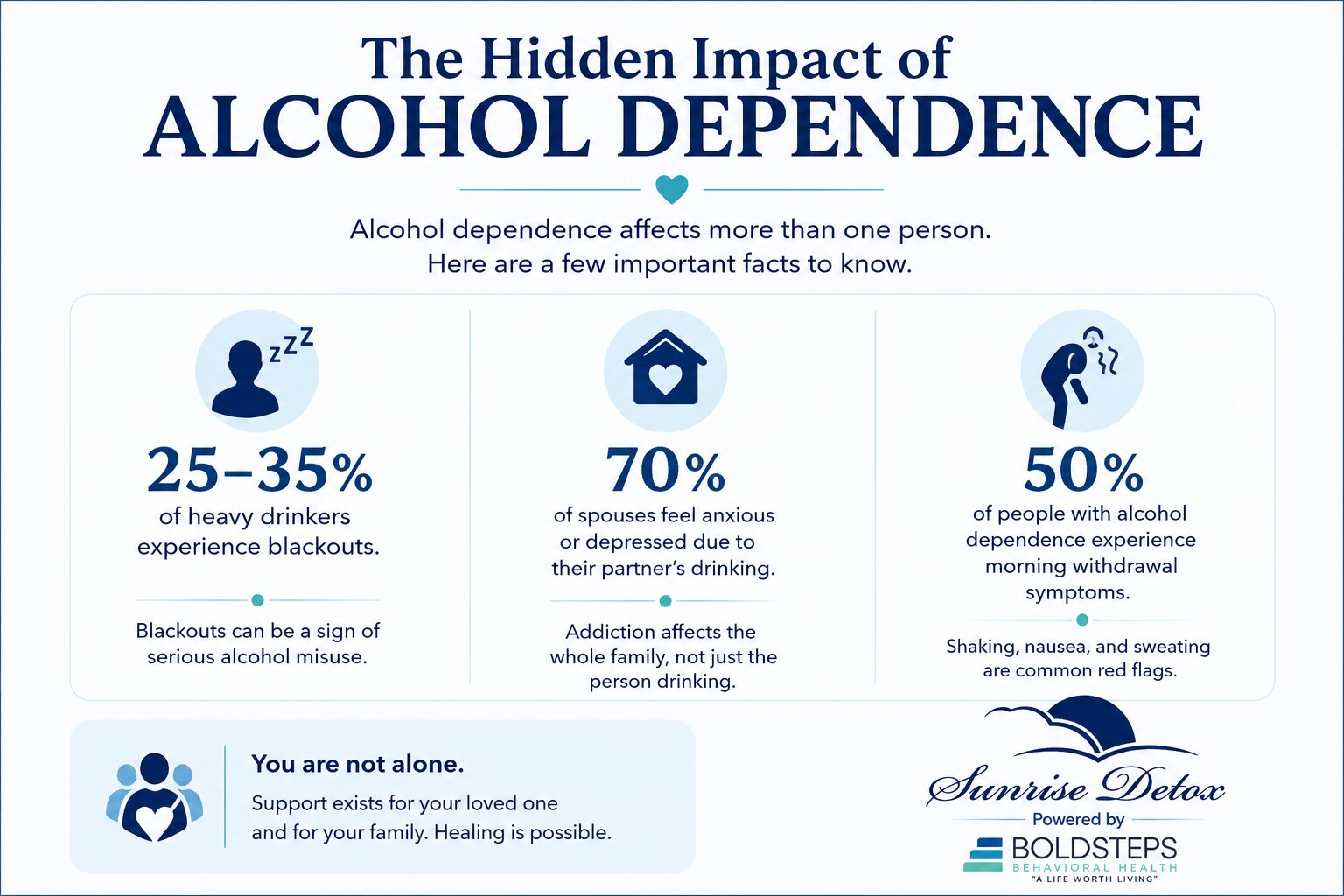
Blackouts Change the Emotional Climate of a Home
One of the hardest parts about living with severe alcohol use is unpredictability.
Blackouts can make someone physically present but mentally disconnected. A person may hold conversations, argue, drive, text, laugh, or promise things they won’t remember later.
For spouses, this creates a strange kind of emotional loneliness.
You may start feeling like:
- You’re constantly monitoring the mood in the room
- You have to repeat conversations the next day
- You can’t trust which version of your partner is coming home
- You’re always preparing for damage control
- You’ve become more caretaker than spouse
Many people looking for help for alcoholic husband are not simply worried about drinking itself anymore. They’re worried about what constant instability is doing to their family, children, finances, emotional health, and sense of safety.
And honestly, that stress builds quietly over time.
Living with addiction can feel like living beside a storm system that everyone else pretends not to notice.
Morning Sickness and Shaking Are Often Bigger Warning Signs Than People Realize
A lot of spouses assume hangovers are normal.
But when someone wakes up sick every morning — especially shaky, sweating, nauseated, anxious, or vomiting — it may point to physical alcohol dependence.
This happens because alcohol changes how the nervous system functions over time. Eventually, the body adapts to alcohol being present regularly. When alcohol levels drop overnight, withdrawal symptoms can begin.
People often experience:
- Trembling hands
- Dry heaving or vomiting
- Panic or agitation
- Sweating
- Rapid heartbeat
- Anxiety that eases after drinking
- Needing alcohol early in the day to “steady” themselves
Many families don’t realize this transition is happening until the symptoms become impossible to ignore.
And it can be deeply frightening to witness.
Some spouses describe mornings as the hardest part because they can physically see how dependent their partner’s body has become.
Alcohol Dependence Doesn’t Always Look the Way People Expect
One reason families stay confused so long is because many people struggling with severe alcohol use still appear “functional.”
They may:
- Go to work
- Pay bills
- Coach sports
- Attend social events
- Maintain routines
- Appear successful publicly
Meanwhile, privately, alcohol is controlling far more than anyone realizes.
A lot of people imagine addiction always looks chaotic immediately. But high-functioning alcohol dependence can stay hidden for years behind normal routines and responsibilities.
That disconnect leaves many spouses doubting themselves.
You may think:
“If it’s truly this bad, why does everyone else think he’s fine?”
Because addiction often hides best inside predictability.
And many people become experts at appearing okay long after they’ve stopped feeling okay internally.
The Person Drinking Is Often More Afraid Than They Admit
This is something many partners don’t fully realize at first.
People who wake up shaking or sick after drinking often know something is wrong long before they openly admit it.
But fear can keep them stuck.
They may fear:
- Withdrawal symptoms
- Losing alcohol completely
- Facing emotional pain without drinking
- Looking weak
- Damaging their reputation
- Failing at recovery
- Being judged by family
That fear often shows up as:
- Defensiveness
- Irritability
- Denial
- Anger
- Withdrawal from conversations
Meanwhile, spouses are left trying to separate what’s addiction, what’s fear, and what’s still the person they love underneath it all.
That emotional confusion can become exhausting.
Alcohol Withdrawal Can Become Medically Dangerous
One of the most important things families need to understand is this:
Severe alcohol withdrawal can become dangerous without medical supervision.
A lot of people believe someone should simply stop drinking immediately if things are bad enough. But for people with significant physical dependence, abruptly stopping alcohol can trigger serious withdrawal symptoms.
These may include:
- Severe anxiety or panic
- Hallucinations
- Seizures
- Dangerous blood pressure changes
- Confusion or disorientation
- Intense vomiting or dehydration
This is why medical detox exists.
Not because someone lacks willpower.
Not because they are morally weak.
Because the nervous system and body may need medical stabilization during withdrawal.
Many spouses feel guilt after learning this because they didn’t realize how medically serious alcohol dependence could become.
Please know: most families do not recognize the severity immediately. Addiction often develops gradually and quietly.
A Lot of Partners Stop Noticing Their Own Pain
When someone in the household is actively struggling with addiction, the spouse often becomes the emotional shock absorber for everyone else.
You manage schedules.
You smooth over conflict.
You hide problems from the kids.
You monitor moods.
You brace yourself constantly.
Over time, many spouses stop asking themselves a critical question:
“How am I doing?”
And honestly, many are not doing well at all.
They’re exhausted.
Hypervigilant.
Anxious.
Lonely.
Emotionally burned out.
Some partners describe feeling like they haven’t fully relaxed in years because they are always anticipating the next crisis, blackout, argument, or emergency.
That kind of chronic stress changes people physically and emotionally.
You deserve support too.
Detox Is Often More Human Than Families Expect
A lot of people imagine detox as cold, clinical, or punitive.
In reality, compassionate alcohol detox is meant to create safety during one of the hardest physical and emotional moments someone can experience.
Depending on individual needs, detox may include:
- 24/7 medical monitoring
- Medication support for withdrawal symptoms
- Nutritional and hydration support
- Emotional reassurance
- Rest and stabilization
- Planning for continued treatment afterward
For many people, detox is the first moment their body stops living in constant crisis mode.
For spouses, it can also be the first time they stop carrying the entire emotional burden alone.
One woman once described her husband entering treatment this way:
“It felt like the house finally stopped vibrating.”
That sentence stays with people because addiction affects entire families, not just the individual drinking.
You Don’t Need to Have the Entire Future Figured Out Right Now
A lot of spouses feel trapped between extremes.
Stay or leave.
Push harder or back off.
Demand treatment or stay quiet.
But relationships affected by addiction are emotionally complicated. Love, resentment, fear, guilt, hope, and exhaustion often exist all at once.
You do not need every answer today.
You do not need to decide the entire future of your marriage before acknowledging that what’s happening right now is serious.
Sometimes the first step is simply recognizing:
“This has gone beyond stress or bad habits.”
That awareness matters.
Conversations Usually Go Better When Fear Is Named Honestly
Many spouses feel pressure to say the “perfect thing” to convince their partner to seek help.
There usually isn’t one perfect sentence.
But calmer, honest conversations often work better than explosive confrontations fueled by panic.
Some people find it helpful to focus on what they’re observing:
- “I’m scared by how sick you’ve been.”
- “The shaking worries me.”
- “I don’t think your body is okay.”
- “You seem exhausted.”
- “I miss you.”
People struggling with alcohol dependence often expect criticism and shame. Concern delivered honestly can sometimes break through defensiveness more effectively than anger alone.
That said, you cannot fully control someone else’s readiness.
And that is one of the hardest truths families face.
Recovery Is Possible Even If Things Feel Hopeless Right Now
Families often reach out during the worst moments:
- After a blackout
- After hidden alcohol is discovered
- After vomiting or shaking worsens
- After frightening arguments
- After panic sets in
It can feel like everything is unraveling at once.
But many people who once depended on alcohol to function physically do recover. Their nervous systems stabilize. Their health improves. Relationships slowly rebuild trust. Families begin breathing normally again.
Recovery rarely begins with certainty.
Usually it begins with one honest moment where someone finally says:
“We can’t keep living like this.”
That moment matters more than people realize.
FAQ About Alcohol Detox and Severe Drinking
Does blacking out mean someone has alcohol dependence?
Not always, but repeated blackouts combined with morning sickness, shaking, or inability to stop drinking can point to severe alcohol misuse or physical dependence.
Why is my husband shaky and sick every morning?
Shaking, nausea, sweating, and panic after sleeping may be withdrawal symptoms caused by physical alcohol dependence.
Is alcohol withdrawal dangerous?
Yes. Severe withdrawal can become medically dangerous and may include seizures, hallucinations, or serious cardiovascular complications.
What happens during alcohol detox?
Medical detox may include monitoring, medications for withdrawal support, hydration, emotional care, rest, and treatment planning.
Can someone still function normally and still need detox?
Absolutely. Many people with severe alcohol dependence continue working, parenting, and maintaining routines while privately struggling physically.
What if he refuses help?
This is very common. Loved ones often benefit from talking with professionals themselves first to learn supportive ways to approach treatment conversations.
Is it normal to feel emotionally burned out as the spouse?
Completely. Partners living with addiction often experience chronic stress, anxiety, emotional exhaustion, and isolation.
Will detox fix everything immediately?
Detox is usually the beginning of recovery, not the full process. Many people continue with therapy, live-in treatment, structured daytime care, or ongoing support afterward.
If you’ve spent months trying to carry the emotional weight of this alone, please know this: you are not overreacting, and you are not weak for feeling overwhelmed.
Loving someone struggling with alcohol dependence can slowly turn survival into a full-time job.
But support exists — for the person drinking and for the people quietly carrying the fear beside them.
Call (856) 276-0873 or visit our alcohol detox services to learn more about our alcohol detox services in Philadelphia.