


You’ve probably played this out in your head more than once.
Maybe late at night. Maybe in the middle of a tough day.
“I need help… but what if I can’t handle it?”
That thought alone can stop everything.
Because starting means stepping into something unknown. And when your body—and your mind—already feel stretched thin, the idea of detox can feel like too much.
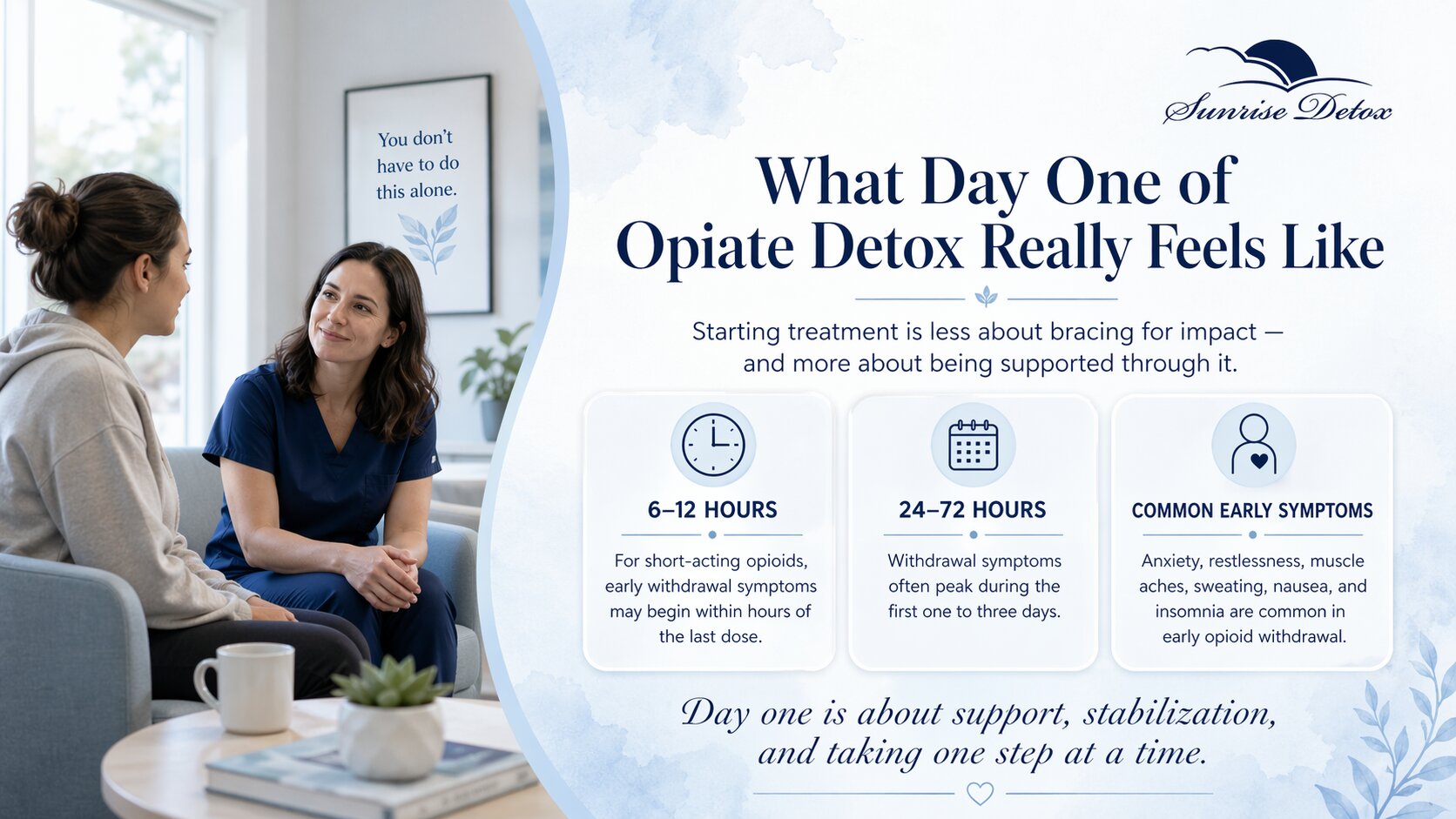
But here’s what most people don’t realize: day one isn’t about proving anything. It’s not a test of strength. It’s not something you have to “get through” on your own.
If you’ve been searching for real, immediate help, exploring something like opioid detox Cherry Hill is less about bracing for impact—and more about finally being supported through something your body has been carrying alone.
Let’s walk through what that actually looks like.
Walking In Feels Like the Hardest Part
There’s often a quiet hesitation right before you walk through the door.
Not because you don’t want help—but because starting makes everything real.
We see it all the time. People arrive unsure, sometimes guarded, sometimes overwhelmed. Some talk a lot. Some barely speak. Both are okay.
You don’t need to explain your whole story right away. You don’t need to “act ready.” There’s no version of you that has to show up perfectly.
The truth is, walking in is the hardest part. Everything after that is guided.
You’re Met With Calm, Not Chaos
A lot of people expect detox to feel clinical, rushed, or impersonal.
Day one is the opposite.
The pace is intentional. Slower than you might expect. Grounded.
We start by getting to know what your body is dealing with—what you’ve been using, how recently, how you’ve been feeling. Not to judge or label, but to understand what support actually looks like for you.
You’re not processed. You’re received.
And that difference matters more than people expect.
Your Body Isn’t Left to “Figure It Out”
One of the biggest fears people carry is this:
“What if I go into withdrawal and no one helps me?”
That fear is real—and it usually comes from stories or past experiences where people felt alone in it.
Here, that’s not how it works.
As your body begins to adjust, symptoms are monitored closely. If discomfort starts to build, it’s addressed early. Medications may be used to reduce symptoms safely and intentionally.
This isn’t about pushing your limits. It’s about easing your body through a difficult transition with as much stability as possible.
You’re not expected to endure unnecessary pain to “earn” recovery.
You’ll Be Checked On Without Feeling Controlled
There’s a subtle but important difference between being watched and being cared for.
Yes, we check your vitals. Yes, we monitor symptoms. But it’s not constant pressure or surveillance.
It’s presence.
Someone notices if you’re uncomfortable. Someone responds if something shifts. Someone asks how you’re doing—and actually listens.
For many people, that alone feels unfamiliar.
You’re not managing this alone anymore.
The Emotional Side Might Surprise You
Most people expect the physical part to be the hardest.
But day one often brings something else: quiet emotional waves.
Not overwhelming—but noticeable.
You might feel:
- A little exposed
- A little unsure of yourself
- A little relieved… and not know why
There can be moments where your mind tries to pull you back:
“I could just leave.”
“Maybe this was a mistake.”
Those thoughts don’t mean you’re failing.
They mean you’re stepping out of something familiar—even if it was hurting you—and into something new.
That space in between can feel unsteady. That’s normal.
You Don’t Have to Open Up Right Away
There’s no expectation that you’ll immediately start sharing everything.
Some people talk early. Others take time.
You’re allowed to settle in first.
You’re allowed to just observe, to get your bearings, to understand the environment before engaging.
Healing doesn’t start with pressure. It starts with safety.
You’ll Start Noticing Small Shifts
Relief doesn’t usually show up all at once.
It’s quieter than that.
It might look like:
- A moment where your body isn’t as tense
- Sitting still without feeling restless
- Being able to take a deeper breath than you expected
These moments can feel small—but they’re not.
They’re the beginning of your body recalibrating. The beginning of your nervous system settling, even just a little.
That’s where progress starts.
Being Around Others Can Feel Unexpectedly Comforting
Even if you’re not ready to talk, something shifts when you realize you’re not the only one here.
You might notice someone else sitting quietly, just like you.
Someone else asking the same questions you had.
Someone else unsure—but still here.
There’s a kind of comfort in shared experience, even without conversation.
It softens the isolation.
You Don’t Have to Decide Everything Today
This is one of the biggest misconceptions.
People think starting detox means committing to everything—treatment, long-term plans, a completely different life.
That’s too much for day one.
Day one is about getting through today.
Safely. Supported. Without doing it alone.
You don’t have to map out the next year. You don’t have to solve everything.
You just have to stay.
What If You Still Feel Scared?
You probably will.
Fear doesn’t disappear just because you made a good decision.
But something important happens alongside that fear: you’re not facing it alone anymore.
And that changes how much it controls you.
There’s a difference between being scared by yourself… and being scared while someone is guiding you through it.
One isolates you. The other supports you.
FAQ: What People Usually Ask (But Don’t Always Say Out Loud)
Will I be in pain the entire first day?
Not usually. Some discomfort can happen, but it’s managed early and carefully. The goal is to reduce symptoms—not let them escalate.
What if I change my mind after I get there?
You’re not locked in. But most people who feel unsure at first start to feel more grounded once they settle in and receive support.
Will I be forced to take medication?
No. Any medication used is discussed with you and based on your needs. You’re part of the process.
What should I bring with me?
Basic personal items, comfortable clothing, and anything that helps you feel a little more at ease. Our team can guide you on specifics before you arrive.
How long does the first day last?
It’s structured, but not overwhelming. You’ll go through intake, meet the care team, and begin stabilization. There’s also time to rest.
What if I feel like I don’t belong there?
That feeling is more common than you think. Most people walk in unsure. That doesn’t mean you don’t belong—it means you’re at the beginning.
Starting detox can feel like standing at the edge of something unknown.
But it’s not a drop. It’s a step—and it’s one you don’t have to take alone.
If you’re looking for support and considering treatment in Cherry Hill, we’re here to meet you exactly where you are—no pressure, no expectations beyond today.
Call (856) 276-0873 or explore your options for treatment in Cherry Hill to learn more about our Opiate Detox services.