


A lot of people who begin thinking about getting off Klonopin don’t look like they’re “in crisis.”
They still go to work.
They still answer texts.
They still take care of responsibilities.
From the outside, life may look mostly normal.
But privately, things can feel very different.
Maybe you panic if you miss a dose. Maybe your anxiety feels sharper now than before you started taking it. Maybe sleep feels impossible without the medication. Maybe you’ve started wondering whether the thing that once helped is now something your body depends on just to feel okay.
Those questions are more common than people realize.
If you’ve been exploring benzodiazepine detox support, there’s a good chance part of you is already exhausted from carrying this uncertainty alone.
And honestly? Many people wait longer than they need to because they don’t know what getting help actually looks like.
A Lot of People Taking Klonopin Never Expected This to Happen
Many individuals prescribed Klonopin originally took it exactly as directed.
For:
- Anxiety
- Panic attacks
- Sleep problems
- Trauma symptoms
- Emotional overwhelm
At first, the medication may have felt life-changing in a positive way. For someone living with constant panic or racing thoughts, finally feeling calm can feel like getting oxygen after holding your breath too long.
Then gradually, something shifts.
Some people notice:
- They need it more consistently
- Anxiety feels worse between doses
- They panic if they run low
- Missing one dose feels physically overwhelming
- Sleep becomes impossible without it
- Their nervous system feels fragile all the time
This can become deeply confusing emotionally because people often feel guilty for struggling with a medication that originally helped them.
But dependence is not the same thing as weakness.
The body adapts to benzodiazepines over time. That can happen to thoughtful, intelligent, responsible people.
Withdrawal Fear Keeps Many People Stuck
One reason people delay treatment is because benzodiazepine withdrawal has a frightening reputation online.
People read stories that terrify them.
Some try to stop suddenly and experience intense symptoms.
Others become convinced they’ll never feel normal again without Klonopin.
That fear can create paralysis.
People often stay stuck between:
- Fear of continuing the medication
- Fear of stopping the medication
And in the middle of that fear, life starts shrinking.
Some stop traveling because they’re afraid to forget their prescription.
Some organize their day entirely around doses.
Some avoid social situations because anxiety feels unmanageable without medication.
Others quietly begin searching terms like klonopin detox near me late at night while wondering:
“Am I overreacting?”
“Do people actually go to detox for this?”
“Is my anxiety real, or is this withdrawal?”
Those are deeply human questions.
Klonopin Withdrawal Can Feel Both Physical and Emotional
People often expect withdrawal to be mostly physical.
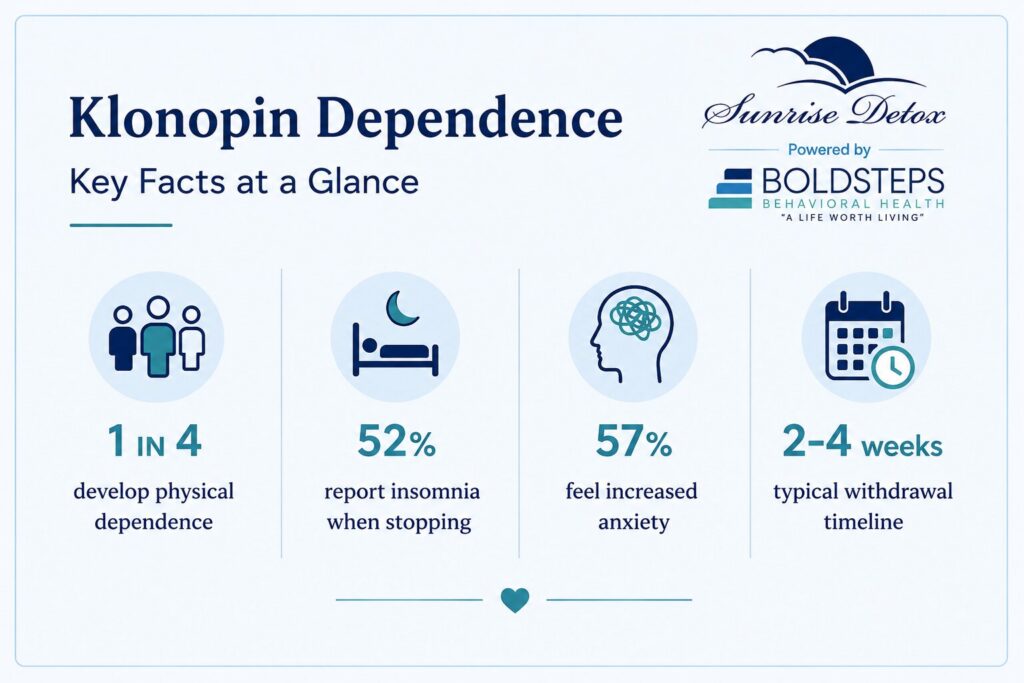
But benzodiazepine withdrawal frequently affects emotions and the nervous system just as strongly.
Symptoms can include:
- Severe anxiety
- Panic attacks
- Insomnia
- Racing thoughts
- Shaking
- Sweating
- Nausea
- Muscle tension
- Sensitivity to light or sound
- Feeling emotionally overwhelmed
- Derealization or feeling disconnected
For some people, the emotional intensity is the hardest part.
One patient once described it as:
“It felt like my nervous system forgot how to feel safe.”
That experience can become frightening quickly, especially for people already struggling with anxiety disorders before taking Klonopin.
This is one reason medical supervision matters. People often need both physical stabilization and emotional reassurance during withdrawal.
Trying to Quit Alone Can Become Overwhelming
Some people do attempt to stop Klonopin on their own.
Often because they feel embarrassed asking for help.
Or because they assume they “should” be able to handle it.
Unfortunately, withdrawal can escalate faster than expected.
In some cases, suddenly stopping benzodiazepines can become medically dangerous, especially after long-term or high-dose use. That’s why professional support is often recommended instead of abruptly quitting alone.
A medically supervised detox environment can help by providing:
- Monitoring during withdrawal
- Gradual taper support
- Symptom management
- Emotional stabilization
- Medical oversight
- Sleep and nutritional support
The goal is not to make someone “tough it out.”
The goal is to help the nervous system adjust as safely and comfortably as possible.
Detox Is Usually Much Quieter Than People Expect
A lot of people picture detox as chaotic or frightening.
In reality, compassionate detox often feels far more human and calm than expected.
Most people entering treatment are not dramatic stereotypes. They are tired human beings who’ve spent months or years trying to quietly manage escalating anxiety, dependence, or emotional overwhelm alone.
Many patients say the first feeling they experience is relief.
Relief that:
- Someone understands what they’re describing
- They no longer have to hide how bad things feel
- They can stop obsessing over doses temporarily
- Their nervous system can finally rest a little
One patient once said:
“I didn’t realize how exhausted I was until I stopped trying to hold myself together every second.”
That’s often the hidden reality of benzodiazepine dependence.
A Lot of Sober Curious People Don’t Know Where They Fit
Some people hesitate to seek help because they don’t identify with traditional addiction language.
They think:
“I’m not partying.”
“I’m not buying drugs illegally.”
“I still function.”
“I just want to feel normal again.”
And honestly, many people seeking benzodiazepine detox feel exactly that way.
Some are not even sure whether they want permanent sobriety yet. They simply know their relationship with Klonopin no longer feels healthy, stable, or fully voluntary.
That awareness matters.
You do not need to completely fall apart before asking questions about your mental health, medication use, or dependence.
Curiosity counts too.
Sometimes recovery begins with nothing more dramatic than someone admitting:
“I don’t think I want to live like this forever.”
Healing Usually Happens Gradually, Not All at Once
People often fear detox because they imagine it as one massive life-changing event.
In reality, recovery is usually much quieter.
It starts with:
- Sleeping through the night
- Feeling physically steady again
- Having fewer panic spikes
- Eating normally
- Thinking clearly
- Feeling emotionally present for small moments again
Healing the nervous system takes time.
And good treatment does not pressure people into perfection overnight. It helps create enough stability for someone to start reconnecting with themselves underneath the fear, anxiety, exhaustion, or dependence.
That process looks different for everyone.
Some continue with therapy afterward.
Some benefit from structured daytime care.
Some continue mental health treatment while learning healthier coping strategies.
The important thing is that people do not have to navigate it alone.
You Are Allowed to Ask for Help Before Things Get Worse
This is something many people need permission to hear.
You do not need:
- A public breakdown
- A lost job
- A relationship collapse
- A medical emergency
before your pain becomes valid.
If your nervous system feels trapped in a cycle of dependence, anxiety, fear, and exhaustion, that matters already.
And despite what anxiety often says, reaching out for information does not commit you to anything permanently.
Sometimes it’s simply the first honest conversation someone has had with themselves in a long time.
FAQ About Klonopin Detox and Benzodiazepine Withdrawal
Do people really go to medical detox for Klonopin?
Yes. Many people seek medical support when stopping benzodiazepines because withdrawal symptoms can become physically and emotionally overwhelming.
Is Klonopin withdrawal dangerous?
It can be. In some cases, abruptly stopping benzodiazepines may lead to serious medical complications, which is why supervised detox is often recommended.
What does benzodiazepine withdrawal feel like?
People may experience anxiety, insomnia, shaking, panic attacks, nausea, sweating, emotional distress, and nervous system sensitivity during withdrawal.
Can I stop taking Klonopin on my own?
Some people attempt it, but stopping suddenly can become difficult or dangerous depending on dosage and duration of use. Professional medical guidance is strongly recommended.
How long does Klonopin withdrawal last?
Withdrawal timelines vary depending on the individual, dosage, length of use, and overall health. Some symptoms improve within days, while others may take longer to stabilize.
What happens during medical detox?
Medical detox may include monitoring, taper support, symptom management, emotional support, rest, and planning for ongoing treatment after stabilization.
Does needing detox mean I’m addicted?
Not necessarily in the way people often imagine. Physical dependence can develop even when someone takes Klonopin as prescribed. Detox is about safety and stabilization, not labels.
What if I’m scared to make the call?
That’s extremely common. Many people feel anxious, embarrassed, or uncertain before reaching out. You do not need perfect certainty before asking questions or exploring support options.
A lot of people silently struggle with benzodiazepine dependence for much longer than they need to because they think asking for help means they’ve failed somehow.
It doesn’t.
Sometimes it simply means your nervous system needs support finding balance again.
Call (856) 276-0873 or visit our Benzodiazepine Detox services to learn more about our Benzodiazepine Detox services in Philadelphia.