


Sometimes parents notice the shaking before their child does.
A trembling hand reaching for coffee. A drink poured earlier than usual. A sudden mood shift that seems to ease only after alcohol enters the picture. These moments can feel deeply unsettling because part of you already knows this may be more serious than stress.
And if you’ve started searching for answers online late at night, trying to understand what you’re seeing, you are far from alone.
Many families exploring medical detox support arrive at that point after months — sometimes years — of confusion, fear, and quiet worry. They’ve watched someone they love become emotionally exhausted, physically unwell, or increasingly dependent on alcohol just to make it through the day.
That experience can feel isolating. But it is more common than people realize.
Shaking After Drinking Wears Off Can Signal Physical Dependence
A lot of people assume shaking automatically means someone is “drunk too often” or making reckless choices.
The reality is more complicated.
Alcohol changes the way the brain and nervous system function over time. When someone drinks heavily or consistently enough, the body can begin adapting to alcohol’s presence. Eventually, the nervous system struggles when alcohol levels suddenly drop.
That’s why some people wake up shaky, nauseated, anxious, sweaty, or panicked after several hours without drinking.
Families often notice:
- Trembling hands
- Irritability first thing in the morning
- Sweating or nausea
- Drinking earlier in the day than before
- Panic or agitation without alcohol
- Trouble sleeping through the night
- Emotional instability between drinks
Many people secretly search phrases like alcohol shakes in the morning because the symptoms scare them. Parents search too — usually after realizing this may no longer be “casual drinking” or temporary stress.
One of the hardest parts is how quietly alcohol dependence can grow. Some young adults still maintain jobs, relationships, classes, or routines while their physical health slowly becomes more unstable underneath the surface.
Young Adults Often Hide the Severity of What’s Happening
Parents frequently say the same thing:
“I knew something was wrong, but I didn’t realize it had gotten this serious.”
That’s incredibly common.
A lot of young adults become skilled at minimizing symptoms or hiding how much they drink. Some feel embarrassed. Others are terrified of worrying their family. Some genuinely believe they still have control and can stop anytime they choose.
Meanwhile, their body may already be physically dependent.
Alcohol dependence doesn’t always look dramatic. Sometimes it looks like:
- Canceling plans because they feel sick
- Drinking secretly before family gatherings
- Increased anxiety or panic attacks
- Mood swings that seem unpredictable
- Isolation and exhaustion
- Sleeping at odd hours
- Defensiveness whenever alcohol is mentioned
Parents often sense something is off long before they fully understand what’s happening.
That uncertainty can create constant tension in the home. You may feel stuck between wanting to help and fearing you’ll push your child further away.
The Emotional Side of This Is Often Overlooked
Families sometimes focus entirely on the drinking because it’s the most visible part.
But underneath alcohol use, there is often emotional pain that hasn’t been fully addressed.
Many young adults struggling with alcohol dependence are also battling:
- Anxiety
- Depression
- Panic symptoms
- Trauma
- Emotional burnout
- Social pressure
- Shame
- Sleep problems
For some, alcohol began as a coping mechanism long before it became a physical dependency.
It may have helped them:
- Quiet racing thoughts
- Feel less socially anxious
- Sleep at night
- Escape emotional overwhelm
- Numb fear or sadness temporarily
Then gradually, the line between emotional relief and physical dependence blurred.
This matters because treatment is not simply about “taking alcohol away.” It’s also about helping someone stabilize emotionally and physically at the same time.
Without that understanding, many people feel misunderstood or judged instead of supported.
Withdrawal Can Become Dangerous Faster Than Families Expect
One of the most frightening things for parents to learn is that alcohol withdrawal can become medically serious.
Some people assume detox means feeling uncomfortable for a few days. But for individuals with significant dependence, withdrawal symptoms can escalate unpredictably.
Symptoms may include:
- Severe anxiety
- Vomiting
- Elevated heart rate
- Hallucinations
- Confusion
- Seizures
- Dangerous blood pressure changes
This is why medical detox exists.
Not because someone lacks willpower. Not because they are weak. Because the body and nervous system can react intensely when alcohol is removed suddenly.
Parents often carry guilt once they understand this. They wonder whether they should have acted sooner or noticed the signs earlier.
But alcohol dependence usually develops gradually. Many families do not recognize the severity until physical symptoms become impossible to dismiss.
You are not failing because you are learning in real time.
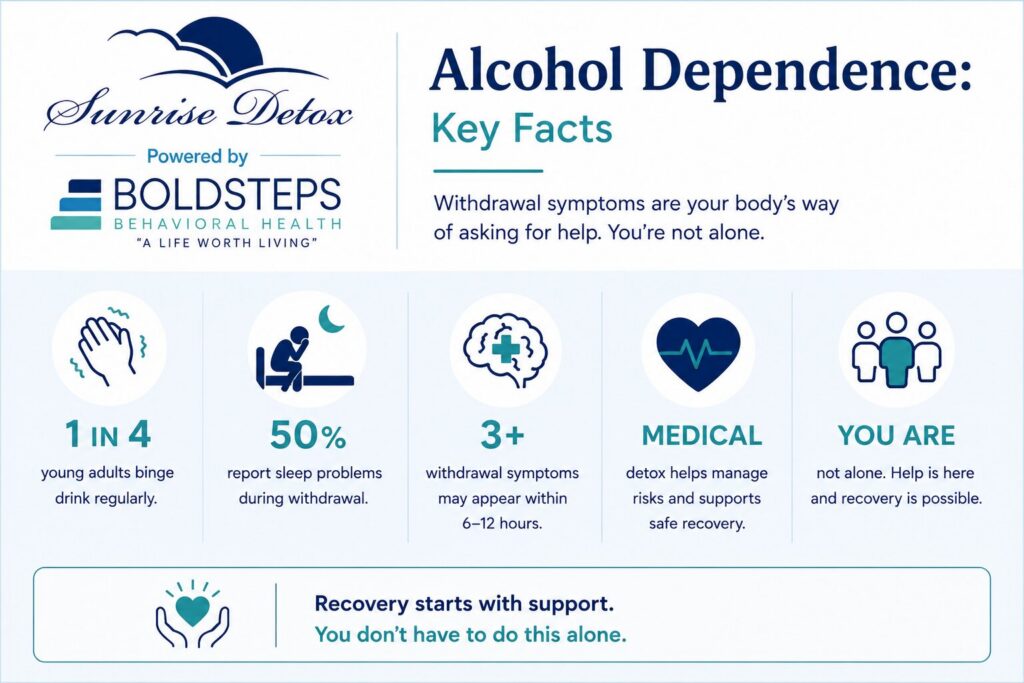
Your Child May Be Terrified Too
One painful truth about addiction is that many people know something is wrong long before they ask for help.
They may wake up frightened by the shaking.
Ashamed of needing a drink to steady themselves.
Scared by how anxious they feel without alcohol.
But fear can also keep people stuck.
A lot of young adults are silently asking themselves:
- “What if I can’t stop?”
- “What if detox is horrible?”
- “What if people think I’m an alcoholic?”
- “What if treatment changes my life forever?”
- “What if I fail?”
That fear often shows up outwardly as anger, defensiveness, withdrawal, or denial.
Parents understandably panic when they see the physical signs worsening. But beneath the conflict, many young adults are already overwhelmed emotionally.
Sometimes they don’t need a lecture first.
They need a safe place to stop spiraling.
Medical Detox Is About Stabilization, Not Punishment
Many families imagine detox as cold, harsh, or humiliating.
In reality, compassionate medical detox is meant to create safety during one of the most physically and emotionally vulnerable moments in someone’s life.
A supportive detox setting may include:
- 24/7 medical monitoring
- Medication support for withdrawal symptoms
- Nutritional support and hydration
- Emotional reassurance
- Rest and stabilization
- Assessment for mental health needs
- Planning for continued care afterward
For some people, detox is the first time they’ve felt physically safe in months.
For others, it’s the first time they’ve stopped hiding how exhausted they really are.
A good treatment environment recognizes that people entering detox are often scared, ashamed, emotionally overwhelmed, and physically depleted all at once.
They do not need punishment.
They need support.
Parents Carry Heavy Guilt During This Process
Parents in crisis often replay every moment leading up to this point.
You may wonder:
- “Did I miss the signs?”
- “Did I make things worse?”
- “Should I have stepped in sooner?”
- “How did this happen?”
- “What if they hate me for getting involved?”
Those thoughts are deeply human.
But addiction is not created by one mistake, one bad year, or one imperfect parenting decision.
Many deeply loving families find themselves here unexpectedly.
One of the hardest parts of loving someone in crisis is realizing you cannot control every outcome. You cannot force recovery through fear, guilt, or exhaustion.
What you can do is help create a path toward safety and support.
That matters more than perfection ever will.
Recovery Often Starts Smaller Than People Expect
People sometimes imagine recovery begins with a dramatic breakthrough moment.
In reality, it often starts quietly.
A young adult admitting they’re scared.
A parent making a phone call through tears.
A family finally saying, “We can’t keep managing this alone.”
Those moments matter.
And despite how hopeless things may feel right now, many people who once needed alcohol just to steady their hands do recover. Their nervous systems stabilize. Their sleep improves. Their anxiety becomes manageable. Families slowly begin trusting that peace is possible again.
Recovery is rarely linear. But neither is healing in any other part of life.
The important thing is that support exists before things become even more dangerous.
FAQ About Alcohol Dependence and Medical Detox
Why does someone shake when they stop drinking?
Shaking can happen because the nervous system has adapted to alcohol over time. When alcohol levels suddenly drop, the body may struggle to regulate itself properly, causing withdrawal symptoms.
Are alcohol withdrawal symptoms dangerous?
They can be. Severe alcohol withdrawal may lead to seizures, hallucinations, or dangerous cardiovascular symptoms. Medical supervision is often recommended for safety.
Can anxiety cause shaking too?
Yes, anxiety can absolutely cause trembling or shakiness. But if symptoms consistently improve after drinking alcohol, physical alcohol dependence may also be involved.
How do I know if my child needs medical detox?
Signs may include shaking, sweating, nausea, panic symptoms, drinking early in the day, inability to stop drinking safely, or worsening withdrawal symptoms after trying to cut back.
What happens during medical detox?
Medical detox typically includes monitoring, symptom management, emotional support, hydration, rest, and medical care to help someone withdraw from alcohol as safely and comfortably as possible.
Will detox fix everything immediately?
Detox is often the first step, not the final step. Many people continue with therapy, structured daytime care, mental health support, or additional treatment after detox stabilization.
What if my child refuses help?
This is incredibly common. Many people struggling with alcohol dependence feel afraid, ashamed, or defensive. Families often benefit from speaking with professionals about how to approach conversations supportively and safely.
Is it normal for parents to feel overwhelmed?
Completely. Parents dealing with a behavioral health crisis often feel fear, guilt, anger, confusion, and exhaustion all at once. Support matters for families too.
Watching someone you love struggle with alcohol dependence can make an entire household feel like it’s holding its breath.
But you do not have to navigate this alone.
There are people who understand how frightening these moments can become — and there are safe, medically supported ways to help your loved one stabilize before things get worse.
Call (856) 276-0873 or visit our Medical Drug and Alcohol Detox Center in Philadelphia to learn more about our Medical Drug and Alcohol Detox Center services in Philadelphia.