


Maybe it started with a single drink.
Maybe the prescription had been helping with anxiety, panic attacks, or sleep difficulties. Maybe alcohol was simply part of a normal evening routine. Neither one felt unusual on its own.
So when they were combined, it didn’t seem like a big deal.
That is one reason so many people find themselves searching questions late at night like:
“My husband mixes Ativan with beer. Is that dangerous?”
The concern rarely begins with a crisis.
More often, it begins with a feeling.
Something doesn’t seem right.
Someone appears more tired than usual. Conversations are forgotten. Mood changes become more noticeable. Sleep patterns shift. Small concerns begin stacking on top of each other.
If you’re reading this because you’re worried about yourself or someone you love, know that you’re not alone. Many people start asking questions long before they ever consider treatment. Learning more about benzodiazepine recovery support can help you better understand what options may be available if those concerns continue to grow.
The Biggest Risk Is Often Underestimating the Situation
One of the reasons alcohol and Ativan become such a concerning combination is because both substances feel familiar.
Alcohol is common.
Ativan is prescribed by medical professionals.
Neither one automatically feels dangerous in everyday life.
That familiarity can create a false sense of security.
People often assume that if something is prescribed, it must be safe under most circumstances.
They assume that if they’ve had a few drinks before without problems, the next time will probably be fine too.
But familiarity and safety are not always the same thing.
Many people underestimate risk simply because nothing bad happened the last time.
Unfortunately, the body doesn’t always provide advance warnings.
Why the Combination Can Be More Powerful Than People Expect
Ativan belongs to a class of medications known as benzodiazepines.
These medications are often prescribed to reduce anxiety, manage panic symptoms, or assist with certain medical conditions.
Alcohol can create similar calming effects.
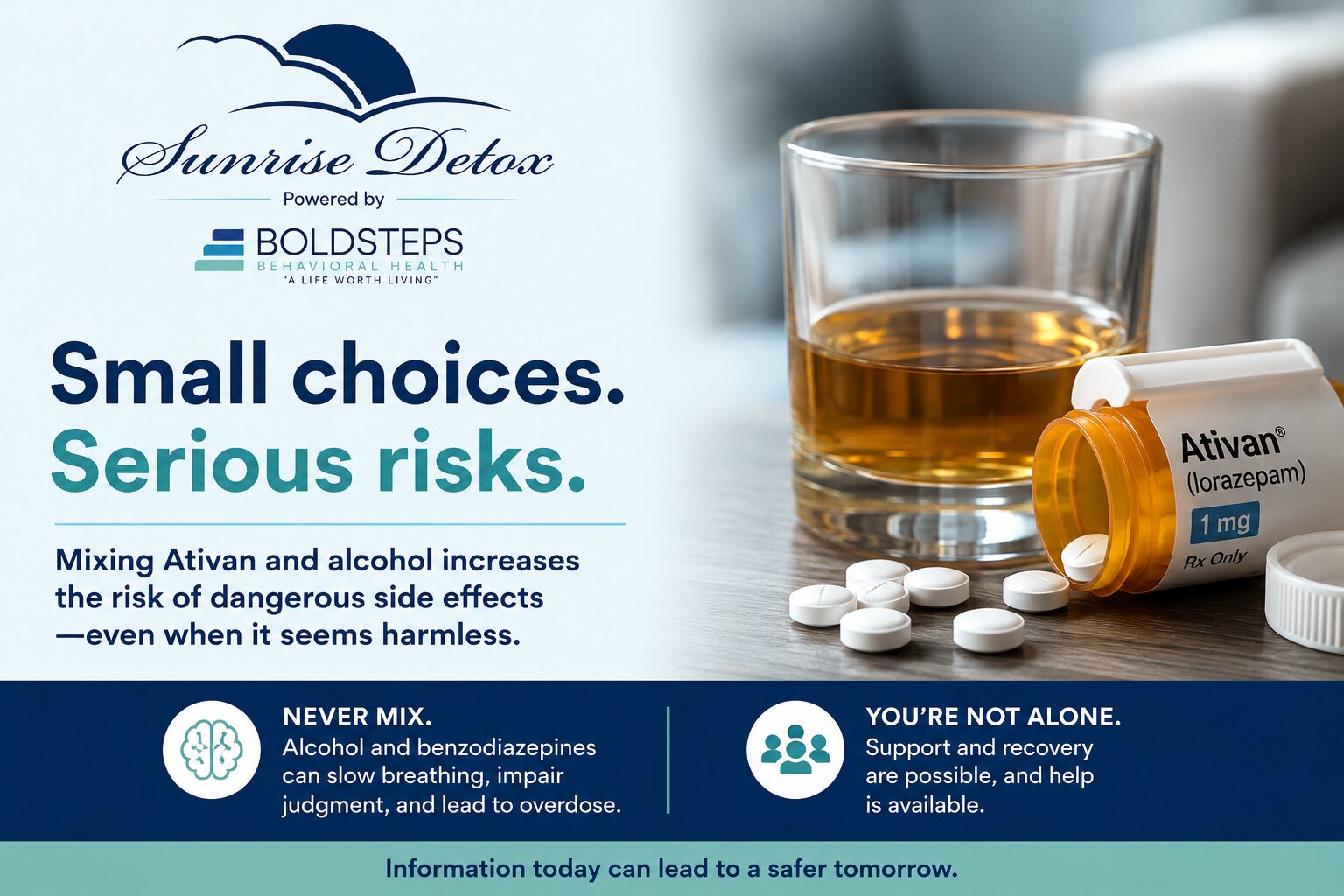
When both substances are used together, those effects can become amplified.
Instead of one substance slowing the nervous system, two substances are working in the same direction.
The result may include:
- Increased drowsiness
- Reduced coordination
- Impaired judgment
- Memory problems
- Slower reaction times
- Increased sedation
For some people, these effects may appear mild.
For others, they can become much more serious.
This is why concerns about mixing the two should never be dismissed simply because the person appears “mostly okay.”
The Warning Signs Families Often Notice First
One thing we’ve learned over the years is that family members often notice problems before the individual does.
A spouse may observe changes that seem small at first.
Maybe conversations need repeating.
Maybe stories are told twice.
Maybe responsibilities are slipping.
Maybe plans are being forgotten.
Maybe the person seems unusually tired, detached, or emotionally distant.
None of these signs automatically indicate dependence.
But they can indicate that substance use is affecting daily functioning in ways that deserve attention.
When people look back later, they often realize those early warning signs were trying to tell them something important.
When Occasional Use Starts Becoming a Pattern
Many people initially focus on frequency.
How often is it happening?
Once a month?
Once a week?
Every weekend?
Frequency matters.
But patterns often matter more.
A useful question to ask is this:
“What role are these substances playing in everyday life?”
Are they becoming the primary way someone manages stress?
The primary way they relax?
The primary way they cope with difficult emotions?
The primary way they fall asleep?
The more essential substances become to daily functioning, the more closely the situation deserves attention.
Dependence rarely arrives all at once.
It often develops quietly through repeated reliance.
The Difference Between Use and Dependence
This distinction is important.
Not everyone who drinks alcohol and takes Ativan develops dependence.
However, dependence can develop when the body begins adapting to regular use.
At that point, the situation becomes less about preference and more about necessity.
People often notice this shift when they attempt to stop.
They expect the transition to be simple.
Instead, they experience discomfort.
Anxiety increases.
Sleep becomes difficult.
Restlessness appears.
Irritability grows.
Suddenly, stopping feels harder than expected.
That experience often becomes one of the first signs that professional evaluation may be helpful.
Why Loved Ones Often Feel Confused
One of the hardest parts for spouses and family members is inconsistency.
Some days everything appears normal.
Other days something feels noticeably different.
This inconsistency can create confusion.
You start questioning yourself.
Maybe you’re overreacting.
Maybe it’s stress.
Maybe you’re imagining things.
Maybe you’re making too much of it.
These thoughts are incredibly common.
The challenge is that substance-related concerns do not always present themselves consistently.
Problems can exist long before they become obvious every day.
Trusting your observations does not mean jumping to conclusions.
It simply means remaining attentive.
The Question That Matters More Than Quantity
Many people become focused on numbers.
How many drinks?
How many pills?
How often?
Those questions are important.
But another question can sometimes reveal even more:
“What happens when they don’t use?”
Do they become unusually anxious?
Do they struggle to sleep?
Do they seem preoccupied?
Do they become irritable?
Do they spend significant time thinking about the next opportunity to use?
The answers to those questions often provide valuable insight into whether a larger issue may be developing.
When Safety Becomes the Main Concern
Certain situations require immediate attention.
If someone becomes difficult to wake up, appears confused, experiences slowed breathing, loses consciousness, or appears medically unstable, emergency care should be sought immediately.
These are not situations to monitor casually at home.
Even when symptoms are less dramatic, recurring concerns deserve serious consideration.
Waiting for a crisis is rarely the safest strategy.
Early conversations often create more options than emergency situations.
Why “Just Stop” Isn’t Always a Safe Answer
One of the most common misconceptions surrounding benzodiazepines is the belief that stopping should be simple.
People often assume the solution is straightforward.
Just stop taking the medication.
Just stop drinking.
Just quit.
Unfortunately, the body doesn’t always respond that way.
When benzodiazepines have been used regularly, stopping suddenly may create significant withdrawal symptoms for some individuals.
That is one reason professional guidance matters.
The goal is not simply ending use.
The goal is ending use safely.
Many people searching information about ativan and alcohol dangers eventually discover that medical support may help reduce risks and create a safer path forward.
Hope Exists Long Before Someone Hits Rock Bottom
A common myth in addiction treatment is that people need to lose everything before seeking help.
That simply isn’t true.
Many people begin treatment while they still have careers, relationships, families, and responsibilities intact.
In fact, seeking help earlier often protects those things.
You do not need a dramatic crisis.
You do not need a public collapse.
You do not need to wait until life becomes unmanageable.
Sometimes concern itself is enough reason to start exploring options.
The fact that you’re asking questions today may be one of the healthiest signs possible.
Asking Questions Is Often the First Step Toward Change
Most treatment journeys don’t begin with certainty.
They begin with curiosity.
Concern.
Questions.
A spouse notices something unusual.
An individual becomes worried about their own behavior.
A family member wonders whether things have gone too far.
Those questions matter.
Because questions create awareness.
Awareness creates action.
And action creates the possibility of change.
The goal isn’t to diagnose yourself or your loved one from an internet article.
The goal is recognizing when a situation deserves a closer look.
You Don’t Have to Figure This Out Alone
If you’re concerned about alcohol and Ativan use—whether it’s your own or someone else’s—you don’t have to navigate the uncertainty by yourself. Professional support can help you better understand what’s happening and what options may be available.
Call (856) 276-0873 or learn more about our benzodiazepine recovery support to explore our Benzodiazepine Detox services and discuss possible next steps.
Frequently Asked Questions
Is mixing Ativan and alcohol dangerous?
Yes. Both substances can slow activity in the central nervous system. When combined, they may increase risks related to sedation, impaired judgment, coordination issues, and breathing difficulties.
What are common warning signs that a problem may be developing?
Warning signs may include memory problems, excessive sleepiness, mood changes, increasing reliance on substances, missed responsibilities, and difficulty functioning without alcohol or medication.
Does someone need detox if they mix Ativan and alcohol?
Not necessarily. Every situation is different. A professional assessment can help determine whether medical supervision or other forms of support may be appropriate.
Can dependence develop even when Ativan was prescribed?
Yes. Physical dependence can develop in some individuals even when medication is initially used as directed.
Why shouldn’t someone stop benzodiazepines suddenly?
Abruptly stopping benzodiazepines after regular use may create withdrawal symptoms that can require medical supervision. Professional guidance helps determine the safest approach.
What should I do if my spouse mixes alcohol and Ativan regularly?
Express your concerns calmly, pay attention to patterns, and consider speaking with a treatment professional who can provide guidance specific to the situation.
When is it time to seek help?
If substance use is affecting health, relationships, work, safety, or quality of life—or if concerns continue growing despite attempts to address them—it may be time to seek professional support.