


It’s usually not dramatic.
No big crash. No clear “rock bottom.”
It’s quieter than that.
You tell yourself it’s just one night.
You’ll reset tomorrow.
You’ve done this before—you know how to fix it.
And then morning comes.
Your body feels off. Your thoughts start racing. And underneath all of it is something heavier than the hangover:
I just messed everything up.
If that thought is sitting in your chest right now, I know how loud it gets.
But before you let it decide what happens next, it’s worth slowing down for a second.
There’s a difference between a mistake… and a spiral.
And what you do next matters more than what just happened.
If you need to ground yourself in what safe support actually looks like from here, you can start by looking at alcohol detox support. Not as punishment. Not as starting over. Just as a way to steady yourself again.
The Shame Comes in Fast—and It Lies to You
The physical stuff? You can handle that.
It’s the voice in your head that hits hardest.
You knew better.
You had time under your belt.
Why would you throw that away?
That voice doesn’t just criticize—it isolates.
It tells you:
- Don’t tell anyone
- Don’t go back
- Don’t admit it
Because if you do, it means you failed.
But here’s the truth most people don’t say out loud:
Shame is not a sign you’ve failed.
It’s a sign you care.
And if you let it run the show, it will keep you stuck longer than the relapse itself ever would.
It Didn’t Erase What You Built (Even If It Feels Like It Did)
This is the part that’s hardest to believe in the moment.
It feels like everything is gone.
The days. The effort. The version of you that was starting to feel steady.
But relapse doesn’t delete that.
You still:
- Know what sobriety feels like in your body
- Understand your triggers more clearly than before
- Have proof that you can go without alcohol
That doesn’t disappear overnight.
It just gets buried under the weight of what happened.
And it can come back faster than you think—once you stop hiding from it.
The Physical Side Can Catch You Off Guard
A lot of people expect the emotional part to be hard.
What they don’t expect is how their body reacts.
You might wake up feeling:
- Shaky
- On edge
- Restless in a way that doesn’t settle
Even after a short relapse.
That’s because your body doesn’t fully reset just because you had time sober.
When alcohol comes back into the system—even briefly—it can disrupt things again.
That’s why some people find themselves searching for alcohol withdrawal treatment near me after thinking they could just “bounce back.”
Not because they’ve undone everything.
But because their body needs support to stabilize again.
The Dangerous Thought: “I’ll Fix This Myself”
This is where things can start to go sideways.
You tell yourself:
- You’ve done this before
- You don’t need help again
- You’ll just tighten things up and move on
It sounds strong. Independent. Controlled.
But here’s what’s different now:
You’re not just dealing with alcohol.
You’re dealing with shame, fear, and pressure on top of it.
And that combination can make everything heavier.
Trying to “fix it alone” often turns into:
- Hiding what’s happening
- Minimizing how you feel
- Waiting longer than you should
Not because you don’t care.
Because you care so much you don’t want to face it.
The Part No One Admits: It’s Harder After a Relapse
There’s this expectation that it should be easier the second time.
You know what to do. You’ve been here before.
But emotionally?
It can be harder.
Because now there’s:
- Fear of repeating the cycle
- Doubt about yourself
- Pressure to “get it right this time”
That weight can make even small steps feel bigger.
So if this feels harder than you expected—that doesn’t mean you’re weaker.
It means you’re carrying more.
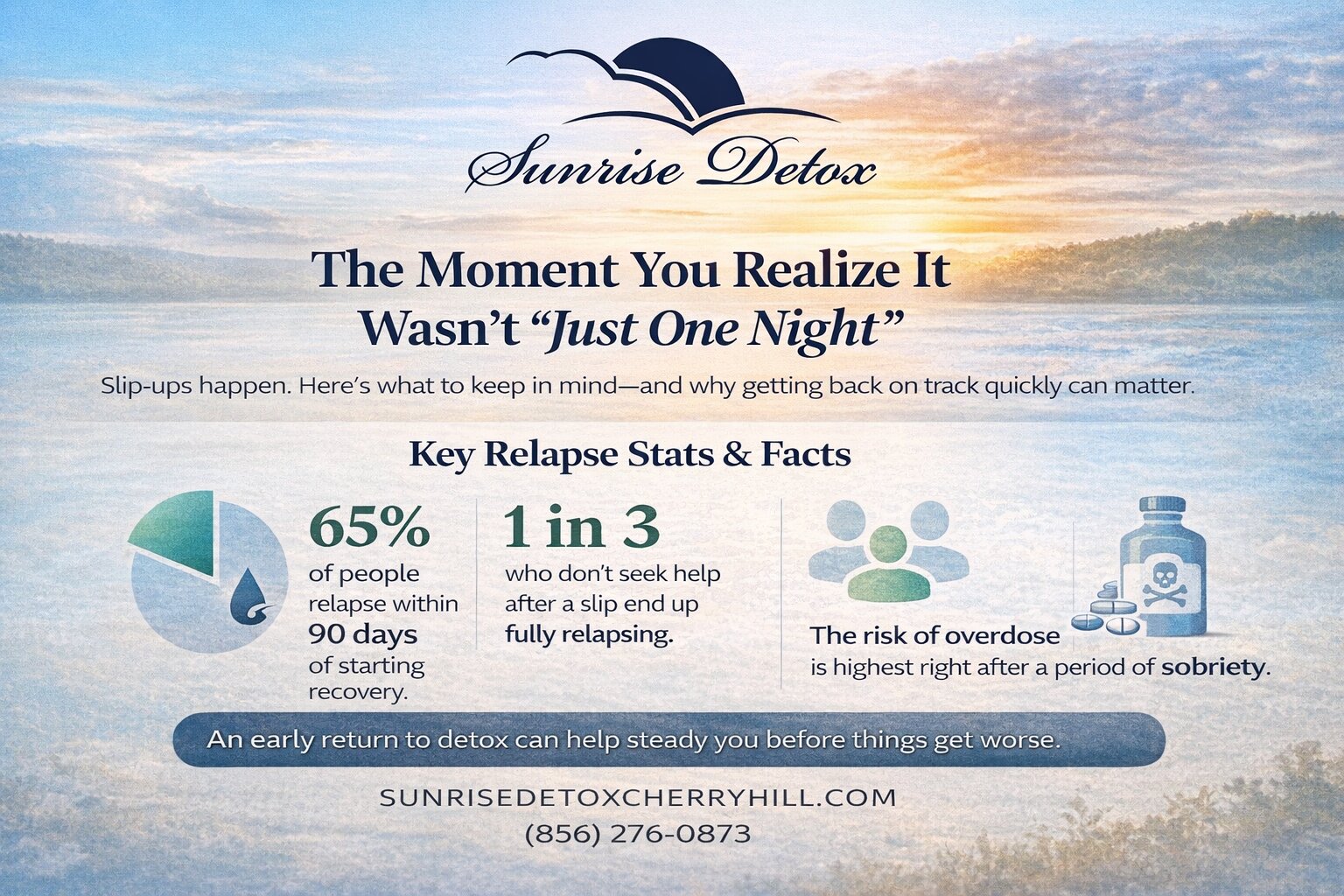
You’re Not Starting Over—You’re Picking Back Up
This distinction matters.
Starting over feels like failure.
Picking back up feels like movement.
You don’t need to:
- Rebuild everything from scratch
- Prove anything to anyone
- Have a perfect plan
You just need to:
- Acknowledge what happened
- Stabilize your body
- Reconnect with support
That’s it.
Small, steady steps.
Not a full reset.
Going Back Isn’t as Bad as Your Mind Thinks It Is
This is the part that keeps people stuck the longest.
The idea of going back.
Walking through those doors again.
Talking to people who saw you doing well.
Admitting what happened.
Your mind makes it feel unbearable.
But the reality?
Most people there understand more than you think.
They’ve either:
- Been through it themselves
- Helped others through the same moment
You’re not walking into judgment.
You’re walking into understanding.
And often, relief.
There’s a Version of This That Gets Better—Faster Than You Think
Right now, everything might feel fragile.
Like one more wrong move could send things further off track.
But this moment?
It’s not the end of your progress.
It’s a decision point.
You can:
- Stay quiet
- Try to manage it alone
- Let the shame stretch this out
Or you can:
- Reach out
- Stabilize early
- Get back on track before it gets heavier
One path feels easier right now—but harder later.
The other feels harder right now—but steadier over time.
You’re Still Someone Who Can Do This
Relapse doesn’t change that.
It doesn’t erase your effort.
It doesn’t make you incapable.
It doesn’t disqualify you from getting better.
It just means something in your process needs attention.
That’s it.
And the fact that you’re here—reading this, looking for answers—means you haven’t checked out.
That matters more than you think.
FAQ: The Questions That Usually Stay in Your Head
Did I just ruin all my progress?
No. Relapse interrupts progress—it doesn’t erase it. What you’ve learned and built is still there.
Why do I feel physically off after just one relapse?
Your body adjusts during sobriety. Reintroducing alcohol—even briefly—can disrupt that balance and cause symptoms again.
Do I really need support again if it was just a short slip?
Not always—but if your body feels unstable or your thoughts are spiraling, support can help you reset safely and quickly.
Why does this feel harder than the first time?
Because now there’s emotional weight—shame, fear, and pressure—that wasn’t there in the same way before.
What if I’m too embarrassed to go back?
That’s common. But most people in recovery understand relapse. You’re not walking into judgment—you’re walking into support.
How do I stop this from turning into a full relapse?
Act early. Don’t wait. The sooner you stabilize and reconnect with support, the easier it is to regain your footing.
What’s the next step if I’m unsure?
You don’t have to commit to anything big. Just start with a conversation. Clarity reduces fear.
You’re Not Alone in This Moment (Even If It Feels Like You Are)
Relapse has a way of making everything feel smaller.
Your world. Your options. Your sense of control.
But this moment?
It’s not as final as it feels.
It’s just quiet. Heavy. Uncomfortable.
And temporary—if you don’t let it stretch out longer than it needs to.
You don’t have to fix everything today.
You just have to not disappear.
Call (856) 276-0873 or visit our alcohol detox services to learn more about our alcohol detox services in Philadelphia.