


Most people who finally seek help for opioid withdrawal do not look the way the public expects.
They are often still going to work. Still answering emails. Still showing up for family dinners. Still paying bills on time while privately organizing their entire day around avoiding withdrawal.
That’s the part many people miss about high-functioning addiction: the outside can stay intact long after the inside starts collapsing.
If you’ve been looking into opioid detox support, there’s a good chance you already know this isn’t sustainable anymore. Maybe you’ve tried tapering alone. Maybe you’ve made promises to yourself every Sunday night that this would be the week you stopped. Maybe you’ve searched symptoms at 2am while sweating through another night of withdrawal panic.
And maybe you’re exhausted from carrying the secret.
High-Functioning Addiction Often Hides in Plain Sight
One of the biggest misconceptions about opioid dependence is that it always looks chaotic from the beginning.
In reality, many people maintain careers, routines, relationships, and responsibilities for years while quietly struggling.
I’ve worked with:
- Healthcare professionals
- Executives
- Tradespeople
- Parents
- College students
- Business owners
Some began with legitimate prescriptions after surgery or injury. Others started recreationally or through stress relief. Many never imagined dependence would happen to them.
That’s partly because opioid addiction rarely announces itself dramatically at first.
It usually grows slowly.
At the beginning, opioids may feel helpful:
- More energy
- Less emotional pain
- Better sleep
- Temporary calm
- Ability to keep functioning under stress
Then gradually, life starts revolving around not getting sick.
People tell themselves:
“I’m still handling it.”
“I still have my job.”
“No one knows.”
“I can stop whenever I need to.”
But dependence changes the equation over time.
Eventually, staying functional becomes a full-time job.
Withdrawal Is Often the Moment People Realize How Serious It’s Become
A lot of high-functioning people don’t fully recognize the severity of their dependence until they try to stop.
That’s usually when the illusion of control cracks.
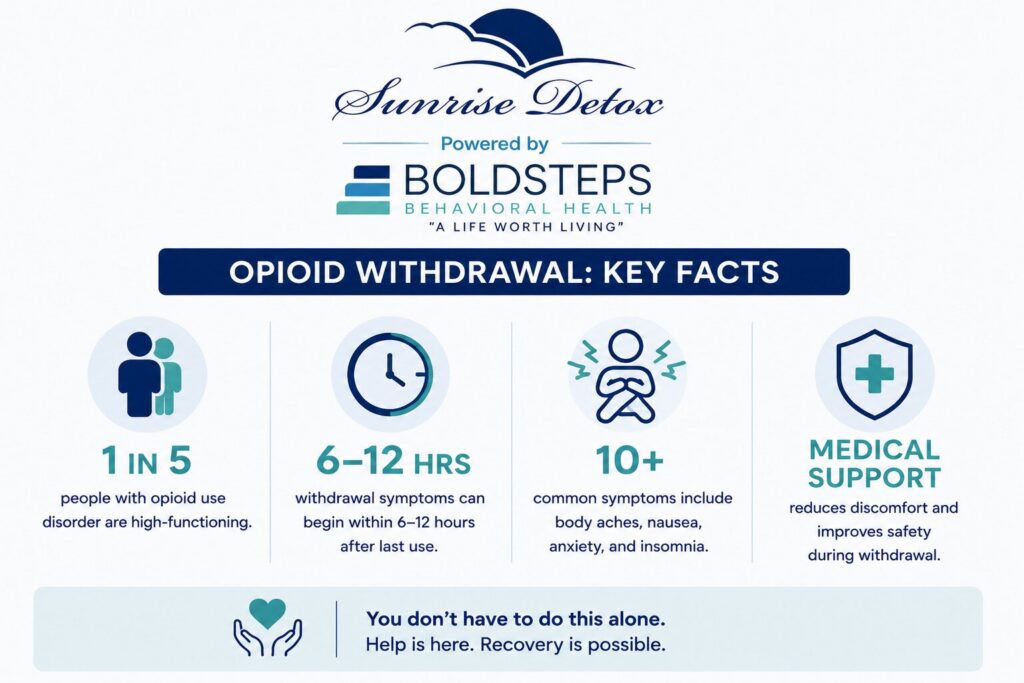
Withdrawal symptoms can arrive fast and feel overwhelming:
- Severe body aches
- Sweating and chills
- Vomiting
- Insomnia
- Restlessness
- Panic
- Anxiety that feels unbearable
- Exhaustion mixed with inability to sit still
People often expect discomfort.
What shocks them is the intensity.
I’ve had patients describe withdrawal as feeling like their nervous system was “plugged into an electrical socket.” Others describe a kind of emotional despair that feels impossible to explain unless you’ve experienced it firsthand.
And for high-functioning people especially, withdrawal can feel psychologically devastating because they are used to controlling everything.
Suddenly, discipline doesn’t seem to matter anymore.
That realization can be terrifying.
Most People Wait Longer Than They Needed To
One thing I wish more people understood is how long high-functioning individuals typically delay treatment.
Not because they don’t know something is wrong.
Because they’re trying to avoid what treatment represents emotionally.
Many people fear:
- Being judged
- Losing professional respect
- Being seen differently by family
- Looking “weak”
- Losing control over their life
- Facing what they’ve been avoiding emotionally
So they keep functioning.
Until functioning itself becomes exhausting.
People spend enormous amounts of energy trying to appear okay while privately deteriorating. They memorize pharmacy schedules. They calculate doses constantly. They avoid vacations because withdrawal logistics become too risky. They panic anytime supply runs low.
Eventually, their entire life becomes organized around avoiding sickness.
That’s not freedom. Even if the outside still looks successful.
Going to the Hospital Is Not the End of Your Life
A lot of people enter detox terrified that seeking medical help means they’ve officially failed.
Honestly, many arrive expecting shame.
Instead, what surprises them most is relief.
Relief that someone understands withdrawal.
Relief that they no longer have to hide.
Relief that they can stop pretending everything is manageable.
Medical detox exists because opioid dependence is physical, emotional, and neurological — not simply behavioral.
And contrary to what many people fear, asking for help does not erase who you are.
You are still:
- Intelligent
- Capable
- Employable
- Worthy of respect
- Recoverable
Addiction may have exhausted you. It may have isolated you. But it did not erase your humanity.
That distinction matters deeply.
Withdrawal Support Is About Stabilization, Not Suffering
A lot of people delay treatment because they believe withdrawal has to be unbearable.
That fear keeps many trapped far longer than necessary.
People often search phrases like medications for opioid withdrawal because they’re desperate to know whether there’s any realistic way through this process without feeling destroyed physically.
The answer is yes.
Medical detox settings may provide support aimed at reducing the intensity of withdrawal symptoms and helping patients stabilize more safely and comfortably. Depending on individual needs, care can include:
- Medical monitoring
- Hydration support
- Nutritional support
- Sleep support
- Symptom management
- Emotional stabilization
- Continued treatment planning
For many patients, simply being medically supported during withdrawal changes everything psychologically.
Instead of feeling trapped in survival mode alone, they begin realizing:
“I might actually be able to get through this.”
That shift matters more than people realize.
High-Functioning People Carry a Different Kind of Shame
People who maintain careers and responsibilities while struggling often become experts at compartmentalization.
They hide symptoms well.
They minimize problems well.
They keep producing even while exhausted.
But internally, many are carrying enormous shame.
They say things like:
“I should know better.”
“I’m smarter than this.”
“No one would believe how bad it got.”
That shame becomes dangerous because it keeps people isolated.
The more high-functioning someone appears externally, the harder it can become to admit they need help internally. They fear disappointing everyone around them. They fear becoming “the addict” in people’s minds.
So they keep performing normalcy while quietly unraveling underneath it.
Eventually though, the body forces honesty.
The withdrawal worsens.
The fear deepens.
The exhaustion becomes impossible to outrun.
And many people finally reach the point where asking for help becomes less painful than maintaining the secret.
Recovery Usually Starts Smaller Than People Expect
Movies often portray recovery as one giant breakthrough moment.
Real recovery is usually quieter.
It starts with someone finally sleeping through the night.
Eating a real meal.
Laughing naturally for the first time in months.
Not panicking about running out of pills every few hours.
Those moments sound small until you’ve lived without them.
I’ve watched patients arrive convinced their lives were ruined, only to slowly realize something important:
They were not morally broken.
They were physically dependent and emotionally depleted.
There’s a difference.
And high-functioning people often recover remarkably well once they stop spending all their energy maintaining appearances.
You Do Not Need to Lose Everything First
This belief keeps people trapped longer than almost anything else.
Many assume they need:
- An arrest
- Job loss
- Relationship collapse
- Financial disaster
- Public humiliation
before they “deserve” treatment.
That thinking is dangerous.
You do not need catastrophe to justify care.
If opioids have become something your body depends on to function normally, that matters already.
If withdrawal fear is controlling your choices, that matters already.
If you are exhausted from secretly managing addiction while trying to hold your life together, that matters already.
The earlier someone gets support, the more stability they often preserve long-term.
There is no prize for suffering longer in silence.
The Person Underneath the Addiction Is Still There
This is something many patients struggle to believe initially.
They think addiction permanently changed them.
But underneath the withdrawal, exhaustion, fear, and shame is often someone who is still deeply capable — just overwhelmed and physically dependent for too long.
Detox is not instant transformation. It doesn’t magically solve every emotional struggle overnight.
But it can create enough physical and mental stability for someone to finally think clearly again.
To stop surviving hour by hour.
To stop living in constant fear of withdrawal.
To imagine a future not organized entirely around opioids.
That future is still possible for more people than they realize.
FAQ About Hospital Detox for Opioid Withdrawal
What happens during opioid withdrawal?
Withdrawal symptoms can include body aches, nausea, sweating, chills, insomnia, anxiety, restlessness, vomiting, and intense cravings. Symptoms vary depending on opioid use history and overall health.
Is opioid withdrawal dangerous?
While opioid withdrawal is not usually life-threatening in the same way severe alcohol withdrawal can be, it can become medically and emotionally overwhelming. Professional support can improve safety and comfort significantly.
Why do people go to the hospital for opioid withdrawal?
Many people seek medical help because withdrawal symptoms become too severe to manage alone. Medical detox can provide monitoring, stabilization, and symptom support during the withdrawal process.
Do hospitals give medications during opioid withdrawal?
Yes, medical professionals may use different approaches and medications for opioid withdrawal depending on the patient’s symptoms, health status, and treatment needs.
How long does opioid withdrawal last?
Acute withdrawal symptoms often begin within hours after stopping opioids and may last several days to over a week depending on the substance involved and the person’s history of use.
Can high-functioning people still have severe addiction?
Absolutely. Many people maintain jobs, relationships, and responsibilities while privately struggling with significant opioid dependence.
What happens after detox?
Detox is usually the beginning of recovery, not the full process. Many people continue with therapy, live-in treatment, structured daytime care, or ongoing recovery support afterward.
Is it too early to get help if my life hasn’t completely fallen apart?
No. Seeking help before total collapse often improves long-term outcomes. You do not need to lose everything before your pain becomes valid.
For many high-functioning people, the hardest part is not withdrawal itself.
It’s admitting they are exhausted from pretending they can manage this alone.
But asking for help is not weakness. Sometimes it’s the first honest thing someone has done for themselves in a very long time.
Call (856) 276-0873 or visit our Opiate Detox services to learn more about our Opiate Detox services in Philadelphia.