


For years, I believed I wasn’t the kind of person who needed treatment.
I had a picture in my mind of what someone in treatment looked like, and I didn’t think I fit it.
I still went to work.
I still answered my phone.
I still showed up for birthdays, holidays, and family events.
From the outside, my life looked manageable.
That made it easy to tell myself that everything was fine.
Or at least fine enough.
The problem was that what people saw and what I experienced were two very different things.
Every day felt like a balancing act. I was constantly trying to stay one step ahead of consequences, one step ahead of questions, and one step ahead of the growing realization that I was losing control.
If you’ve spent years wondering whether treatment is really worth it, I understand.
I was skeptical too.
In fact, skepticism became part of my identity.
I had reasons for every argument.
Reasons treatment wouldn’t help.
Reasons I wasn’t that bad.
Reasons I should wait.
Reasons I could handle it myself.
For a long time, those reasons felt convincing.
Until they didn’t.
While searching for answers, I came across information about cocaine detox services, but I quickly closed the page. I wasn’t looking for help. I was looking for reassurance that I didn’t need help.
There’s a big difference.
I Thought Needing Help Meant I Had Failed
One of the hardest beliefs for me to let go of was the idea that asking for help meant weakness.
I thought strong people figured things out on their own.
I thought admitting I was struggling meant admitting defeat.
Looking back, I can see how backwards that thinking was.
I wasn’t strong because I refused help.
I was exhausted because I refused help.
Every day became a battle between what I knew and what I wanted to believe.
I knew my life was becoming harder to manage.
I knew my relationships were suffering.
I knew I wasn’t as present as I used to be.
But admitting those things felt terrifying.
Because if I admitted them, I might have to do something about them.
And doing something about them felt even scarier.
The Problem Wasn’t Getting Better With Time
For years, I convinced myself I just needed more willpower.
I told myself I would stop after the weekend.
Then after the holiday.
Then after a stressful project at work.
Then after one more month.
There was always another reason to postpone change.
What I didn’t realize was that waiting had become part of the problem.
Every delay reinforced the idea that I wasn’t ready.
The truth was that I would probably never feel completely ready.
Most major life decisions don’t come with certainty.
Recovery isn’t different.
Waiting for confidence often means waiting forever.
I Was Tired of Living Two Different Lives
One thing people don’t talk about enough is how exhausting secrecy can become.
The substance itself wasn’t the only thing draining me.
The hiding was exhausting.
The explanations were exhausting.
The constant mental calculations were exhausting.
Who knew what?
Did anyone notice?
How much could I get away with?
What excuse would I use this time?
The longer it continued, the more energy it required.
It felt like carrying a heavy backpack everywhere I went.
At first, I barely noticed the weight.
Over time, it became impossible to ignore.
I wasn’t just managing substance use anymore.
I was managing the stress of protecting it.
The Moment That Changed Everything Was Surprisingly Small
People often imagine a dramatic turning point.
A medical emergency.
An arrest.
A public collapse.
That wasn’t my experience.
My turning point came during an ordinary conversation.
Someone close to me asked a simple question:
“Are you actually happy?”
The question caught me off guard.
I immediately started listing things that were going okay.
Work.
Bills.
Responsibilities.
The person listened patiently and then asked again.
“That’s not what I asked.”
For the first time in a long time, I stopped talking.
Because the honest answer was no.
I wasn’t happy.
I wasn’t at peace.
I wasn’t enjoying my life.
I was surviving it.
That realization stayed with me.
Sometimes the truth arrives quietly.
I Kept Looking for Proof That Treatment Would Fail
One thing I notice now is how desperately I searched for negative stories.
I looked for examples of people who relapsed.
I looked for stories where treatment didn’t work.
I looked for reasons to stay skeptical.
What I wasn’t looking for were stories of success.
Not because they didn’t exist.
Because I wasn’t ready to believe them.
Doubt can become comfortable.
If treatment fails, you can say you were right.
If treatment works, your life has to change.
And change can be frightening even when it’s positive.
I eventually realized I had been protecting my fear more than I had been protecting myself.
Walking Through the Door Was Harder Than Staying Home
The morning I finally decided to seek help felt strange.
Part of me wanted to go.
Part of me wanted to run.
I second-guessed everything.
Maybe I was overreacting.
Maybe things weren’t that bad.
Maybe I should wait a little longer.
Those thoughts followed me all the way to the door.
What surprised me most was that nobody expected me to arrive with certainty.
Nobody expected me to be fearless.
Nobody expected me to have everything figured out.
They simply expected honesty.
For years, I thought treatment required confidence.
What it actually required was willingness.
There is a difference.
What I Found Wasn’t What I Expected
I expected judgment.
I expected lectures.
I expected people telling me what I should have done differently.
Instead, I found people who understood.
People who had heard stories like mine before.
People who weren’t shocked by my doubts.
People who understood that skepticism often comes from disappointment, fear, and exhaustion.
For the first time in a long time, I felt understood instead of analyzed.
That mattered more than I expected.
Recovery didn’t begin because somebody convinced me.
Recovery began because I stopped trying to carry everything alone.
Learning to Trust the Process
One of the biggest misconceptions I had was believing recovery would feel dramatic.
I expected a breakthrough moment.
A sudden transformation.
A complete personality change.
What actually happened was much simpler.
I started making small decisions differently.
I became more honest.
I accepted support.
I learned how to tolerate uncomfortable emotions without immediately trying to escape them.
Little by little, life became easier to manage.
The changes weren’t always dramatic.
But they were real.
And unlike the promises I used to make myself, these changes lasted.
If You’re Reading This While Feeling Skeptical
Maybe you’re reading this because someone suggested it.
Maybe you’re reading it because you’re curious.
Maybe you’re reading it because you’re tired.
Whatever brought you here, I want you to know something.
You don’t have to believe every success story.
You don’t have to be completely convinced.
You don’t have to feel ready.
You only need enough willingness to consider the possibility that your future doesn’t have to look exactly like your present.
For me, that possibility changed everything.
Many people eventually begin asking questions about how to quit coke safely because they realize trying to handle everything alone is no longer working.
That realization isn’t failure.
It’s often the beginning of something better.
A Better Life Started With One Uncomfortable Decision
The day I walked through the door wasn’t the day every problem disappeared.
It was the day I stopped pretending the problem would disappear on its own.
That single decision created momentum.
Momentum created change.
Change created hope.
And hope created a future that once felt impossible.
If you’ve spent years doubting treatment, I understand.
I did too.
But eventually I learned that skepticism can only take you so far.
At some point, the question becomes simple:
Is staying exactly where you are working?
For me, the answer was no.
And that answer changed everything.
Frequently Asked Questions
What if I’ve tried treatment before and it didn’t help?
Many people have experiences that leave them discouraged. A previous experience does not determine what future support will look like. Different programs, different timing, and different levels of readiness can create very different outcomes.
Is it normal to feel scared about seeking help?
Yes. Fear is one of the most common emotions people experience before entering treatment. Many people feel uncertain, skeptical, embarrassed, or overwhelmed. Those feelings do not mean you’re making the wrong decision.
Do I need to hit rock bottom before getting help?
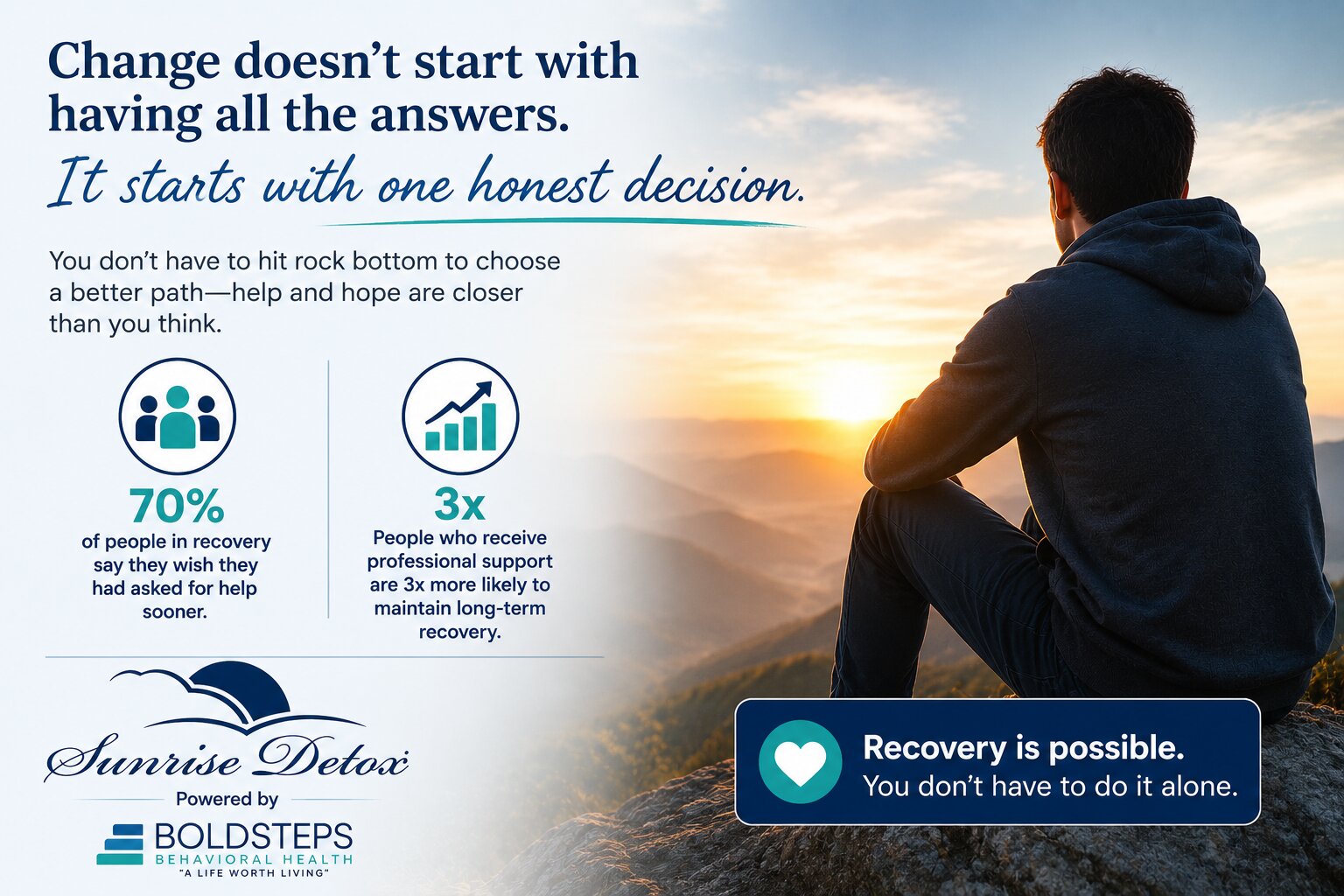
No. Waiting for a crisis is not a requirement for recovery. Many people seek support because they recognize a pattern they want to change before more serious consequences occur.
What if I don’t know whether my substance use is serious enough?
If you’re spending time questioning it, that concern is worth paying attention to. You do not need a specific level of severity to have an honest conversation about your situation.
Can recovery really happen after years of struggling?
Yes. People begin recovery at many different stages of life and after many years of substance use. Change often starts with a single decision to seek support.
What should I do if I’m not ready to commit to treatment?
You don’t have to make every decision today. Sometimes the first step is simply learning more, asking questions, or speaking with someone who understands what you’re experiencing.
Take the First Step
Call 856-276-0873 or visit our cocaine detox services to learn more about our detox and cocaine services Philadelphia.