


The hardest part for me wasn’t the drinking again.
It was the silence afterward.
The way I stopped answering calls. The way I convinced myself I could fix it quietly before anyone noticed. The way shame made my apartment feel smaller every night.
After enough sober time, relapse doesn’t just hurt. It confuses you. You start questioning whether your recovery was ever real in the first place.
And when people search for a safe way to stop drinking without doing it alone, they’re usually not looking for a lecture. They’re looking for a way back without feeling like they destroyed everything.
That’s where support matters.
Not because you’re weak. Because addiction gets louder in isolation. A lot of people reconnect with recovery through alcohol detox services after realizing they can’t heal while hiding from everyone around them.
Relapse Usually Starts Long Before the First Drink
That’s something I wish more people understood.
Relapse often begins emotionally before it becomes physical.
You stop talking honestly.
You stop reaching out.
You stop letting people see how tired you actually are.
Then one stressful week turns into emotional exhaustion. And emotional exhaustion has a way of making old coping mechanisms look comforting again.
Especially after 90 days sober or more.
Because once you’ve built some recovery time, your brain starts bargaining differently:
- “You’re not as bad as before.”
- “You already know how to stop.”
- “You don’t need help this time.”
- “Just get through this quietly.”
That last thought becomes dangerous fast.
A lot of alumni don’t relapse because they stopped caring about sobriety. They relapse because they slowly disconnected from support while trying to appear okay.
And loneliness has a way of making alcohol feel like relief again.
The Nights Get Heavy Fast When You Detox Alone
People who’ve never gone through alcohol withdrawal often underestimate how intense it can become.
Not just physically. Emotionally too.
The shaking.
The sweating.
The panic.
The racing thoughts at 2am.
The exhaustion that somehow still won’t let you sleep.
And the worst part is how convincing your brain becomes during withdrawal.
You start negotiating with yourself constantly.
“Just one drink so I can sleep.”
“Just enough to stop the anxiety.”
“I’ll really quit tomorrow.”
That cycle can trap people for months or years.
One guy I knew described detoxing alone like this:
“It felt like being trapped in a house with someone screaming at me nonstop. Except the voice was my own brain.”
That’s the part people don’t see from the outside.
Withdrawal strips away emotional defenses. Fear gets louder. Shame gets louder. Hopelessness gets louder.
And when nobody else is around, those thoughts start sounding true.
Isolation Changes the Way You See Yourself
This is what relapse shame does.
It doesn’t just make you feel guilty. It changes your identity for a while.
You stop seeing yourself as someone in recovery and start seeing yourself as someone who failed recovery.
That shift matters.
Because once shame becomes your main inner voice, asking for help starts feeling humiliating instead of lifesaving.
You think:
“They’re going to be disappointed in me.”
“I already had my chance.”
“I should be able to handle this alone.”
But most people in long-term recovery understand relapse differently than that.
They know addiction adapts. Stress changes. Life changes. Pain resurfaces in unexpected ways.
Relapse doesn’t erase the growth that came before it.
It usually means something underneath still needed attention.
There’s a Difference Between Being Alone and Wanting Privacy
A lot of us confuse those two things.
Wanting privacy is human. Especially after relapse.
But isolation becomes dangerous when it turns into secrecy.
When you’re deleting messages.
Ignoring people who care.
Pretending everything is fine while quietly unraveling.
Alcohol thrives in secrecy because secrecy removes interruption.
Nobody can challenge the thoughts.
Nobody can ground you emotionally.
Nobody can help when panic spikes or withdrawal symptoms get scary.
That’s why support matters so much for people trying to quit drinking safely after relapse. Not because they’re incapable. Because withdrawal and shame together create an incredibly isolating mental space.
And isolation distorts reality.
Getting Help Again Can Feel Humbling — But Also Relieving
I remember the strange feeling of walking back into support after relapse.
Part of me expected judgment.
Instead, what I mostly felt was exhaustion leaving my body.
Like I didn’t have to keep pretending anymore.
That’s something people don’t talk about enough:
Recovery support can feel like relief long before it feels hopeful.
You don’t have to explain every emotion perfectly.
You don’t have to convince people you’re suffering enough.
You don’t have to perform strength every second of the day.
You can just admit:
“I’m not okay right now.”
That honesty changes things.
Because once people stop hiding, recovery becomes possible again.
Trying to White-Knuckle Sobriety Usually Creates More Fear
A lot of relapsed alumni try to “earn back” sobriety through suffering.
No support.
No vulnerability.
No asking for help.
Just pure willpower.
I understand the impulse. I really do.
There’s guilt after relapse that makes people feel like they need to punish themselves back into recovery.
But white-knuckling usually creates emotional instability, not healing.
Without support, many people become trapped in survival mode:
- Constant anxiety
- Hypervigilance
- Emotional numbness
- Sleep problems
- Intense cravings
- Isolation
And eventually the exhaustion catches up.
Real recovery tends to become more connected over time, not more isolated.
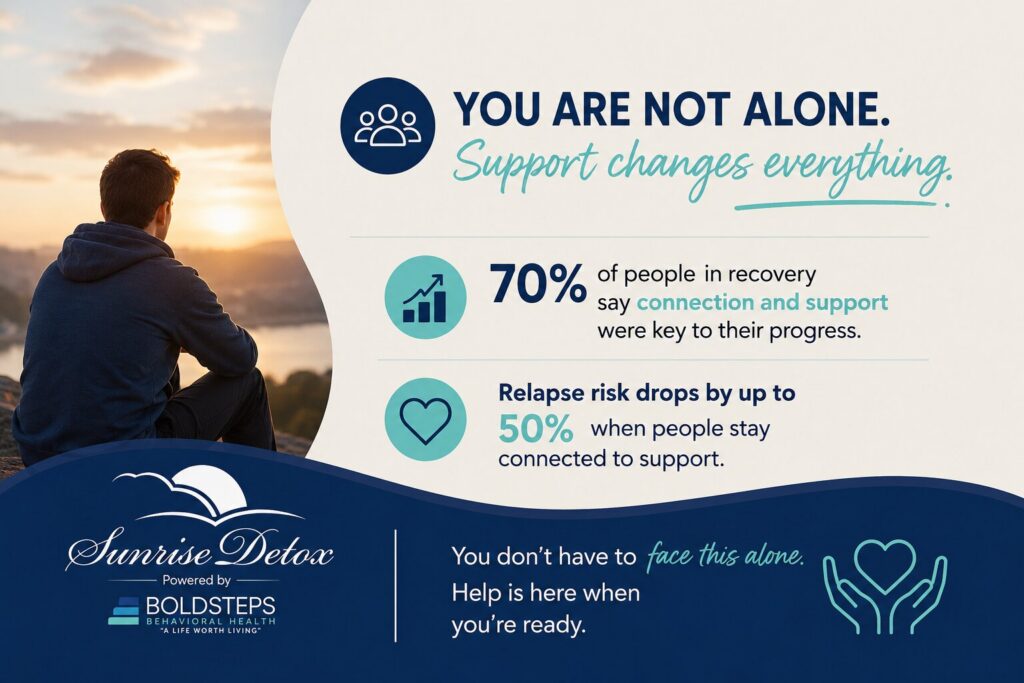
Safe Detox Isn’t Just About the Physical Symptoms
Most people think about safety in terms of seizures or medical emergencies.
And yes, alcohol withdrawal can absolutely become medically dangerous for some people.
But emotional safety matters too.
Feeling emotionally trapped and alone during withdrawal can push people toward impulsive decisions quickly.
Supportive detox environments help interrupt that spiral.
Not just medically, but psychologically.
You’re around people who understand what withdrawal actually feels like. People who know panic can peak and pass. People who know shame makes everything feel permanent even when it isn’t.
That atmosphere matters more than people realize.
Especially for alumni carrying relapse shame.
You Don’t Need to Hit a Catastrophic Bottom to Deserve Help
A lot of people wait too long because they compare themselves to worse stories.
“I still have my job.”
“My family doesn’t know yet.”
“It’s not as bad as last time.”
But suffering doesn’t have to become catastrophic before it deserves attention.
One of the healthiest things a person can do is interrupt the spiral early.
Before the DUI.
Before the medical emergency.
Before relationships collapse.
Before shame completely isolates them again.
That’s not weakness.
That’s experience finally turning into wisdom.
Recovery After Relapse Can Become More Honest
This surprised me.
I thought relapse meant I failed recovery.
Instead, eventually, it forced me into a more honest version of recovery than I had before.
I stopped pretending I was emotionally invincible.
I stopped hiding stress until it exploded.
I stopped treating vulnerability like weakness.
That changed the quality of my sobriety completely.
A lot of long-term alumni eventually realize this:
The goal isn’t becoming someone who never struggles again.
The goal is becoming someone who doesn’t disappear while struggling.
That difference can save your life.
The People Who Stay Sober Long-Term Usually Stay Connected
Not perfect.
Not fearless.
Not emotionally fixed forever.
Connected.
Connected to support.
Connected to honesty.
Connected to people who can tell when they’re slipping emotionally before substances fully take over again.
Because addiction grows best in darkness.
Connection interrupts it.
Even if reconnecting feels awkward at first.
Even if shame tells you not to reach out.
Even if part of you still thinks you should handle this privately.
Especially then.
FAQ: Safe Ways to Stop Drinking Without Doing It Alone
Is it dangerous to stop drinking suddenly on your own?
For some people, yes. Alcohol withdrawal can become medically serious depending on how long and heavily someone has been drinking. Symptoms can range from anxiety and insomnia to seizures or severe complications in certain cases.
Why is relapse after sobriety so emotionally painful?
Many alumni feel intense shame after relapse because they believe they “should know better” after recovery experience. That shame can create isolation, which often makes relapse worse emotionally and physically.
What does safe alcohol detox support usually involve?
Support may include medical monitoring, emotional support, withdrawal symptom management, hydration, rest, and structured care that helps stabilize both the body and mind during early recovery.
Why do people isolate after relapse?
Shame often convinces people they’ve disappointed everyone around them. Many begin hiding their struggles because they fear judgment or feel embarrassed needing help again.
Can someone still recover after relapsing?
Absolutely. Many people return to lasting recovery after relapse. Relapse does not erase previous growth, healing, or progress. It often highlights areas where more support or honesty is needed.
Is asking for help after relapse a sign of weakness?
No. For many alumni, asking for help again becomes one of the strongest and most honest decisions they make. Recovery usually becomes more connected and emotionally open over time—not more isolated.
Why does support matter during alcohol withdrawal?
Withdrawal can affect mood, thinking, sleep, anxiety levels, and physical health all at once. Support helps reduce risk, provides emotional grounding, and creates stability during a highly vulnerable time.
Maybe this isn’t starting over from scratch.
Maybe this is just the moment you stop trying to survive recovery entirely alone.
Because people don’t stay sober long-term by never struggling again. They stay sober by learning how to let people in before the struggle completely takes over.
And if drinking has started pulling you back into secrecy, fear, or emotional exhaustion, you deserve support now—not only after things get worse.
Call (856) 276-0873 or visit our alcohol detox services to learn more about treatment and support options that can help you move forward safely.