


If you suspect someone you love is using heroin, pay attention to that concern. Heroin use often causes noticeable physical, behavioral, and emotional changes. Some signs appear gradually, while others can develop quickly as dependence grows. Recognizing these changes early can create an opportunity to seek help before addiction becomes even more dangerous. If dependence has already developed, stopping heroin can also cause intense withdrawal symptoms and powerful cravings. A professional heroin detox program can provide medical supervision, symptom management, and support throughout withdrawal. Detox can also create a safer transition into ongoing addiction treatment and long-term recovery.
Physical signs to watch for
- Track marks or bruising, especially on arms
- Constricted (“pinpoint”) pupils
- Drowsiness or “nodding off” at odd times
- Slurred speech
- Sudden weight loss
- Flu-like symptoms between uses (a sign of early withdrawal)
- Wearing long sleeves regardless of weather, to hide marks
Behavioral and social warning signs
- Withdrawing from family, friends, and activities they used to care about
- Financial problems or unexplained missing money/valuables
- Secretive behavior, especially around phone use or time away
- Mood swings that don’t match the situation
- Declining performance at work or school
- New social circles, especially a sudden shift in friend group
Long-term effects
Extended heroin use damages the body significantly — collapsed veins, liver and kidney disease, heart infections, and respiratory problems from long-term suppression of breathing. It also changes brain chemistry in ways that make quitting without support genuinely difficult, not just a matter of willpower.
Withdrawal and overdose risk
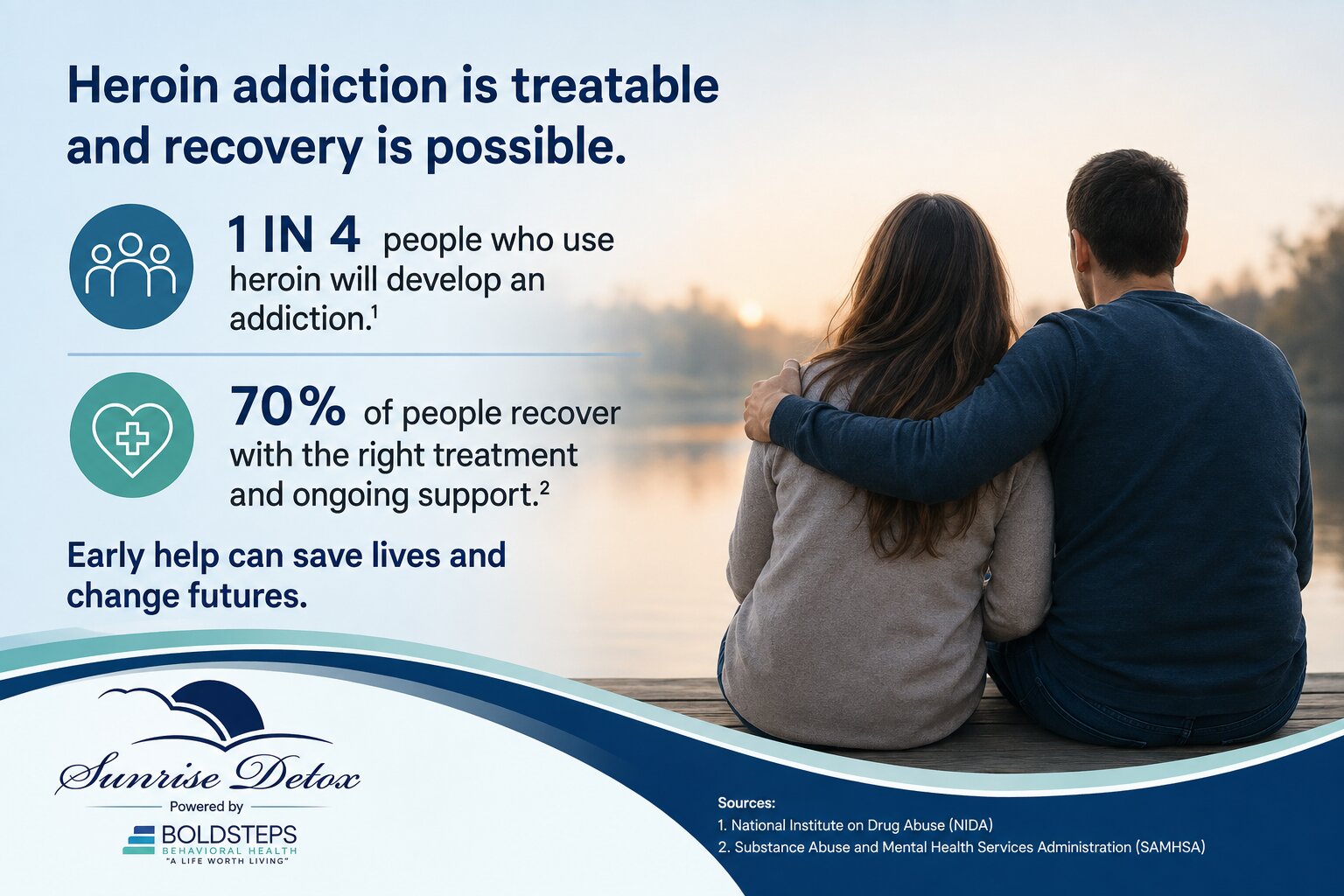
Heroin withdrawal isn’t typically life-threatening the way alcohol or benzo withdrawal can be, but it’s severe — intense flu-like symptoms, vomiting, muscle pain, and powerful cravings that often drive people back to use just to feel normal again. Overdose risk is a serious, immediate danger, especially now that street heroin is frequently mixed with fentanyl without the user’s knowledge.
Co-occurring mental health conditions
Heroin use very often overlaps with depression, anxiety, or unresolved trauma. Treating the addiction without addressing what’s underneath it rarely holds long-term, which is why co-occurring disorder treatment matters as much as the detox itself.
What to do if you recognize these signs
You don’t have to confront them alone or have the perfect words ready. Start by reaching out to our team for families — we can help you understand what intervention actually looks like and how to approach the conversation without pushing them further away. If they’re ready for medical heroin detox, the physical withdrawal can be managed safely and far more comfortably than trying to do it at home.
Call Sunrise Detox today at (856) 276-0873 to speak with a caring admissions specialist and take the first step toward hope, healing, and lasting recovery.