


If your child looks panicked, shaky, or suddenly not like themselves, it can feel like something is spiraling fast.
Most parents don’t think, this could be withdrawal. They think, my child is falling apart.
That fear is real. But what you’re seeing may not mean what it looks like on the surface.
If you’re trying to understand what’s happening and what actually helps, this page on benzodiazepine detox support can walk you through what safe, structured care looks like.
It Can Look Like Anxiety—But Feel Much More Intense
What your child is experiencing might resemble anxiety—but turned up far beyond what feels manageable.
You might notice:
- Hands shaking or body trembling
- Sudden panic that comes out of nowhere
- Racing thoughts that won’t slow down
- Restlessness, pacing, or agitation
- Trouble sleeping—or complete insomnia
And the hardest part?
It often comes on quickly. Sometimes after something as simple as a missed dose.
That’s when parents start to feel like they’re watching something escalate without understanding why.
Why Missing a Dose Can Trigger Such a Strong Reaction
Benzodiazepines work by calming the nervous system. Over time, the brain adjusts to that support.
It starts to rely on it.
So when the medication isn’t there—whether skipped, reduced, or stopped—the brain doesn’t immediately know how to regulate itself again.
Instead, it reacts.
Not gradually. Not gently.
It’s more like pulling the brakes out of a moving car and expecting it to coast to a stop.
That’s why your child might suddenly feel:
- Overstimulated
- On edge for no clear reason
- Emotionally overwhelmed
These reactions are often tied to xanax withdrawal symptoms, even if your child originally started the medication for anxiety.
This Isn’t a Behavioral Issue—It’s a Physical One
This is one of the most important shifts for parents to understand.
Your child is not choosing this reaction.
They are not being dramatic or out of control.
Their brain is trying to recalibrate without the chemical support it got used to.
That doesn’t make the situation less serious—it makes it more urgent to handle it correctly.
Because trying to “reason” someone out of withdrawal symptoms is like trying to talk someone out of a fever.
It’s not about mindset.
It’s about physiology.
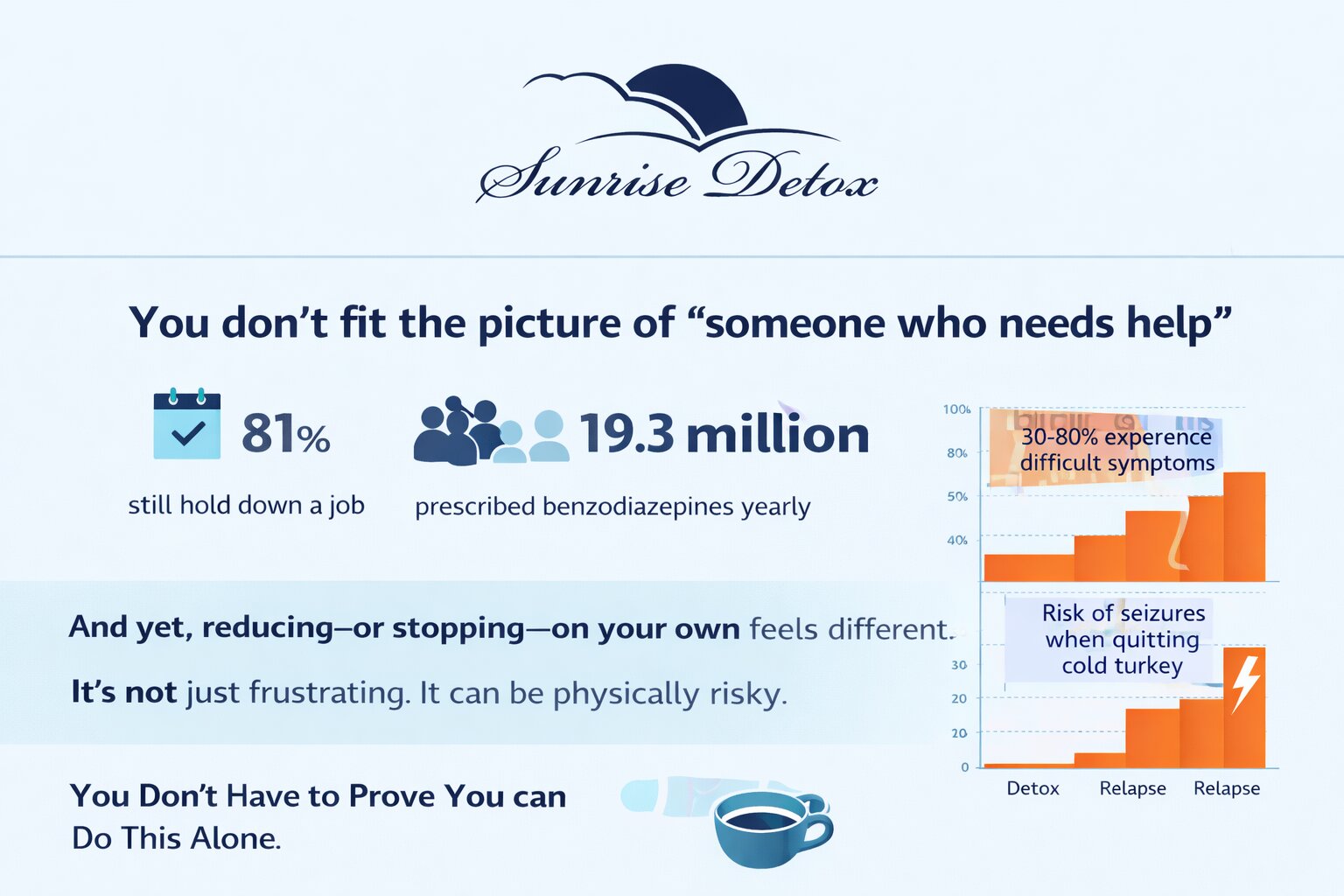
Why It Gets Confusing So Quickly
Many young adults are prescribed medications like Xanax for legitimate reasons—panic attacks, anxiety, sleep issues.
So when withdrawal begins, it doesn’t look like something new.
It looks like the original problem coming back… but worse.
That’s where parents get stuck:
- Is this anxiety returning?
- Is the medication no longer working?
- Is something else going on entirely?
In reality, it can be a mix.
When mental health and substance dependence overlap, the symptoms blur together. And without clear guidance, it’s incredibly hard to tell what’s what.
What Detox Actually Looks Like (And What It Doesn’t)
There’s a common fear that detox is harsh or overwhelming.
For benzodiazepines, it shouldn’t be.
Done correctly, detox is slow, monitored, and focused on safety.
It often includes:
- Gradual adjustments instead of sudden stopping
- Medical monitoring to track symptoms closely
- Support for anxiety, sleep, and physical discomfort
- A calm environment where your child isn’t trying to “push through” alone
It’s not about forcing change.
It’s about stabilizing the system.
For many parents, this is the first time they see their child’s body start to settle instead of escalate.
What This Experience Feels Like for Parents
Most parents don’t say this out loud, but it shows up in every conversation:
- I should’ve seen this sooner.
- Did I make the wrong decision letting them take this medication?
- What if I make the wrong move now too?
That weight is heavy.
But this situation doesn’t come from one mistake or one decision.
Benzodiazepine dependence often develops quietly. Gradually. Without clear warning signs until something shifts.
This isn’t about blame.
It’s about responding with the right kind of support now.
What Actually Helps Your Child Stabilize
Stability doesn’t come from pushing harder.
It comes from reducing chaos—physically and emotionally.
That usually means:
- A structured environment
- Consistent monitoring
- Gradual, medically guided changes
- Emotional support alongside physical care
It also means removing the pressure to “snap out of it.”
Because they can’t.
Not yet.
And that’s okay.
You’re Not Alone in This—Even If It Feels Like It
There’s a specific kind of fear that comes with watching your child struggle in a way you don’t fully understand.
It’s isolating. It’s overwhelming. It’s exhausting.
But this situation is more common than most families realize.
And more importantly—it’s treatable.
Not overnight. Not perfectly. But with the right approach, things can stabilize.
That possibility matters.
FAQs Parents Ask in This Moment
Why does my child seem worse after missing a dose?
Because their brain has adapted to the medication. Without it, the nervous system becomes overstimulated, leading to intense anxiety and physical symptoms.
Is this dangerous, or just uncomfortable?
It can be both. Benzodiazepine withdrawal should always be taken seriously and handled with medical guidance to avoid complications.
Should they just stop taking it completely?
Stopping suddenly can make symptoms worse. Gradual, supervised changes are usually safer and more effective.
How long do these symptoms last?
It varies. Some symptoms improve quickly, while others take longer. What matters most is having support during the process.
Is this the same as their original anxiety?
Not exactly. It can feel similar, but withdrawal often intensifies symptoms and adds physical effects that weren’t there before.
What should I do right now as a parent?
Focus on safety and support. Avoid trying to fix everything at once. Getting guidance from a team experienced in this kind of situation can help you make clearer decisions.
A Steadier Path Forward Exists
Right now, it might feel like everything is urgent and unclear at the same time.
That’s what crisis feels like.
But there is a difference between reacting out of fear and moving forward with support.
Your child is not broken.
And you are not too late.
If you’re trying to understand what to do next, call 856-276-0873 or explore options for treatment in Cherry Hill to learn more about our Benzodiazepine Detox services in Philadelphia.