


You did the hard part. You stopped drinking.
So why does it still feel like something’s missing?
If you’ve been sober for a while and feel flat, disconnected, or quietly struggling—you’re not broken. You’re just in a part of recovery that nobody really prepares you for.
And yeah… it can feel lonelier than day one.
Early on, everything is loud. Urgent. Supported.
Later, it gets quiet—and that quiet can mess with you in ways you didn’t expect.
Within the first few weeks of quitting, many people search for something like safe ways to stop drinking when the shakes and panic hit. That phase is intense and physical. But what comes after? That’s where things get complicated in a different way.
If you’re here now, this is the part that matters.
And if you need to understand the medical side of early recovery again—or support someone who does—you can explore alcohol withdrawal help to ground yourself in what your body may still be processing.
The Part No One Prepares You For After the Crisis Is Over
Detox is clear-cut. You’re either in it or you’re through it.
But long-term sobriety doesn’t come with the same structure. There’s no finish line moment where everything suddenly clicks into place.
Instead, it often feels like this:
- You’re functioning
- You’re not drinking
- But something feels… off
It’s subtle enough that you might ignore it.
Heavy enough that you can’t fully relax.
This is the gray space of recovery. And it catches people off guard.
You Might Look Fine—But Feel Disconnected Inside
From the outside, your life might look stable.
You’re showing up. Handling responsibilities. Maybe even doing better than before.
But internally, it can feel like:
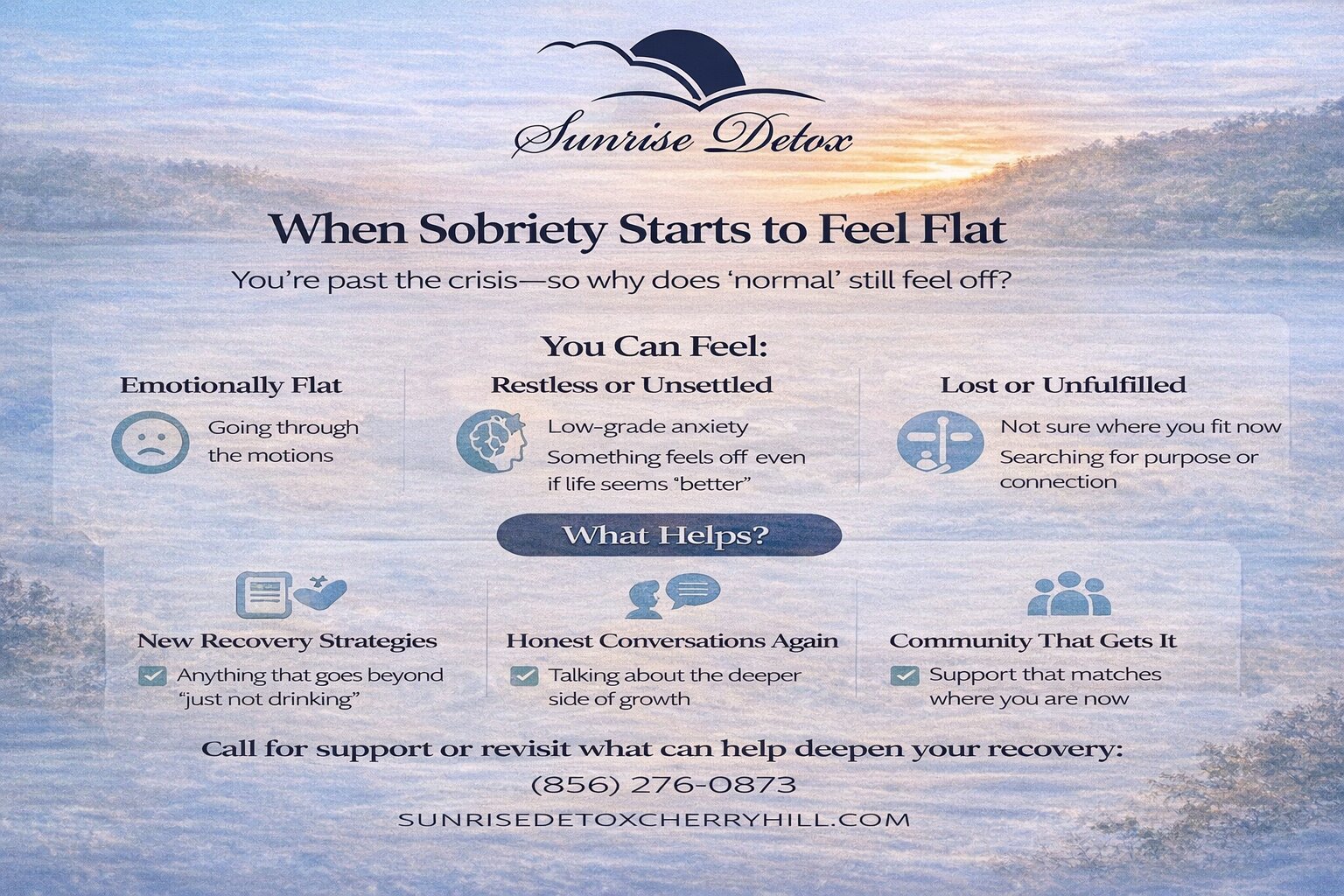
- You’re going through the motions
- You’re emotionally flat or muted
- You don’t feel as connected to people or things you used to
This isn’t uncommon.
Alcohol didn’t just affect your body—it shaped how you processed emotions, stress, and connection. Without it, your system has to relearn everything.
That doesn’t happen overnight.
The Emotional Aftermath Can Be Subtle—but Heavy
Most people expect cravings. They expect triggers.
What they don’t expect is the quiet weight that shows up later.
Things like:
- Low-grade anxiety that lingers without a clear reason
- Moments of restlessness that don’t go away with distraction
- A sense that something is missing, even if life is objectively “better”
This is where a lot of people start questioning themselves.
“Why am I still struggling?”
“Shouldn’t I feel more grateful?”
That internal pressure can be harder than the early days.
The Pressure to Be “Good Now” Can Keep You Stuck
Once you’ve been sober for a while, people assume you’re okay.
And you might assume that too.
So when things feel off, you don’t talk about it.
You downplay it.
You push through it.
You convince yourself it’s just a phase.
But staying silent can slowly create distance between you and your recovery.
Not dramatic distance. Just enough to feel disconnected from it.
Why Some People Drift—Even Without Wanting to Relapse
This part matters.
Drift doesn’t always look like relapse.
It often looks like disengagement.
- You stop doing the things that helped early on
- You feel less connected to your “why”
- You start coasting instead of actively living
And over time, that can feel just as heavy.
Not because you want to go back—but because you don’t feel fully present where you are.
Sobriety without connection can feel like maintenance.
And maintenance alone doesn’t always feel like a life.
A Quiet Truth: It’s Okay to Need Support Again
There’s a belief that once you’ve made it past detox, you shouldn’t need as much help.
That belief keeps people stuck.
Recovery isn’t linear. It’s layered.
Different stages need different kinds of support.
Coming back for support—whether that’s structured care, conversations, or medical check-ins—isn’t regression.
It’s awareness.
Some people revisit support because:
- They’re still dealing with physical or neurological aftereffects
- Their mental health needs more attention
- They’ve outgrown their current recovery routine
And sometimes, it’s simply because they’re tired of feeling disconnected.
That’s a valid reason.
Real Stories Don’t Always Look Like Straight Lines
A lot of long-term alumni go through phases like this.
Not rock bottom. Not relapse. Just… stuck.
And the turning point is rarely dramatic.
It’s usually something small:
- Reaching out to someone they trust
- Admitting they’re not okay
- Trying something new instead of repeating what’s not working
That shift doesn’t erase the discomfort overnight.
But it starts to bring movement back.
And movement matters more than perfection.
You’re Allowed to Want More Than Just “Not Drinking”
This is something people don’t say enough.
Sobriety is not the end goal—it’s the starting point.
If your life feels flat, disconnected, or incomplete, that doesn’t mean sobriety failed you.
It means there’s more work to do beyond just removing alcohol.
Things like:
- Rebuilding identity
- Reconnecting with purpose
- Learning how to feel and respond without shutting down
That work is slower. Deeper. Less visible.
But it’s where life actually starts to feel like yours again.
FAQ: Life After Detox and Long-Term Sobriety
Why do I feel worse emotionally now than I did early in sobriety?
Early recovery often comes with urgency, structure, and support. Later on, things quiet down—and that’s when unresolved emotions or deeper patterns can surface.
Is it normal to feel disconnected after being sober for a long time?
Yes. Many long-term alumni experience phases of emotional flatness or disconnection. It doesn’t mean something is wrong—it means something needs attention.
Does feeling this way mean I’m at risk of relapse?
Not necessarily. But disconnection can increase vulnerability over time if it’s ignored. Addressing it early helps you stay grounded.
Should I go back to treatment even if I haven’t relapsed?
You don’t have to wait for things to get worse. Support at any stage—especially when you feel stuck—can help you reconnect and stabilize.
Could this still be related to withdrawal or physical changes?
In some cases, yes. The body and brain can take time to fully regulate, especially after long-term alcohol use. Revisiting care or guidance can help clarify what’s going on.
What actually helps when I feel like this?
Small, honest steps:
- Talking about it instead of hiding it
- Adding structure back into your routine
- Getting support that fits where you are now
You don’t need to overhaul your life. You just need to re-engage with it.
You Didn’t Come This Far to Feel Stuck
Let’s be real.
You’ve already done something incredibly difficult.
You’ve built time. Space. Distance from something that once controlled you.
If it doesn’t feel the way you thought it would—that’s not failure.
That’s a signal.
A quiet one. But an important one.
You’re still allowed to adjust.
You’re still allowed to need help.
You’re still allowed to want more.
If something in this resonates, you don’t have to figure it out alone.
Call (856) 276-0873 or visit our alcohol detox services to learn more about our alcohol detox services in Philadelphia.