


When people stop using cocaine, one of the first questions they ask is:
“How long will this last?”
It’s an understandable concern. Cocaine can create an intense cycle of euphoria followed by a crash, and many people worry that stopping will bring unbearable withdrawal symptoms or dangerous physical complications.
The reality is a little different.
Unlike withdrawal from alcohol or benzodiazepines, cocaine withdrawal is generally not considered medically life-threatening. However, that does not mean it is easy—or safe to manage alone. The greatest risks are often psychological. Severe depression, exhaustion, loss of motivation, intense cravings, and suicidal thoughts can occur during the early stages of withdrawal, making relapse much more likely without support.
At Sunrise Detox Cherry Hill, we provide medically supervised care for individuals beginning recovery from stimulant use. Our cocaine detox program focuses on helping people safely navigate withdrawal while preparing them for the next stage of treatment, where long-term recovery begins.
Understanding the withdrawal timeline can help you know what to expect and why professional support can make a meaningful difference.
What Cocaine Withdrawal Is
Cocaine is a powerful stimulant that increases dopamine levels in the brain, creating intense feelings of energy, confidence, alertness, and pleasure.
With repeated use, however, the brain begins relying on cocaine to produce these effects.
Over time:
- Natural dopamine production becomes less effective.
- Everyday activities feel less rewarding.
- Larger or more frequent doses may be needed to achieve the same effect.
- The emotional lows after using become more pronounced.
When cocaine use stops, the brain suddenly has much lower dopamine activity than it has become accustomed to. This creates withdrawal symptoms that are primarily emotional and psychological rather than physically dangerous.
The severity of withdrawal depends on several factors, including:
- How long cocaine has been used
- Frequency of use
- Typical dosage
- Route of administration (snorting, smoking, injecting)
- Use of alcohol or other substances
- Mental health conditions such as anxiety or depression
- Overall physical health
Every recovery experience is different, but most people move through similar phases.
The Cocaine Withdrawal Timeline
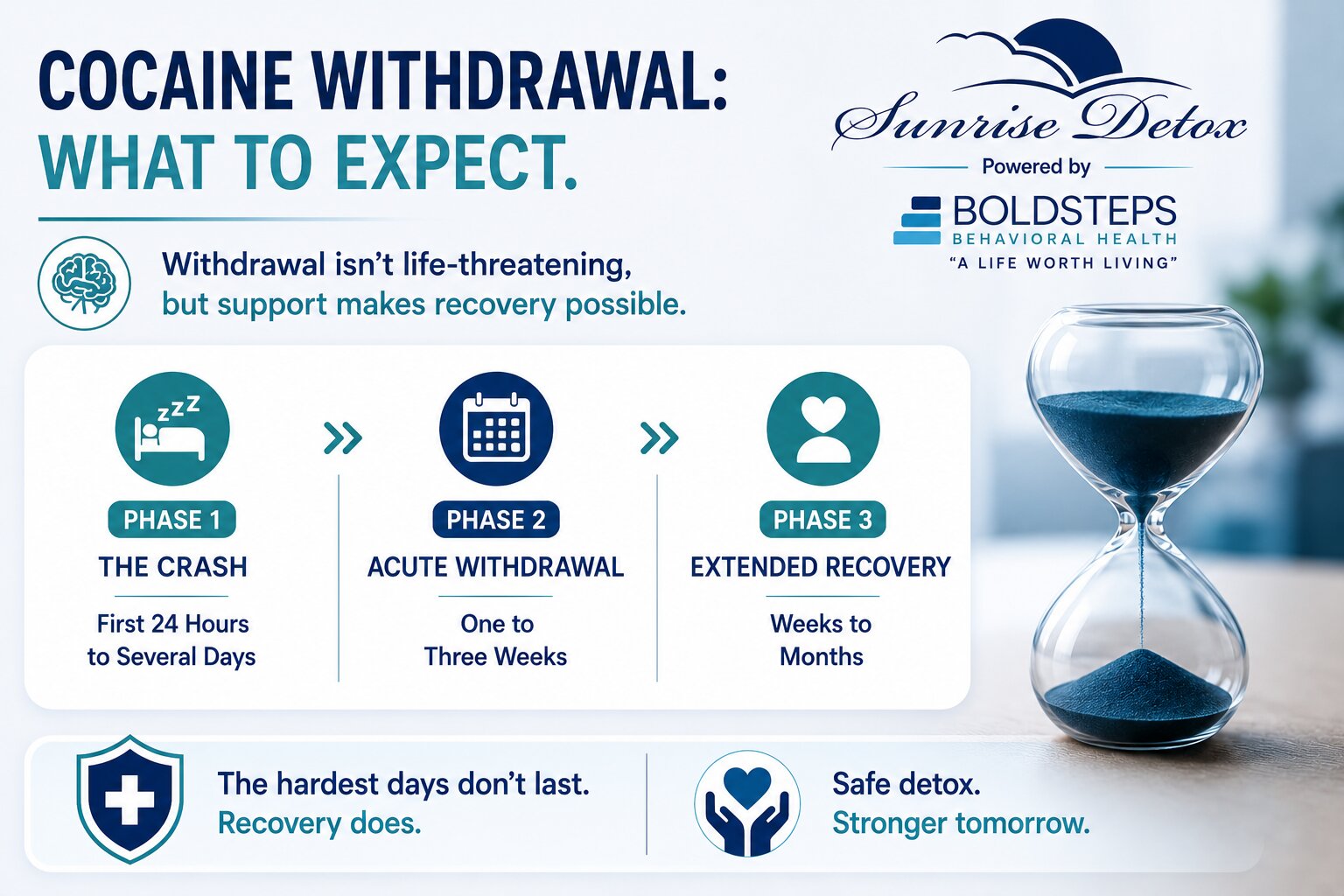
Although every person heals at a different pace, cocaine withdrawal generally follows three stages.
Phase One: The Crash (First 24 Hours to Several Days)
The first stage begins within hours after the last use.
Many people describe this period as feeling like all of their energy suddenly disappears.
Common symptoms include:
- Extreme fatigue
- Long periods of sleep
- Depression
- Anxiety
- Irritability
- Increased appetite
- Intense cravings
- Difficulty concentrating
- Low motivation
This stage is often the most emotionally difficult because dopamine levels have dropped dramatically.
Many people feel unable to experience pleasure during this period.
Phase Two: Acute Withdrawal (One to Three Weeks)
As the body begins recovering, some physical symptoms improve.
However, emotional symptoms frequently continue.
During this phase, people may experience:
- Persistent depression
- Mood swings
- Fatigue
- Restlessness
- Trouble concentrating
- Sleep disturbances
- Ongoing cravings
- Reduced enjoyment of normal activities
Although symptoms gradually become less intense, they may fluctuate from day to day.
Phase Three: Extended Recovery (Weeks to Months)
Some individuals experience lingering psychological symptoms after the acute phase has resolved.
This is sometimes referred to as post-acute withdrawal syndrome (PAWS).
Symptoms may include:
- Intermittent cravings
- Low motivation
- Difficulty managing stress
- Mild depression
- Trouble experiencing pleasure
- Occasional sleep problems
These symptoms typically become less frequent over time, especially with ongoing treatment and recovery support.
Symptoms by Phase
While each person’s experience is unique, cocaine withdrawal symptoms tend to follow predictable patterns.
During the Crash
The earliest symptoms often include:
- Severe exhaustion
- Sleeping much more than usual
- Depression
- Increased appetite
- Anxiety
- Strong cravings
- Emotional numbness
Many people report feeling emotionally “flat” during this stage.
During Acute Withdrawal
As recovery continues, symptoms often shift toward:
- Low energy
- Difficulty focusing
- Irritability
- Mood instability
- Sleep disruption
- Continued cravings
Although improvement usually begins during this phase, motivation often remains low.
During Extended Recovery
The later phase typically involves:
- Occasional cravings triggered by stress or reminders of cocaine use
- Difficulty finding enjoyment in everyday activities
- Mild anxiety or depression
- Emotional ups and downs while the brain continues healing
Many people notice steady improvement as healthy routines and treatment continue.
Why the Psychological Crash Is the Danger Point
The first few days after stopping cocaine are often the most vulnerable period—not because of physical withdrawal complications, but because of the emotional impact.
Cocaine produces a rapid increase in dopamine.
Once use stops, dopamine levels fall sharply before the brain has time to restore its natural balance.
This can leave people feeling:
- Completely exhausted
- Emotionally empty
- Hopeless
- Unmotivated
- Unable to experience pleasure
- Desperate to feel “normal” again
For some individuals, these feelings become so overwhelming that returning to cocaine seems like the only way to escape them.
Others may develop severe depression or suicidal thoughts during this period.
While cocaine withdrawal is generally not medically dangerous in the way alcohol or benzodiazepine withdrawal can be, the psychological risks should never be minimized.
Anyone experiencing suicidal thoughts or severe depression should receive immediate professional evaluation and support.
Why Relapse Often Happens During Withdrawal
Many relapses occur not because people lack motivation to recover, but because withdrawal temporarily convinces them recovery is impossible.
The combination of:
- Depression
- Fatigue
- Cravings
- Poor concentration
- Emotional distress
can make returning to cocaine feel like immediate relief.
Unfortunately, that relief is temporary.
Each relapse often restarts the withdrawal cycle and can make long-term recovery even more difficult.
Professional support during this period helps many individuals remain focused on recovery while symptoms gradually improve.
Why Structured Support Prevents Relapse
Detox provides more than simply stopping cocaine use.
It creates a safe environment where individuals can move through withdrawal with medical oversight, emotional support, and preparation for ongoing treatment.
At Sunrise Detox Cherry Hill, care begins with a comprehensive assessment to evaluate physical health, mental health, substance use history, and any co-occurring conditions.
Throughout withdrawal, healthcare professionals monitor:
- Mood changes
- Depression
- Anxiety
- Sleep patterns
- Cravings
- Overall safety
This is especially important during the crash phase, when emotional symptoms are often at their most severe.
Supportive care may also include:
- Hydration and nutritional support
- Sleep management
- Emotional support
- Mental health evaluation
- Coordination of continuing treatment
Before discharge, individuals receive guidance on the next stage of recovery, which may include:
- Residential treatment
- Partial hospitalization (PHP)
- Intensive outpatient programs (IOP)
- Individual counseling
- Group therapy
- Dual diagnosis treatment when mental health conditions are present
Continuing care addresses the emotional and behavioral aspects of cocaine addiction that detox alone cannot resolve.
Recovery Continues After Withdrawal
Withdrawal is an important first milestone—but it is only the beginning.
As the brain gradually restores healthy dopamine function, many people notice improvements in:
- Mood
- Sleep
- Energy
- Concentration
- Emotional stability
These improvements often occur gradually rather than all at once.
Long-term recovery becomes much more sustainable when withdrawal is followed by therapy, healthy routines, relapse prevention strategies, and continued professional support.
With time and appropriate treatment, many people regain their ability to enjoy daily life without relying on cocaine.
Frequently Asked Questions
How long does cocaine withdrawal last?
The initial crash often begins within hours after the last use and may last several days. Acute withdrawal symptoms commonly improve over one to three weeks, while cravings and occasional mood changes may continue for weeks or months as the brain continues healing.
Is cocaine withdrawal dangerous?
Cocaine withdrawal is generally not medically dangerous in the same way alcohol or benzodiazepine withdrawal can be. However, severe depression, suicidal thoughts, and intense cravings can occur, making professional support important for safety and relapse prevention.
What is the worst phase of cocaine withdrawal?
For many people, the crash phase during the first several days is the most difficult. This period often involves extreme fatigue, depression, emotional numbness, and powerful cravings, which increase the risk of relapse.
Why do cravings continue after withdrawal?
Even after the body has adjusted to the absence of cocaine, the brain continues recovering. Stress, certain environments, or reminders of past cocaine use can trigger cravings, which is why ongoing treatment and relapse prevention are important.
Does detox treat cocaine addiction?
No. Detox helps individuals safely move through the withdrawal process, but lasting recovery usually requires continued treatment, counseling, and support to address the underlying behavioral and psychological aspects of addiction.
Final Thoughts
The question isn’t only how long cocaine withdrawal lasts—it’s how to get through it safely and successfully.
While the physical symptoms often improve within a few weeks, the emotional challenges during the crash phase can make recovery especially difficult without support. Professional care helps reduce the risk of relapse while preparing individuals for long-term treatment and recovery.
At Sunrise Detox Cherry Hill, we provide compassionate, medically supervised care for people beginning recovery from cocaine and other stimulant substances. If you or someone you love is ready to take the first step, call Sunrise Detox Cherry Hill at 856.276.0873 to learn more about your treatment options.