


For many people preparing to stop opioids, one question comes up early in the process:
“Can medication make withdrawal easier?”
The answer is yes—but it’s important to understand that different medications serve different purposes.
One medication that is frequently used during withdrawal is clonidine. Although it was originally developed to treat high blood pressure, it has become an important tool in managing certain opioid withdrawal symptoms. At the same time, clonidine is not a cure for opioid dependence, and it does not replace comprehensive addiction treatment.
Understanding what clonidine can—and cannot—do helps people make informed decisions about treatment.
At Sunrise Detox Cherry Hill, medication-assisted withdrawal is individualized based on each person’s medical history, opioid use, and overall health. As part of our medically supervised opioid detox program, medications such as clonidine may be used alongside medical monitoring and supportive care to help make withdrawal safer and more manageable.
What Clonidine Is
Clonidine is a prescription medication known as an alpha-2 adrenergic agonist.
It was originally approved to treat high blood pressure because it reduces activity within the sympathetic nervous system—the body’s “fight-or-flight” response.
Over time, healthcare providers discovered that this same effect could also help relieve many of the physical symptoms associated with opioid withdrawal.
Today, clonidine is commonly used in hospitals, detox centers, and other medical settings as part of withdrawal management for opioids.
Unlike medications such as buprenorphine or methadone, clonidine does not act on opioid receptors.
Instead, it works by calming the overactive nervous system that develops when opioid use suddenly stops.
Why Opioid Withdrawal Causes Physical Symptoms
Long-term opioid use changes how the brain and nervous system function.
While opioids are active in the body, many normal stress responses become suppressed.
When opioids are suddenly removed, the nervous system becomes temporarily overactive.
This increased activity contributes to many familiar withdrawal symptoms, including:
- Sweating
- Chills
- Anxiety
- Rapid heart rate
- Elevated blood pressure
- Restlessness
- Agitation
- Goosebumps
- Muscle tension
These symptoms are uncomfortable, but they also reflect the body’s attempt to readjust after opioid use ends.
How Clonidine Eases Opioid Withdrawal
Clonidine helps reduce withdrawal symptoms by calming the autonomic nervous system.
Rather than targeting opioids directly, it decreases the release of norepinephrine, a neurotransmitter involved in the body’s stress response.
As nervous system activity decreases, many physical withdrawal symptoms become less intense.
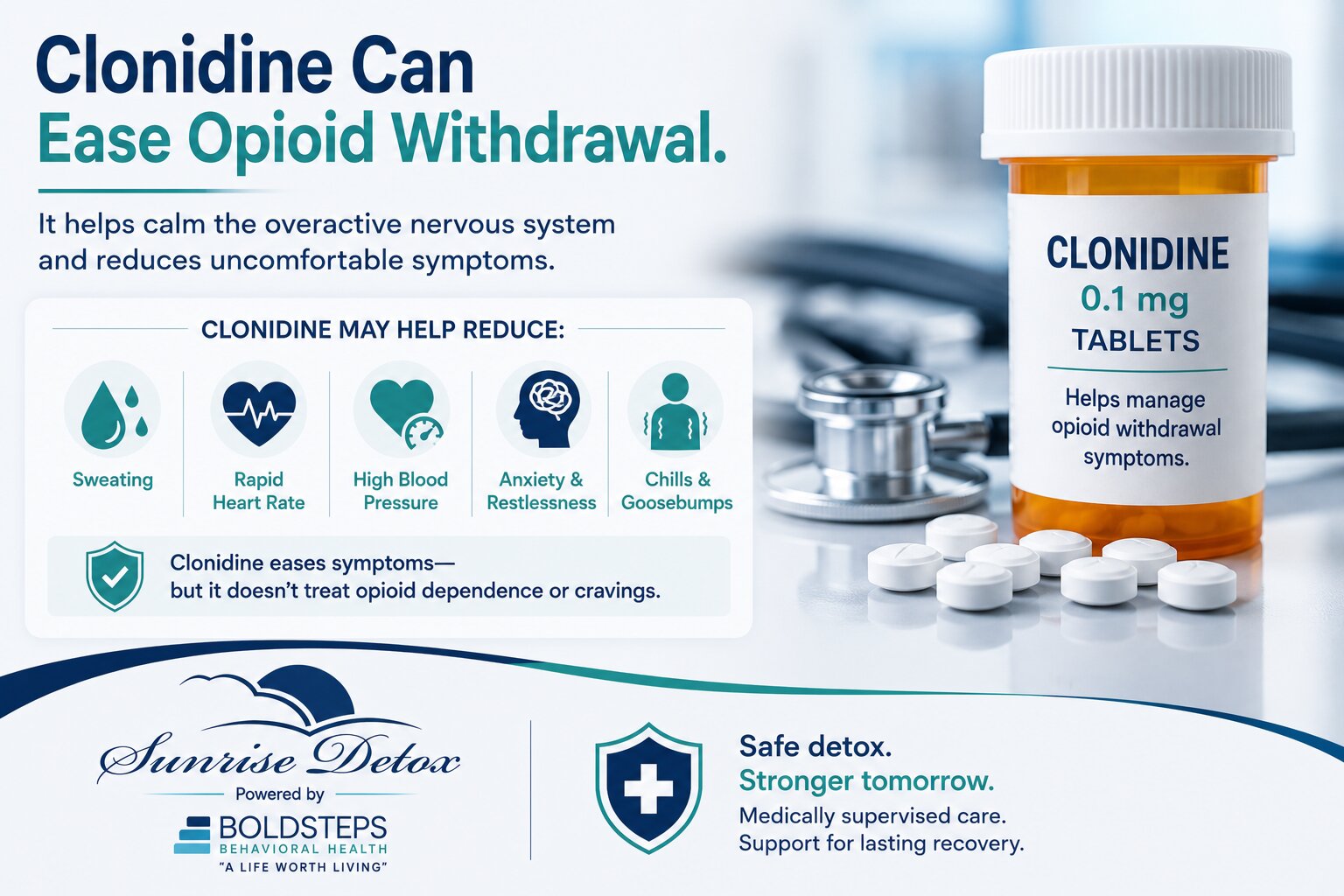
Healthcare providers may use clonidine to help relieve symptoms such as:
Sweating
Excessive sweating is common during opioid withdrawal.
Clonidine may reduce this symptom by calming the body’s heightened stress response.
Rapid Heart Rate
Many people experience a racing heart during withdrawal.
Clonidine can help slow the heart rate by reducing sympathetic nervous system activity.
High Blood Pressure
Withdrawal can temporarily increase blood pressure.
Because clonidine is also a blood pressure medication, it may help control these elevations when medically appropriate.
Anxiety and Restlessness
Although clonidine is not an anti-anxiety medication, reducing physical overactivation often helps people feel calmer and less agitated during withdrawal.
Chills and Goosebumps
Many of the uncomfortable “flu-like” sensations associated with withdrawal become more manageable as the autonomic nervous system settles.
For many patients, these improvements make the withdrawal process more tolerable, particularly during the first several days.
What Clonidine Cannot Do
While clonidine is helpful for certain symptoms, it has important limitations.
Understanding these limitations helps set realistic expectations.
It Does Not Stop Cravings
One of the biggest misconceptions is that clonidine eliminates the desire to use opioids.
It does not.
People may continue experiencing:
- Drug cravings
- Thoughts about using
- Emotional distress
- Psychological dependence
These challenges require additional treatment beyond symptom management.
It Does Not Act on Opioid Receptors
Unlike medications such as buprenorphine or methadone, clonidine does not bind to opioid receptors.
Because of this:
- It does not replace opioids.
- It does not reduce withdrawal by activating opioid receptors.
- It does not treat opioid use disorder itself.
Instead, it simply helps calm the body’s physical response to withdrawal.
It Is Not a Standalone Treatment
Withdrawal is only one part of recovery.
After detox, most individuals benefit from continued treatment that may include:
- Medication-assisted treatment (MAT)
- Individual counseling
- Group therapy
- Behavioral therapies
- Relapse prevention planning
- Ongoing medical follow-up
Managing withdrawal symptoms alone does not address the underlying causes of opioid dependence.
Clonidine vs. Buprenorphine in Opioid Withdrawal
People often hear about both clonidine and buprenorphine and wonder whether one is “better.”
In reality, they have different purposes.
Clonidine
Clonidine:
- Calms the nervous system
- Reduces certain physical withdrawal symptoms
- Lowers blood pressure
- Does not affect opioid receptors
- Does not treat cravings directly
Buprenorphine
Buprenorphine is a partial opioid agonist.
It:
- Binds to opioid receptors
- Reduces withdrawal symptoms
- Helps decrease cravings
- Can support both detox and long-term treatment of opioid use disorder
Because these medications work differently, healthcare providers choose them based on each individual’s medical needs, treatment goals, and clinical situation.
In some cases, clonidine may be used alongside other supportive medications as part of a comprehensive withdrawal plan.
Why Medical Monitoring Is Important
Although clonidine is widely used, it is still a prescription medication that requires careful medical supervision.
One of its most significant effects is lowering blood pressure.
If blood pressure drops too much, individuals may experience:
- Dizziness
- Lightheadedness
- Fainting
- Weakness
- Fatigue
For this reason, healthcare professionals regularly monitor:
- Blood pressure
- Heart rate
- Hydration
- Overall withdrawal symptoms
This monitoring helps ensure the medication is used safely and adjusted when necessary.
Clonidine should not be started or adjusted without guidance from a qualified healthcare provider, especially during opioid withdrawal.
Its Role in Supervised Medical Detox at Sunrise
Every person’s withdrawal experience is different.
Some individuals primarily struggle with anxiety and sweating.
Others experience severe muscle aches, insomnia, elevated blood pressure, or multiple symptoms at once.
At Sunrise Detox Cherry Hill, treatment begins with a comprehensive medical assessment that considers:
- Type of opioid used
- Duration of use
- Amount typically used
- Other medications
- Medical conditions
- Mental health history
- Risk of complications
Based on this evaluation, the medical team develops an individualized withdrawal plan.
If clonidine is clinically appropriate, it may be used as one component of supportive care alongside:
- Continuous medical monitoring
- Hydration and nutritional support
- Symptom management
- Mental health assessment
- Planning for continued treatment after detox
The goal is not simply to make withdrawal more comfortable—it is to help individuals begin recovery safely while preparing for the next stage of treatment.
Detox Is the First Step—Not the Last
Many people understandably focus on getting through withdrawal.
However, recovery continues long after the physical symptoms improve.
Successful long-term recovery often includes:
- Ongoing counseling
- Medication-assisted treatment when appropriate
- Behavioral therapy
- Peer support
- Relapse prevention planning
- Treatment for co-occurring mental health conditions
Detox creates an important foundation, but continuing care provides the tools needed to build lasting recovery.
Frequently Asked Questions
Does clonidine help with opioid withdrawal?
Yes. Clonidine can help reduce several physical withdrawal symptoms, including sweating, rapid heart rate, elevated blood pressure, restlessness, and anxiety caused by an overactive nervous system. It does not eliminate all withdrawal symptoms, but it can make the process more manageable when used under medical supervision.
Is clonidine enough on its own?
For many people, no. While clonidine can ease certain physical symptoms, it does not reduce opioid cravings or treat opioid use disorder itself. Most individuals benefit from comprehensive treatment that may include counseling, ongoing medical care, or medication-assisted treatment depending on their needs.
What are the side effects of clonidine?
Common side effects include drowsiness, dizziness, dry mouth, fatigue, and low blood pressure. Because clonidine can cause hypotension, it should only be used under the supervision of a qualified healthcare provider who can monitor blood pressure and overall health during withdrawal.
Can I take clonidine at home for opioid withdrawal?
Clonidine should only be used under the guidance of a healthcare professional. Because it can significantly lower blood pressure and because opioid withdrawal can involve complex medical and psychological needs, medical supervision is the safest approach.
Is clonidine the same as buprenorphine?
No. Clonidine and buprenorphine work in different ways. Clonidine calms the nervous system to relieve certain physical symptoms, while buprenorphine acts on opioid receptors to reduce both withdrawal symptoms and cravings. A healthcare provider can determine which approach is most appropriate based on an individual’s clinical situation.
Final Thoughts
Clonidine can play an important role in helping people manage the physical discomfort of opioid withdrawal, but it is only one part of a comprehensive treatment plan. By reducing symptoms such as sweating, rapid heart rate, and agitation, it can make the early stages of recovery more manageable—but it does not address cravings or the underlying causes of opioid use disorder.
At Sunrise Detox Cherry Hill, our experienced medical team develops personalized withdrawal plans based on each patient’s unique needs. Through medically supervised care, careful monitoring, and planning for continued treatment, we help individuals take the first step toward lasting recovery.
If you or someone you love is considering treatment for opioid dependence, call Sunrise Detox Cherry Hill at 856.276.0873 to learn more about your options for safe, medically supervised care.