


A few years ago, I met a man who arrived for an assessment wearing a suit that probably cost more than my first car.
He had just finished a conference call in the parking lot.
His assistant was texting him updates.
His company relied on him.
His family depended on him.
His colleagues respected him.
And yet the first thing he said when he sat down was this:
“I don’t know how much longer I can keep doing this.”
Not because he was failing.
Because he was succeeding.
And maintaining that success while living with opioid dependence had become exhausting.
As a clinician, I have learned that some of the people struggling the most are often the people nobody suspects.
They are the professionals who never miss deadlines.
The parents who still show up to every game.
The managers who continue delivering results.
The business owners who keep the company running.
From the outside, everything appears stable.
Behind the scenes, however, their entire day may revolve around avoiding withdrawal.
If you’ve recently started searching for answers and exploring options like opioid recovery support, there is a good chance you recognize part of your own story in these words.
The Problem Doesn’t Always Look Like Addiction
Most people carry a mental picture of what addiction looks like.
They imagine chaos.
Job loss.
Isolation.
Financial problems.
Legal consequences.
While those situations certainly happen, they are not the only reality.
Many high-functioning professionals continue succeeding long after opioid dependence develops.
In fact, their success can become part of the reason they delay getting help.
They tell themselves:
“I’m still working.”
“I’m still paying my bills.”
“I’m still taking care of my family.”
“I’m still functioning.”
And technically, all of those things may be true.
The problem is that functioning and thriving are not the same thing.
A person can be productive while quietly suffering every day.
The Morning Routine Nobody Talks About
When people think about opioid dependence, they often focus on the act of using.
What they rarely see is the time spent trying to avoid withdrawal.
For many successful professionals, the first thoughts of the day are not about work.
They are about how they feel physically.
Did the medication wear off?
How long until the next dose?
Will I make it through my morning meetings?
Will anyone notice if I’m uncomfortable?
The workday begins before they even leave the house.
Not because of their career.
Because of their body’s dependence on opioids.
I’ve had clients describe waking up already anxious because they knew withdrawal symptoms were beginning.
Before checking email.
Before making coffee.
Before speaking to anyone.
Their body was already demanding attention.
Withdrawal Often Starts Quietly
One reason opioid dependence can remain hidden for so long is that withdrawal doesn’t always begin dramatically.
At first, symptoms can be easy to explain away.
You feel restless.
You feel irritable.
You struggle to focus.
You notice unusual anxiety.
You sweat a little more than normal.
You yawn constantly.
You feel like you’re coming down with something.
Many people convince themselves it is stress.
Burnout.
Poor sleep.
A busy schedule.
And because these explanations sound reasonable, the cycle continues.
Weeks become months.
Months become years.
Eventually, the symptoms become harder to ignore.
The Life of Constant Calculation
One of the most exhausting parts of opioid dependence is the constant mental math.
People are rarely talking about it openly, but they’re thinking about it constantly.
How many pills are left?
Can I make it through this business trip?
What happens if my refill is delayed?
Will I have enough for the weekend?
Should I take another dose before this presentation?
Every decision becomes connected to avoiding withdrawal.
The dependence slowly moves from being part of life to organizing life.
Imagine trying to run a marathon while carrying an invisible backpack full of bricks.
Nobody else can see the weight.
But you feel it every second.
That is how many high-functioning professionals describe living with opioid dependence.
Why Withdrawal Feels So Frightening
There is a moment many people experience when they first try to stop.
They expect discomfort.
What they do not expect is how intensely their body reacts.
The symptoms can feel overwhelming.
Body aches.
Chills.
Sweating.
Restlessness.
Nausea.
Insomnia.
Anxiety.
Strong cravings.
Many people are shocked by how quickly withdrawal shifts from a physical experience to an emotional one.
They begin questioning themselves.
Why can’t I handle this?
Why is this so hard?
What’s wrong with me?
The answer is simple.
Nothing is wrong with you.
Your body has adapted to the presence of opioids.
Withdrawal is not a lack of willpower.
It is a physiological response.
That distinction matters because shame keeps people stuck far longer than symptoms do.
The Double Life Eventually Becomes Unsustainable
One of the themes I hear repeatedly from successful professionals is exhaustion.
Not just physical exhaustion.
Emotional exhaustion.
The exhaustion of pretending everything is fine.
The exhaustion of managing appearances.
The exhaustion of constantly monitoring symptoms while trying to perform at a high level.
There is the professional identity everyone sees.
Then there is the private reality nobody sees.
One version is leading meetings.
The other is quietly worrying about withdrawal.
One version is mentoring employees.
The other is calculating how much medication remains.
One version appears calm.
The other feels trapped.
Living between those two realities eventually wears people down.
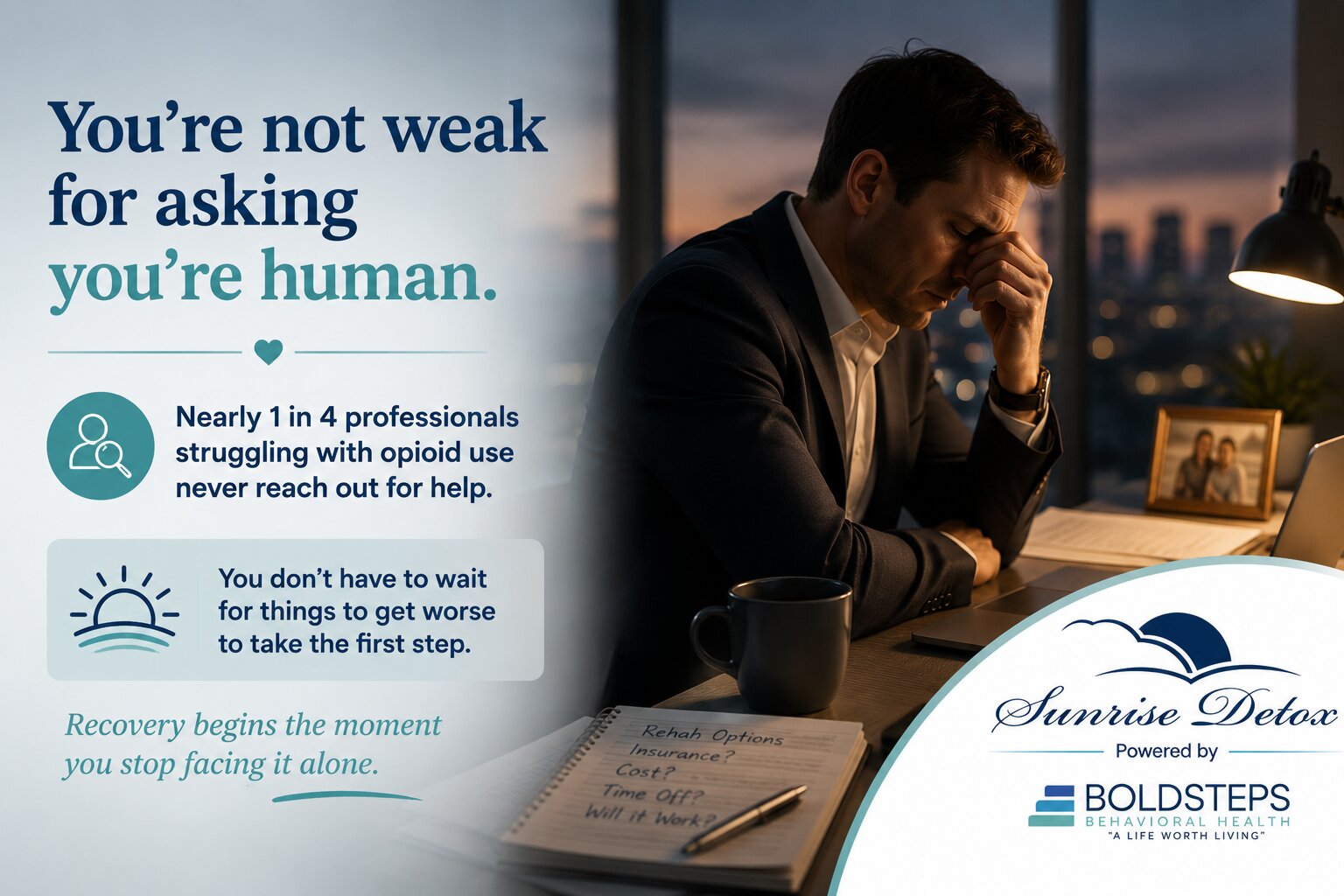
The Career You’re Protecting May Be the Reason to Act
Many professionals delay treatment because they are trying to protect their career.
This is understandable.
Responsibilities matter.
Income matters.
Reputation matters.
But there is an uncomfortable truth that deserves attention.
The longer opioid dependence continues, the greater the risk becomes.
Concentration can decline.
Decision-making can suffer.
Relationships can become strained.
Health can deteriorate.
Performance can slowly change in ways that are difficult to recognize from the inside.
Many people wait because they fear treatment will disrupt their life.
What they eventually realize is that dependence has already begun disrupting it.
The disruption is simply quieter.
The Turning Point Is Rarely Dramatic
Movies often portray recovery beginning with a dramatic crisis.
In reality, many turning points are surprisingly ordinary.
A missed deadline.
A difficult conversation with a spouse.
A child asking an uncomfortable question.
A frightening withdrawal experience.
A moment of honesty in the mirror.
A realization that life has become smaller than it used to be.
I’ve watched people change because they became tired of organizing every day around avoiding sickness.
They reached a point where continuing felt harder than asking for help.
That moment matters.
Because recovery often begins with recognition long before it begins with action.
The Search People Make Late at Night
There is a reason so many people search phrases like opioid withdrawal treatment near me after midnight.
It usually happens when the distractions are gone.
The meetings are over.
The emails have stopped.
The family is asleep.
The performance is finished for the day.
And they are left alone with a question:
“How much longer can I keep doing this?”
If you’ve asked yourself that question, you are not weak.
You are not failing.
You are confronting a reality that many successful people face.
The strongest people I know are not the ones who endure the most suffering.
They are the ones willing to acknowledge when suffering no longer needs to be carried alone.
You Don’t Need to Wait for Rock Bottom
One of the most damaging myths surrounding addiction is the belief that help is only necessary after catastrophe.
I have worked with physicians, executives, attorneys, entrepreneurs, teachers, and parents who sought help before losing everything.
And that decision often preserved the things they cared about most.
You do not need a public collapse.
You do not need a legal issue.
You do not need financial devastation.
You do not need to prove how bad things can get.
If opioid use has become something your daily life revolves around, that is enough reason to explore support.
Sometimes the most successful recovery stories begin before disaster arrives.
Frequently Asked Questions
Can someone be highly successful and still struggle with opioid dependence?
Absolutely. Many people maintain careers, families, financial stability, and professional responsibilities while privately struggling with opioid dependence.
What are common opioid withdrawal symptoms?
Symptoms often include anxiety, sweating, chills, body aches, nausea, insomnia, irritability, restlessness, and strong cravings.
Why does withdrawal feel so intense?
Opioids change how the brain and body function over time. When opioid use stops, the body must adjust, which can create significant physical and emotional discomfort.
Is withdrawal dangerous?
Withdrawal experiences vary from person to person. Professional evaluation can help determine the safest and most appropriate approach based on an individual’s history and circumstances.
How do I know if I need professional help?
If opioid use feels difficult to control, withdrawal symptoms appear when you stop, or your life increasingly revolves around avoiding sickness, it may be time to seek professional guidance.
Can I get help without completely disrupting my life?
Many people seek support while balancing personal and professional responsibilities. Speaking with treatment professionals can help you understand available options and next steps.
Do I have to hit rock bottom before seeking treatment?
No. Early intervention often helps people protect their health, careers, relationships, and future opportunities.
You Don’t Have to Keep Carrying This Alone
If your success has started to feel like a mask hiding exhaustion, you’re not alone. Many professionals spend years trying to push through withdrawal, manage symptoms, and maintain appearances before realizing they deserve support.
Call (856) 276-0873 or learn more about our opioid recovery support to explore our Opiate Detox services and take the next step toward recovery.