


Stopping amphetamines can be far more difficult than many people expect.
Whether someone has been taking a prescription stimulant for ADHD, using methamphetamine, or misusing another amphetamine-based drug, the body and brain need time to adjust when stimulant use ends. While withdrawal from amphetamines is generally not associated with the life-threatening complications seen with alcohol or benzodiazepine withdrawal, it can bring intense emotional and psychological symptoms that make recovery extremely challenging without support.
For many people, the most difficult part is not the physical exhaustion.
It’s the emotional crash.
Severe depression, hopelessness, powerful cravings, and an inability to experience pleasure often occur during the first several days after stopping stimulant use. This period is when many people relapse—not because they want to continue using, but because they desperately want the emotional pain to stop.
At Sunrise Detox Cherry Hill, we provide medically supervised care for individuals withdrawing from stimulant drugs while helping them prepare for long-term recovery. If you or someone you love is struggling with prescription stimulants or illicit amphetamines, our amphetamine detox program offers medical monitoring, emotional support, and individualized treatment planning from the very beginning.
Understanding what withdrawal looks like can help you recognize when professional care may be the safest next step.
What Amphetamine Withdrawal Is
Amphetamines are stimulant medications and substances that increase activity within the central nervous system.
This drug class includes both prescription medications and illicit stimulants, including:
- Adderall® (mixed amphetamine salts)
- Dexedrine® (dextroamphetamine)
- Vyvanse® (lisdexamfetamine)
- Methamphetamine (both prescription and illicit forms)
- Other amphetamine-based stimulants
These substances increase levels of dopamine and norepinephrine, improving alertness, focus, wakefulness, and energy.
With repeated use, however, the brain gradually adapts to these elevated neurotransmitter levels.
When stimulant use suddenly stops, dopamine activity drops dramatically before the brain has time to restore its normal balance. This sudden shift produces the symptoms commonly associated with amphetamine withdrawal.
The severity of withdrawal depends on factors such as:
- Type of amphetamine used
- Length of use
- Daily dosage
- Frequency of use
- Method of use (oral, smoked, injected, etc.)
- Co-occurring mental health conditions
- Use of other substances
People who misuse prescription stimulants and those who use methamphetamine can experience many of the same withdrawal symptoms, although the intensity often varies.
Why Withdrawal Happens
The brain is constantly trying to maintain balance.
When amphetamines repeatedly stimulate dopamine pathways, the brain responds by adjusting how those pathways function.
Over time:
- Natural dopamine production becomes less efficient.
- Reward pathways become less responsive.
- Higher amounts of stimulant may be needed to produce the same effects.
- Normal daily activities feel less rewarding without the drug.
Once stimulant use stops, the brain temporarily struggles to function normally.
Until neurotransmitter systems recover, many people experience fatigue, depression, poor concentration, and powerful cravings.
Common Symptoms of Amphetamine Withdrawal
Symptoms usually involve both the body and the mind.
Extreme Fatigue
One of the earliest and most noticeable symptoms is overwhelming exhaustion.
Many individuals who previously slept only a few hours each night suddenly find themselves sleeping for long periods.
Even after waking, they may continue feeling physically drained.
Excessive Sleeping (Hypersomnia)
Many people sleep 12 to 20 hours per day during the first phase of withdrawal.
The body is attempting to recover from prolonged stimulant exposure and sleep deprivation.
Depression
Depression is often the most concerning symptom.
Individuals may experience:
- Persistent sadness
- Hopelessness
- Emotional numbness
- Lack of motivation
- Loss of interest in activities
- Feelings of worthlessness
In some cases, suicidal thoughts can develop during this period, making professional monitoring especially important.
Anxiety and Irritability
Mood swings are common.
People may feel:
- Easily frustrated
- Restless
- Anxious
- Emotionally overwhelmed
These symptoms often improve gradually over time.
Increased Appetite
Because stimulants suppress appetite, many individuals notice a dramatic increase in hunger after stopping use.
Weight gain during recovery is not unusual.
Difficulty Concentrating
Without stimulant medication or illicit amphetamines, concentration often feels significantly impaired.
People may describe:
- Brain fog
- Forgetfulness
- Slow thinking
- Trouble completing simple tasks
Most cognitive symptoms improve as the brain recovers.
Intense Cravings
Cravings can be both physical and psychological.
Many people crave:
- Increased energy
- Mental clarity
- Improved mood
- Motivation
These cravings can become especially intense during stressful situations or periods of emotional distress.
The Amphetamine Withdrawal Timeline
Recovery follows a general pattern, although every person experiences withdrawal differently.
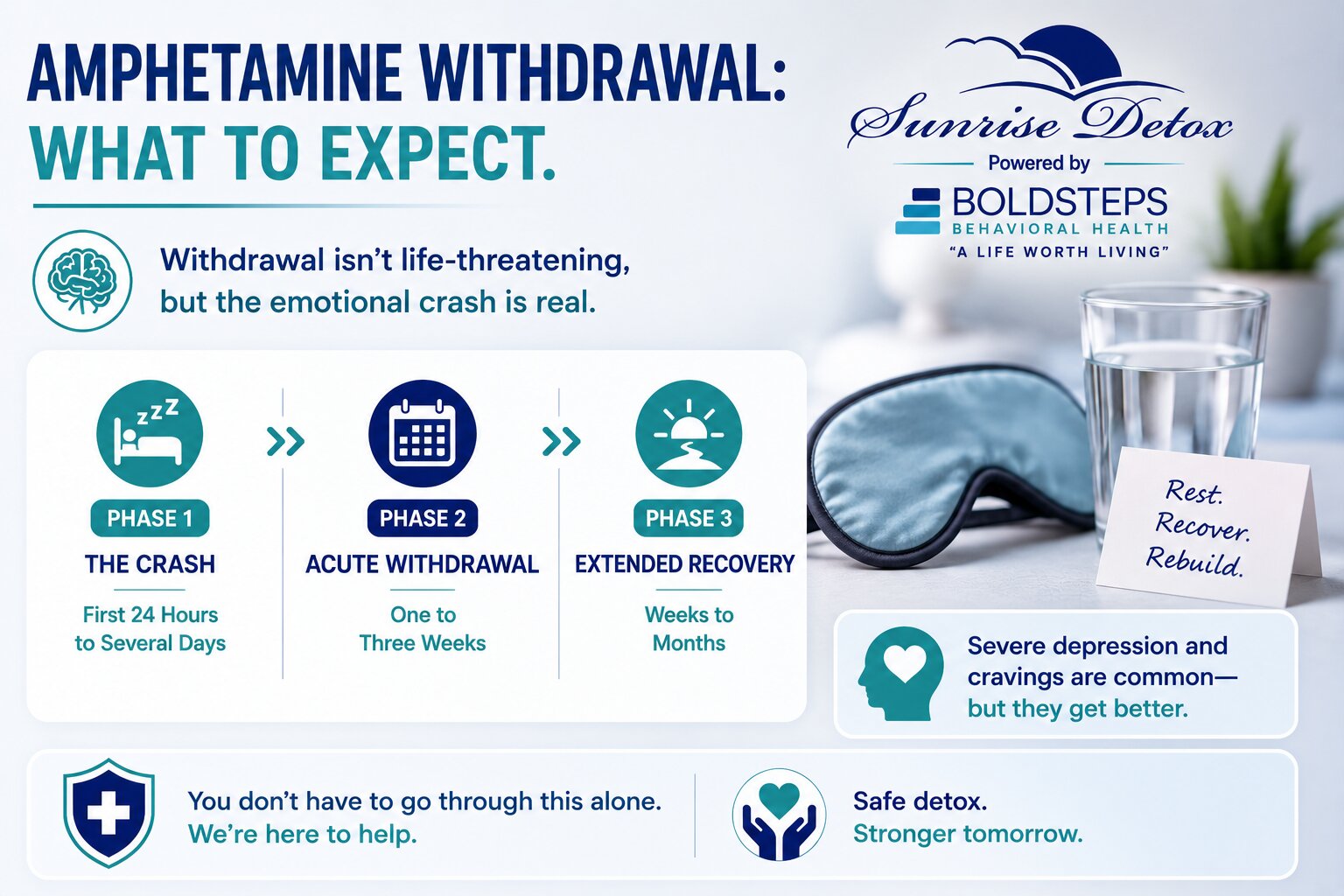
Phase One: The Crash (First 24 Hours to Several Days)
The crash typically begins within several hours to one day after the last use.
This stage often includes:
- Extreme exhaustion
- Long periods of sleep
- Depression
- Increased appetite
- Anxiety
- Irritability
- Powerful cravings
- Difficulty concentrating
This is usually the most emotionally difficult phase.
Phase Two: Acute Withdrawal (One to Three Weeks)
As sleep patterns begin normalizing, emotional symptoms may continue.
People commonly experience:
- Low motivation
- Mood swings
- Fatigue
- Cravings
- Poor concentration
- Difficulty experiencing pleasure
Although physical symptoms often improve, psychological symptoms may remain challenging.
Phase Three: Extended Recovery
Some individuals experience lingering symptoms for weeks or even months.
These may include:
- Intermittent cravings
- Reduced motivation
- Mild depression
- Difficulty managing stress
Long-term counseling and recovery support often become especially valuable during this stage.
Why the Depression Phase Is the Most Dangerous Part of Withdrawal
Many people assume cravings are the greatest challenge.
In reality, severe depression often creates the highest risk.
During the crash, dopamine levels remain significantly lower than normal.
As a result, individuals may feel:
- Like nothing will ever improve
- Emotionally empty
- Unable to experience pleasure
- Completely exhausted
- Isolated
- Hopeless
Some people begin believing that using amphetamines again is the only way to feel normal.
Others experience suicidal thoughts during this period.
Although amphetamine withdrawal itself is generally not medically dangerous in the same way alcohol or benzodiazepine withdrawal can be, the psychological effects deserve serious attention.
Professional monitoring helps ensure that mood changes, severe depression, and safety concerns are recognized and addressed promptly.
Why Relapse Often Happens During the Crash
The crash creates a perfect storm.
People are:
- Emotionally vulnerable
- Physically exhausted
- Unable to experience normal pleasure
- Struggling with cravings
- Often isolated from support
Returning to stimulant use may seem like the quickest way to escape these feelings.
Unfortunately, this often restarts the cycle of dependence and makes future withdrawal even more difficult.
Support during this period can significantly improve the chances of continuing recovery.
How Detox Support at Sunrise Helps
Medical detox provides more than a safe place to stop using stimulants.
It offers structure, supervision, and compassionate care during one of the most emotionally difficult stages of recovery.
At Sunrise Detox Cherry Hill, treatment may include:
Comprehensive Medical Evaluation
Each individual receives an assessment of:
- Current stimulant use
- Medical history
- Mental health concerns
- Other substance use
- Withdrawal risk
This allows the care team to create a personalized treatment plan.
Ongoing Monitoring
Throughout withdrawal, healthcare professionals monitor:
- Mood changes
- Depression
- Anxiety
- Sleep patterns
- Vital signs
- Cravings
- Overall safety
Prompt intervention can help address concerns before they become more serious.
Symptom Management
Although there is no medication that completely eliminates stimulant withdrawal, supportive medical care can help individuals manage symptoms such as:
- Sleep disruption
- Anxiety
- Dehydration
- Nutritional needs
- Emotional distress
Comfort-focused care helps make the withdrawal process more manageable.
Emotional Support
Many people entering detox feel ashamed or discouraged.
The treatment team provides compassionate support while helping individuals understand that recovery is possible.
Whether stimulant use began with a prescription medication or illicit drug use, every person deserves respectful, evidence-based care.
Planning for Long-Term Recovery
Detox is only the beginning.
Before discharge, the care team helps individuals transition into the next level of treatment, which may include:
- Residential rehabilitation
- Partial hospitalization programs (PHP)
- Intensive outpatient programs (IOP)
- Individual counseling
- Group therapy
- Medication management when appropriate
- Dual diagnosis treatment for co-occurring mental health conditions
Continuing care significantly reduces the risk of relapse after detox.
Recovery Doesn’t End When Withdrawal Ends
The brain continues healing long after the most noticeable withdrawal symptoms have improved.
That is why long-term recovery focuses on more than simply stopping stimulant use.
It also involves:
- Learning healthy coping skills
- Managing stress
- Treating underlying mental health conditions
- Building supportive relationships
- Developing sustainable recovery routines
With the right treatment and continued support, people can recover from stimulant dependence and build healthier, more stable lives.
Frequently Asked Questions
How long does amphetamine withdrawal last?
The initial crash typically begins within the first day after stopping use and lasts several days. Acute withdrawal symptoms often improve over one to three weeks, although cravings and mood changes may continue longer depending on the individual.
Is amphetamine withdrawal dangerous?
Amphetamine withdrawal is generally not considered medically dangerous in the same way alcohol or benzodiazepine withdrawal can be. However, the psychological symptoms—particularly severe depression, suicidal thoughts, and intense cravings—can create significant safety risks and should be professionally monitored.
How do you cope with the crash?
The crash is best managed through rest, hydration, balanced nutrition, emotional support, and professional medical supervision when needed. Because depression and cravings can be intense, many people benefit from treatment in a medically supervised detox setting where symptoms can be monitored and support is readily available.
Can withdrawal happen after taking prescription amphetamines?
Yes. Physical dependence can develop even when prescription stimulants are taken as directed for legitimate medical conditions. This does not necessarily mean someone has an addiction, but it does mean stopping the medication may require medical guidance.
Does detox cure stimulant addiction?
No. Detox helps the body move through withdrawal safely, but it does not address the psychological, behavioral, and emotional aspects of stimulant use disorder. Ongoing treatment and recovery support are essential for long-term success.
Final Thoughts
The emotional crash that follows stopping amphetamines can feel overwhelming, but it does not last forever. With professional care, compassionate support, and a clear recovery plan, it is possible to move safely through withdrawal and begin rebuilding your health.
At Sunrise Detox Cherry Hill, we provide medically supervised care for people withdrawing from prescription stimulants, methamphetamine, and other amphetamine-based substances. Our team understands the unique challenges of stimulant withdrawal and offers individualized support every step of the way.
If you or someone you love is struggling with stimulant dependence, call Sunrise Detox Cherry Hill at 856.276.0873 to learn more about medically supervised treatment options.