


Many people never expected to search for Adderall detox.
The medication was prescribed by a doctor. It may have helped improve focus, manage ADHD symptoms, or increase productivity at school or work. For a while, everything seemed to be working as intended.
Then something changed.
Perhaps the medication no longer seemed as effective, leading to higher doses. Maybe it became difficult to get through the day without taking it. Or perhaps stopping the medication—even for a day—resulted in overwhelming fatigue, depression, irritability, or an inability to concentrate.
If this sounds familiar, you’re not alone.
Physical dependence on a prescription medication can happen even when it is taken exactly as directed. That does not mean someone has done something wrong, and it does not automatically mean they have an addiction. It does, however, mean the body may have adapted to the medication in a way that makes stopping difficult without support.
At Sunrise Detox Cherry Hill, we help individuals safely navigate stimulant withdrawal while preparing for the next phase of recovery. For people who have become dependent on prescription stimulants or other medications, medically supervised amphetamine detox services provide medical monitoring, symptom management, and a plan for what comes after detox.
Understanding what detox involves—and what happens after it—is the first step toward making an informed decision.
What Adderall Detox Is
Adderall is a prescription medication containing amphetamine salts that stimulate the central nervous system. It is commonly prescribed to treat ADHD and narcolepsy by increasing levels of dopamine and norepinephrine in the brain.
Over time, the brain can become accustomed to these increased neurotransmitter levels.
When Adderall is reduced or stopped, the brain must gradually readjust to functioning without the medication. During this adjustment period, withdrawal symptoms may occur.
Adderall detox refers to the period during which the medication leaves the body and the brain begins restoring its natural balance. The process is different for everyone and depends on factors such as:
- Daily dosage
- Length of use
- Whether the medication was taken as prescribed
- Immediate-release versus extended-release formulations
- Other medications being taken
- Co-occurring mental health conditions
- Overall physical health
Detox is not designed to “cure” ADHD or eliminate dependence overnight. Instead, it helps people safely move through the withdrawal process while preparing for long-term treatment and recovery.
Dependence Does Not Always Mean Addiction
One of the biggest misconceptions surrounding prescription stimulants is that dependence and addiction are the same thing.
They are related—but different.
Physical dependence means the body has adapted to a medication, and withdrawal symptoms develop when it is stopped.
Addiction, or stimulant use disorder, involves compulsive use despite harmful consequences, difficulty controlling use, cravings, and continued use even when it affects health, relationships, or responsibilities.
Some people become physically dependent while taking Adderall exactly as prescribed.
Others develop both dependence and addiction.
Because the distinction is not always obvious, a professional evaluation can help determine the safest way to stop the medication and identify what type of ongoing care may be appropriate.
Most importantly, becoming dependent on a prescribed medication is not a personal failure. It is a recognized medical phenomenon that can occur with several types of prescription drugs, including stimulants.
Signs You May Be Dependent on Adderall
Dependence usually develops gradually rather than all at once.
Many people notice subtle changes before realizing their body has become reliant on the medication.
Common signs include:
Needing Higher Doses
Over time, the original dose may no longer feel as effective.
Some people find themselves asking their prescriber about dosage increases, while others take extra doses without medical guidance.
This may indicate tolerance.
Feeling Unable to Function Without It
You may notice that on days you skip a dose:
- Work feels impossible.
- Concentration disappears.
- Motivation drops dramatically.
- Even simple tasks seem overwhelming.
While ADHD symptoms naturally return when medication is stopped, extreme exhaustion or emotional crashes may suggest dependence rather than symptom recurrence alone.
Withdrawal Symptoms When You Miss a Dose
Some people experience symptoms within hours after missing medication.
These may include:
- Fatigue
- Excessive sleepiness
- Depression
- Anxiety
- Irritability
- Increased appetite
- Brain fog
- Difficulty concentrating
Thinking About Medication Constantly
If much of your day revolves around ensuring you have enough medication, avoiding missed doses, or worrying about running out, it may be worth discussing these concerns with a healthcare professional.
Using Adderall Differently Than Prescribed
Warning signs can include:
- Taking larger doses
- Taking doses more frequently
- Using someone else’s prescription
- Taking Adderall primarily for energy or productivity rather than medical treatment
These behaviors increase the risk of both dependence and stimulant use disorder.
What Adderall Detox Involves
Every person’s detox experience is different.
Unlike alcohol or benzodiazepine withdrawal, stimulant withdrawal is usually not associated with life-threatening complications. However, it can produce significant emotional and psychological symptoms that make professional support extremely valuable.
Initial Assessment
Medical professionals begin by evaluating:
- Current medication use
- Prescription history
- Mental health conditions
- Physical health
- Sleep patterns
- Risk of depression or suicidal thoughts
- Other substances being used
This information helps guide an individualized care plan.
Stopping vs. Tapering
Whether someone tapers off Adderall or stops it depends on several factors.
Some individuals can safely discontinue under medical supervision.
Others may benefit from a gradual reduction, particularly if they have been taking high doses for an extended period or have other medical considerations.
The safest approach should always be determined by the prescribing clinician or detox team rather than attempted independently.
Medical Monitoring
During detox, healthcare professionals monitor for:
- Mood changes
- Blood pressure
- Heart rate
- Sleep disturbances
- Anxiety
- Depression
- Severe fatigue
- Cravings
- Safety concerns
Monitoring is especially important for people experiencing significant depression or emotional instability during withdrawal.
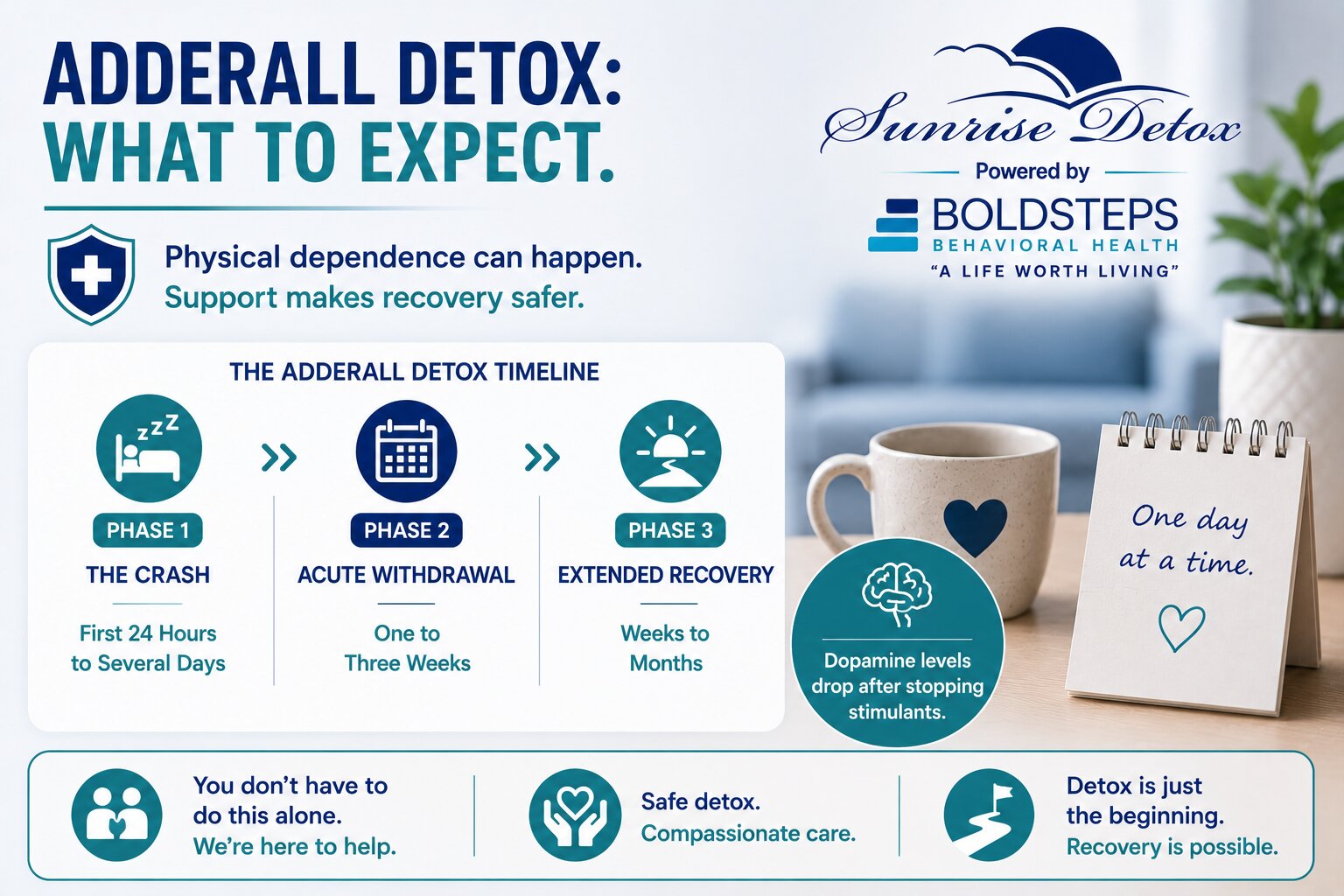
Managing the Crash During Detox
Many people describe the first stage of stimulant withdrawal as “the crash.”
This occurs because the brain temporarily has reduced stimulant activity after becoming accustomed to Adderall.
Common symptoms include:
Extreme Fatigue
Many individuals sleep significantly more than usual during the first few days.
This is a normal part of recovery as the body begins restoring its natural sleep cycle.
Depression
Low mood is one of the most challenging aspects of stimulant withdrawal.
Some people experience:
- Hopelessness
- Loss of motivation
- Emotional numbness
- Crying spells
- Difficulty enjoying previously pleasurable activities
These symptoms should always be monitored by medical professionals, particularly if suicidal thoughts develop.
Increased Appetite
Because stimulants suppress appetite, many people notice hunger returning during detox.
While this can feel surprising, it is generally a normal part of recovery.
Difficulty Concentrating
Without stimulant medication, concentration often feels much worse initially.
This does not necessarily reflect permanent cognitive changes. The brain needs time to adjust.
Sleep Changes
People may experience:
- Long periods of sleep
- Vivid dreams
- Difficulty establishing a normal sleep schedule
- Ongoing fatigue
Most sleep patterns gradually improve as recovery progresses.
Emotional Support Matters During Detox
The physical symptoms of stimulant withdrawal are only part of the experience.
Many people also struggle with guilt, embarrassment, or fear.
Questions like these are common:
- “Did I cause this?”
- “Will people think I’m an addict?”
- “What if I can’t function without medication?”
- “What if my ADHD becomes unmanageable?”
These concerns deserve compassion—not judgment.
Healthcare professionals understand that prescription stimulant dependence often develops in complex ways. Detox programs provide not only medical care but also emotional support, education, and planning for what comes next.
Aftercare: What Happens to Your ADHD After Detox?
One of the biggest fears people have is understandable:
“If I stop Adderall, what happens to my ADHD?”
The answer depends on the individual.
Detox is not the end of treatment.
Instead, it creates an opportunity to reassess ADHD management safely.
After detox, providers may recommend:
A Comprehensive ADHD Evaluation
Sometimes symptoms have changed over time.
A fresh evaluation helps determine current needs.
Medication Review
Some individuals may still benefit from ADHD medication but require:
- A different stimulant
- A lower dose
- A different dosing schedule
- A non-stimulant medication
Treatment decisions should always be made with a qualified medical provider.
Behavioral Therapy
Therapy can help develop practical strategies for:
- Organization
- Time management
- Emotional regulation
- Stress management
- Executive functioning
These skills often remain valuable whether medication is used or not.
Ongoing Mental Health Care
Many people with ADHD also experience:
- Anxiety
- Depression
- Trauma
- Sleep disorders
Treating these conditions alongside ADHD often improves long-term outcomes.
Recovery Support
If stimulant misuse has become part of a larger substance use disorder, ongoing counseling, outpatient treatment, peer support groups, or residential care may be recommended to reduce the risk of relapse.
When Should Someone Seek Professional Help?
Professional evaluation is recommended if:
- You cannot reduce Adderall use despite wanting to.
- You experience withdrawal symptoms whenever you stop.
- You are taking higher doses than prescribed.
- You obtain medication from multiple sources.
- You feel emotionally unstable without the medication.
- You combine Adderall with alcohol or other substances.
- Loved ones have expressed concern about your use.
Seeking help early often makes recovery more manageable.
Recovery Is About More Than Stopping the Medication
The goal is not simply getting through withdrawal.
Successful recovery means helping people regain healthy functioning while addressing the reason the medication was prescribed in the first place.
For many individuals, that includes creating a thoughtful ADHD treatment plan alongside recovery support. With appropriate medical care, it is possible to safely stop problematic stimulant use while continuing to manage ADHD in ways that support long-term health and daily functioning.
Frequently Asked Questions
Do you need to detox from Adderall?
Not everyone does. Some people can stop Adderall under the guidance of their prescribing clinician with minimal symptoms, while others experience significant withdrawal or have developed dependence that benefits from medical supervision. A healthcare provider can help determine the safest approach based on your dose, duration of use, and overall health.
How long does Adderall detox take?
The most intense withdrawal symptoms often begin within the first 24 hours after the last dose and may peak over the next several days. Fatigue, mood changes, and sleep disturbances frequently improve within one to two weeks, although some people experience lingering symptoms for several weeks. Recovery timelines vary from person to person.
What happens to my ADHD after detox?
Detox does not mean your ADHD will be ignored. After withdrawal, your healthcare team can reassess your symptoms and discuss ongoing treatment options, which may include behavioral therapy, non-stimulant medications, lifestyle strategies, or a carefully monitored medication plan if appropriate.
Is becoming dependent on prescribed Adderall common?
Physical dependence can develop with long-term use of prescription stimulants, even when they are taken as directed. This is different from addiction, although some individuals may experience both. If you are concerned about dependence, speak with your prescribing clinician rather than stopping the medication on your own.
Can I detox from Adderall at home?
Some people may be able to discontinue the medication at home under the guidance of their healthcare provider. However, individuals with severe withdrawal symptoms, significant depression, co-occurring substance use, or other medical or psychiatric concerns may benefit from medically supervised detox where symptoms and safety can be closely monitored.
Final Thoughts
If you’re worried that your prescription medication has become something your body depends on, you’re not alone—and you don’t have to face that uncertainty by yourself.
At Sunrise Detox Cherry Hill, we understand that many people who seek help with Adderall withdrawal never intended to misuse their medication. Our compassionate medical team provides individualized care to help people move through withdrawal safely while planning the next steps for their mental health and long-term recovery.
If you or someone you love has questions about prescription stimulant dependence or medically supervised detox, call Sunrise Detox Cherry Hill at 856.276.0873 to learn more about your treatment options.