


Caffeine dependence is real, and withdrawal can cause more than simply feeling tired without coffee. Regular caffeine use changes how the brain responds to stimulation. Cutting back suddenly can trigger headaches, fatigue, irritability, poor concentration, low mood, and sleepiness. Symptoms often begin within a day and can temporarily interfere with work, school, or daily responsibilities.
Unlike withdrawal from alcohol, benzodiazepines, or certain other substances, caffeine withdrawal typically does not require medically supervised withdrawal. However, understanding the difference matters. Medical supervision can protect people withdrawing from substances that carry serious health risks. For caffeine, gradually reducing intake often makes withdrawal symptoms easier to manage.
What is caffeine dependence?
Regular caffeine use changes how your brain’s adenosine receptors function. Adenosine is what makes you feel sleepy, and caffeine blocks it. Your brain adjusts to the constant blocking by producing more receptors, so when the caffeine stops, you get a flood of unblocked adenosine — and the symptoms that come with it.
Common withdrawal symptoms
- Headache (the most common and often the first symptom)
- Fatigue and low energy
- Irritability and mood changes
- Difficulty concentrating, often described as “brain fog”
- Depressed mood
- Flu-like symptoms in heavier users — nausea, muscle stiffness
The withdrawal timeline
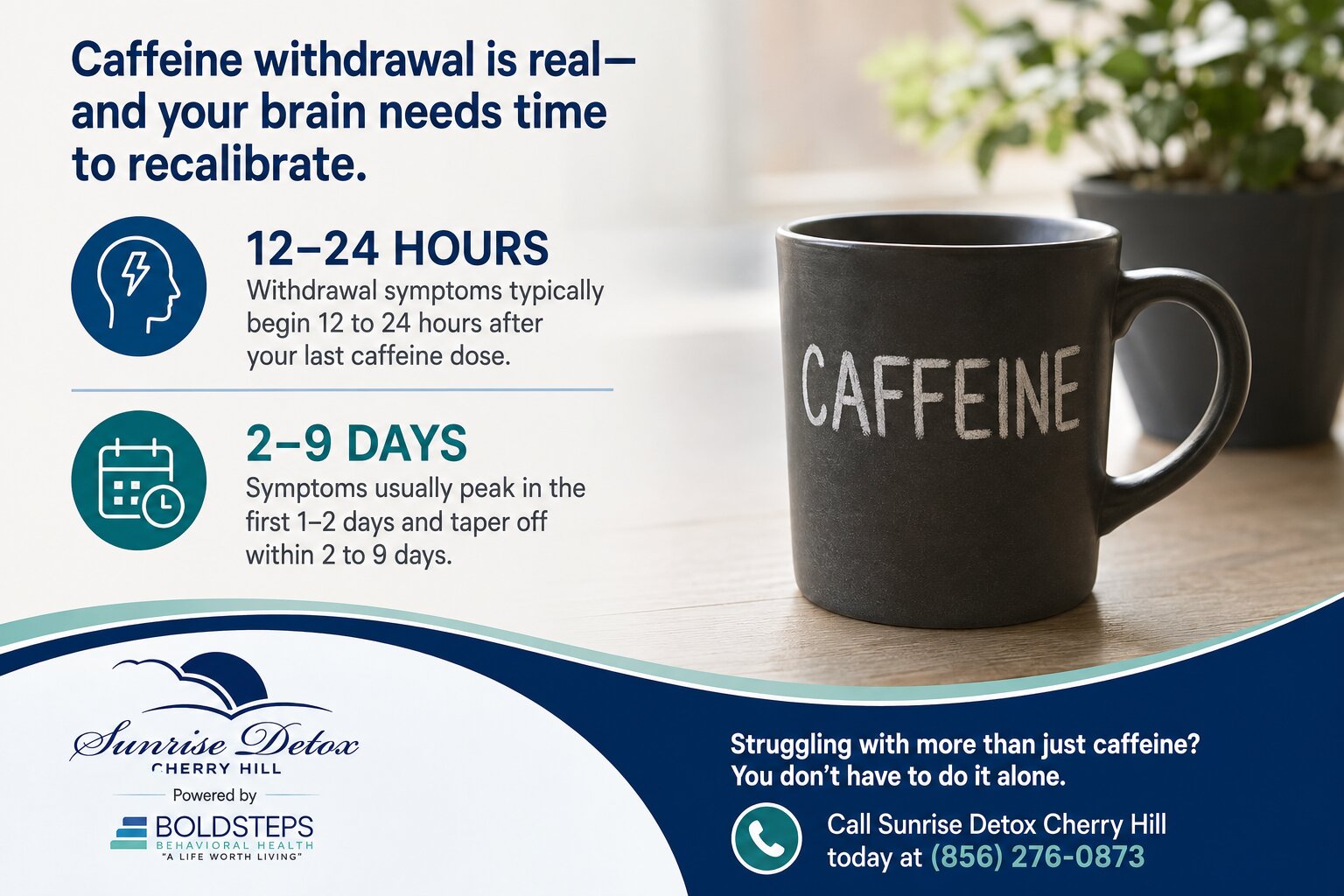
Symptoms typically start 12 to 24 hours after your last dose, peak around day one to two, and taper off over 2 to 9 days depending on how much caffeine you were used to consuming and for how long.
How this compares to withdrawal from other substances
Caffeine withdrawal is uncomfortable but not dangerous — it’s not going to cause seizures or medical complications the way alcohol or benzodiazepine withdrawal can. But the mechanism is the same idea: your brain and body adapt to a substance being present, and pulling it away suddenly causes a rebound reaction while things recalibrate. That’s true whether the substance is caffeine, alcohol, or something far more serious. Medically supervised withdrawal exists specifically because that recalibration period can be dangerous for substances with a real physical dependence profile.
When withdrawal points to something bigger
If you’re only dealing with caffeine, most people can push through the symptoms in about a week. But if caffeine withdrawal has you noticing how intense even a “mild” substance dependence can feel, and you’re also dealing with dependence on alcohol, benzodiazepines, or other substances, it’s worth taking that discomfort seriously as a preview — the real thing is more dangerous and shouldn’t be managed alone.
Medically supervised withdrawal management
If you’re detoxing from something more serious than caffeine, don’t try to white-knuckle it. Sunrise Detox Cherry Hill provides 24/7 medical monitoring through withdrawal, so you’re never managing the hardest part of recovery on your own.
Call Sunrise Detox today at (856) 276-0873 to speak with a caring admissions specialist and take the first step toward hope, healing, and lasting recovery.