


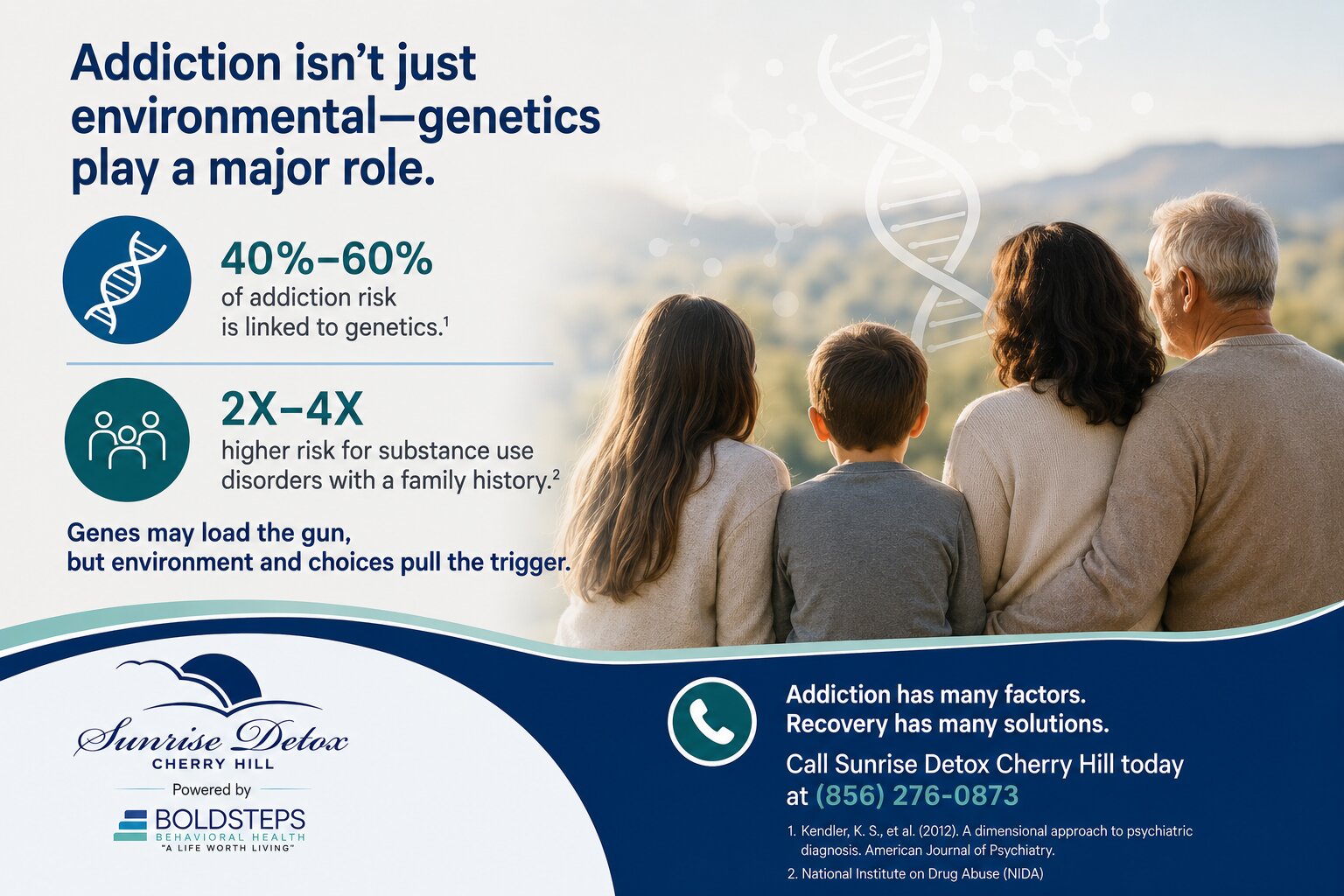
Yes — genetics can significantly influence a person’s risk of developing addiction. Research estimates genetics account for about 40% to 60% of addiction vulnerability. However, scientists have not identified one specific “addiction gene.” Instead, many genes can influence how the brain responds to substances, stress, reward, and impulse control.
Genetics also interact with a person’s environment and life experiences. Trauma, chronic stress, early substance exposure, and family dynamics can all affect addiction risk. Access to substances and social influences can also play a role.
Co-occurring mental health conditions can increase vulnerability as well. Anxiety, depression, bipolar disorder, ADHD, and trauma-related conditions commonly occur alongside substance use disorders. Some people use drugs or alcohol to cope with untreated symptoms. Over time, substance use can worsen those symptoms and create a cycle that becomes increasingly difficult to break.
A family history of addiction increases risk, but it does not determine someone’s future. Prevention, early intervention, mental health support, and addiction treatment can all help reduce that risk. Treatment works best when clinicians address substance use and co-occurring mental health concerns together.
What the research actually shows
Twin and family studies are where most of this data comes from. Identical twins raised apart still show similar rates of substance use disorders, which points strongly to a genetic component that isn’t just “learned behavior” from watching a parent drink or use drugs.
The genes involved affect things like how your brain processes dopamine, how you metabolize alcohol or certain drugs, and how sensitive you are to stress. None of these guarantee addiction on their own. They shift the odds.
Genetics vs. environment
Family history raises risk, but it doesn’t operate in a vacuum. Early exposure to substances, trauma, and untreated mental health conditions all interact with genetic vulnerability. Someone with a strong genetic predisposition who grows up in a low-stress environment with no early exposure may never develop a problem. Someone with a weaker genetic predisposition who experiences significant trauma might.
This is also part of why co-occurring mental health conditions show up so often alongside substance use disorders — anxiety, depression, and trauma responses share some of the same genetic and neurological wiring that influences addiction risk.
Does family history mean it’s inevitable?
No. It means the odds are stacked differently than they are for someone with no family history. That’s useful information, not a life sentence. Plenty of people with a strong family history of addiction never develop a substance use disorder, and plenty of people with no family history at all do.
Why this makes early treatment more important, not less
If you know addiction runs in your family, that’s a reason to take early warning signs seriously rather than assume you’re “different” or immune. It’s also a reason not to blame yourself or a loved one for something that has a real biological component. Addiction isn’t a character flaw — it’s a medical condition with genetic, environmental, and behavioral pieces.
If you’re trying to figure out what treatment actually looks like for you or someone you love, our admissions team can walk you through it without any pressure to commit on the first call. Call Sunrise Detox today at (856) 276-0873 to speak with a caring admissions specialist and take the first step toward hope, healing, and lasting recovery.