


A lot of people don’t search “detox from painkillers at home vs inpatient which is safer” because they’re curious.
They search it at 2am. Sick. Scared. Exhausted. Trying to decide whether they can survive this quietly without anyone knowing.
And honestly, a lot of us understand that thinking.
Home feels familiar. Inpatient treatment sounds overwhelming. You tell yourself maybe you can get through a few bad days alone and move on with your life.
But the people who’ve been around recovery long enough usually know something painful: the way you start recovery often affects how stable you feel long after detox ends.
That’s why people exploring opioid treatment options are often asking a deeper question underneath the practical one:
“What gives me the best chance of actually making it through this?”
The “I Can Handle It Myself” Trap
A lot of long-term alumni didn’t relapse because they stopped caring.
They relapsed because life got heavy again. Stress piled up. Isolation crept back in quietly. Maybe they got injured. Maybe they were prescribed painkillers again. Maybe they just got tired of carrying everything alone.
And after enough time sober, there’s a dangerous thought many people start believing:
“I already know what withdrawal feels like. I can manage this at home.”
That confidence can become risky fast.
Opioid withdrawal isn’t just physical discomfort. It can completely hijack your thinking. One moment you’re determined to quit. A few hours later your brain starts bargaining like your life depends on it.
Because biologically, it thinks it does.
At home, there are usually no barriers between you and relapse. No distance from triggers. No interruption to the spiral.
The pills may still be nearby. The dealer’s number may still be in your phone. The stress that pushed you toward using is still sitting in the same room with you.
That’s a brutal setup for someone already emotionally drained.
Why Detoxing at Home Feels More Appealing Than It Really Is
Nobody likes talking about this part honestly.
Detox at home sounds less scary because inpatient treatment carries emotional weight. It forces you to admit things got serious. It interrupts work, routines, and the image you’ve tried to maintain.
For high-functioning people especially, staying home can feel like preserving control.
But withdrawal rarely stays controlled.
People often imagine opioid detox as “feeling sick for a few days.” In reality, it can involve:
- Severe body aches
- Vomiting and dehydration
- Panic and agitation
- Intense insomnia
- Depression and hopelessness
- Dangerous cravings
- Emotional volatility
And what catches many people off guard is how quickly the mental side escalates once exhaustion sets in.
Sleep deprivation alone can make people feel emotionally shattered.
One alumni member described detoxing at home like this:
“By day three, I wasn’t thinking clearly anymore. I just wanted the pain to stop.”
That’s the moment many people return to using—not because they don’t want recovery, but because their nervous system is screaming for relief.
The Emotional Crash After Home Detox
Here’s something people don’t discuss enough:
Even if someone successfully detoxes at home, they may still feel emotionally wrecked afterward.
That part surprises people.
They expect to feel proud or free. Instead, many feel empty. Flat. Disconnected. Like their brain and body still haven’t caught up.
Long-term alumni especially can struggle here because they expected themselves to “know better” or recover faster.
That shame creates distance.
Distance from meetings. Distance from loved ones. Distance from support systems that once helped.
And isolation has a way of making relapse feel logical again.
This is one reason structured care matters. Not because people are weak, but because withdrawal affects more than physical dependence. It destabilizes emotions, sleep, judgment, and hope all at once.
You can survive withdrawal and still feel completely lost afterward.
What Inpatient Detox Actually Gives People
People who’ve never experienced inpatient detox often picture something cold and clinical.
But many alumni describe the opposite.
They talk about finally feeling safe enough to stop performing.
No pretending they’re okay. No hiding symptoms. No trying to manage cravings alone in the dark.
Just support.
Good inpatient care creates separation from chaos. That separation matters more than people realize.
Instead of spending every ounce of energy surviving symptoms alone, people can focus on stabilizing physically and emotionally.
Inpatient opioid detox may include:
- 24/7 medical monitoring
- Medication support for withdrawal symptoms
- Emotional support during cravings or panic
- Nutrition and hydration support
- Structured rest and sleep stabilization
- Immediate help if complications arise
And maybe most importantly, it removes access to impulsive relapse decisions during the hardest stretch.
That pause can save lives.
Recovery Doesn’t Usually Fail All at Once
This is something long-term alumni understand deeply.
Most relapses don’t happen in one dramatic moment.
They happen slowly.
You disconnect a little. You isolate a little more. You stop telling people how bad things feel. You convince yourself you’re fine because technically you’re still functioning.
Then one bad week becomes something bigger.
That’s why the detox environment matters so much. The first few days often shape whether someone feels defeated or supported moving forward.
People who enter recovery through structured care frequently talk about feeling something unfamiliar:
Relief.
Not happiness right away. Not instant transformation.
Just relief.
Relief that somebody else was helping carry the weight for once.
Pride Can Become Dangerous in Recovery
A lot of people who’ve stayed sober before struggle with asking for help again.
There’s embarrassment in needing support after already “knowing how this works.”
Some feel like inpatient treatment means they failed.
But recovery isn’t a test you pass forever.
Sometimes life hits harder than expected. Sometimes painkillers reconnect pathways that wake addiction back up quickly. Sometimes the strongest thing a person can do is stop trying to suffer privately.
One alumni member said something that stuck with me:
“I kept trying to prove I didn’t need help anymore. That almost killed me.”
That’s the hard truth underneath this conversation.
Detoxing alone can become more about protecting pride than protecting recovery.
The Environment You Heal In Matters
People underestimate how much environment affects the nervous system.
At home, your brain stays connected to stress patterns, memories, routines, and triggers. Even certain rooms can activate cravings.
In a supportive inpatient setting, your brain finally gets a break from constant survival mode.
That interruption creates space.
Space to sleep. Space to think clearly again. Space to remember who you were before substances became the center of everything.
And for people who feel emotionally numb after years of addiction or relapse cycles, that space can become the beginning of reconnecting with themselves again.
Not instantly. Not perfectly.
But honestly.
The Real Question Isn’t “Can I Detox at Home?”
For many people, the better question is:
“What gives me the best chance of staying alive and emotionally stable afterward?”
Because technically surviving withdrawal and actually rebuilding your life are two different things.
A lot of people can push through pain for a few days.
Far fewer can sustain recovery while isolated, exhausted, ashamed, and emotionally disconnected.
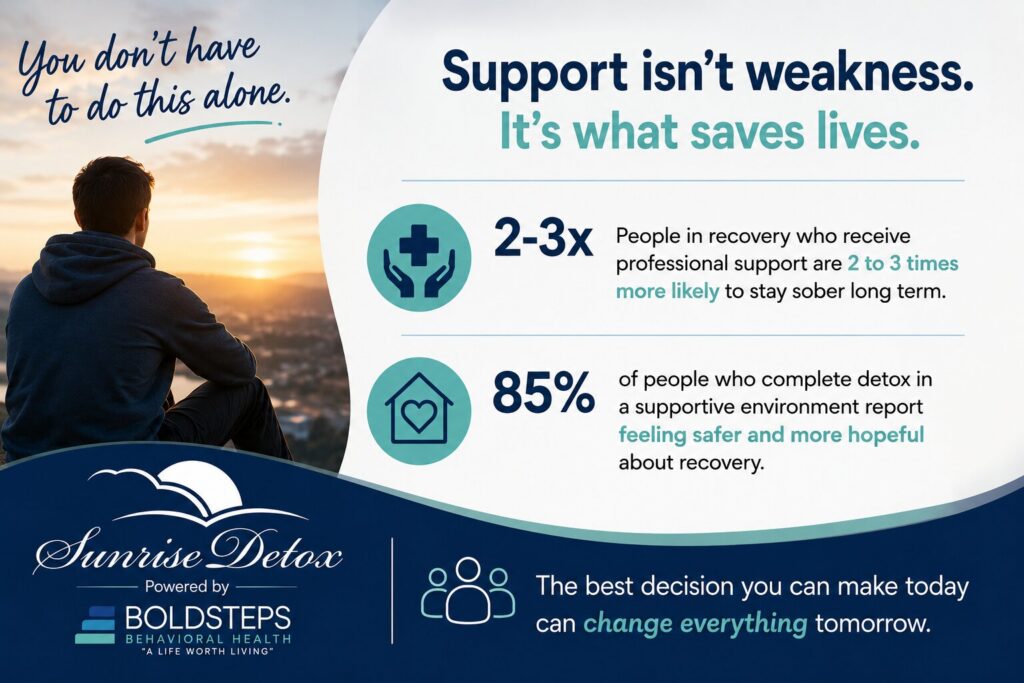
That’s where support changes outcomes.
And that’s why conversations around home vs inpatient opioid detox aren’t really about toughness. They’re about safety, stability, and giving recovery enough support to last longer than a moment of desperation.
FAQ: Detoxing From Painkillers at Home vs Inpatient Care
Is detoxing from opioids at home dangerous?
It can be. While opioid withdrawal is not always medically fatal on its own, complications like dehydration, relapse, overdose risk after lowered tolerance, and mental health distress can make detox at home risky—especially without medical support.
Why do people relapse during at-home detox?
Withdrawal symptoms can become overwhelming physically and emotionally. Many people relapse simply to stop the pain, panic, insomnia, or cravings. Isolation also increases relapse risk during detox.
Does inpatient detox make withdrawal painless?
No. Withdrawal can still be uncomfortable. But inpatient care helps manage symptoms safely and provides emotional and medical support during the hardest stages of detox.
Is inpatient detox only for severe addiction?
Not at all. Many people choose inpatient detox because they want structure, accountability, or a safer environment away from triggers—even if they’re still functioning in daily life.
How long does opioid detox usually last?
Acute withdrawal symptoms often last several days to about a week, though cravings, fatigue, and emotional symptoms can continue longer depending on the person, substance use history, and overall health.
Why do long-term alumni sometimes struggle to ask for help again?
Many people feel ashamed needing support after previous recovery success. They may think they should be able to handle relapse or detox alone. But recovery needs can change over time, and asking for help is not failure.
What happens after detox?
Detox is usually the beginning, not the full recovery process. Many people continue with therapy, support groups, outpatient care, or residential treatment after detox to help maintain long-term recovery.
Recovery doesn’t always begin with confidence.
Sometimes it begins with exhaustion. Honesty. A quiet realization that doing this alone is getting harder, not easier.
And sometimes the safest decision is the one that finally gives you room to stop fighting by yourself.
Call (856) 276-0873 or visit our Opiate Detox services to learn more about treatment options and support that can help you move forward.