


I thought getting through detox would be the hard part.
The anxiety. The sleepless nights. The way your body feels like it’s trying to relearn gravity. That part is loud, obvious, undeniable.
But no one really prepares you for what comes next.
The quiet.
Not peaceful quiet. Not relief. Just… a kind of emotional silence that makes you question everything.
If you’re here—weeks or months after stopping—and thinking, Why don’t I feel like myself yet? you’re not off track.
You’ve just reached the part most people don’t talk about.
And if you’ve been searching for a safe way to come off Xanax, this is the part that comes after that decision—the part where things aren’t dramatic anymore, but they’re not settled either.
The Intensity Leaves—And Takes Something With It
During detox, everything feels urgent.
Your body is reacting. Your mind is racing. There’s a constant sense that something needs to be managed, fixed, endured.
Then one day, that intensity fades.
And instead of relief, you feel… off.
Like something went missing when the chaos left.
No one tells you that you might miss the intensity—not because it was good, but because it was familiar.
And now you’re in unfamiliar territory with nothing to hold onto.
You Start Questioning the Whole Decision
This is where it gets uncomfortable.
Because the thoughts don’t come in a dramatic way. They come in quietly:
- Was I actually better before?
- Did I overreact?
- Why do I feel more disconnected now than I did then?
That kind of thinking can shake your confidence fast.
Not because it’s true—but because it feels real in the moment.
And when you don’t have something numbing or stabilizing those thoughts, they land harder.
Anxiety Comes Back Without a Filter
Here’s the part that hits people sideways.
You don’t just “feel better” after detox.
You feel more.
And anxiety, especially, doesn’t disappear—it changes shape.
Before, it might have been dulled, softened, pushed down.
Now it shows up more directly:
- A tight chest with no clear reason
- A sense of unease in normal situations
- Overthinking things that never used to bother you
It can feel like you’ve gone backward.
But you haven’t.
You’re feeling your baseline without interference—and learning how to navigate it in real time.
That’s harder at first. But it’s also where real change happens.
The Disconnection Feels Personal (But It’s Not)
This part is one of the hardest to explain—and one of the most important to hear.
You might feel:
- Emotionally flat
- Less excited about things
- Disconnected from people, even close ones
And it’s easy to take that personally.
To think:
Something’s wrong with me.
I’ve lost something I can’t get back.
But what’s actually happening is this:
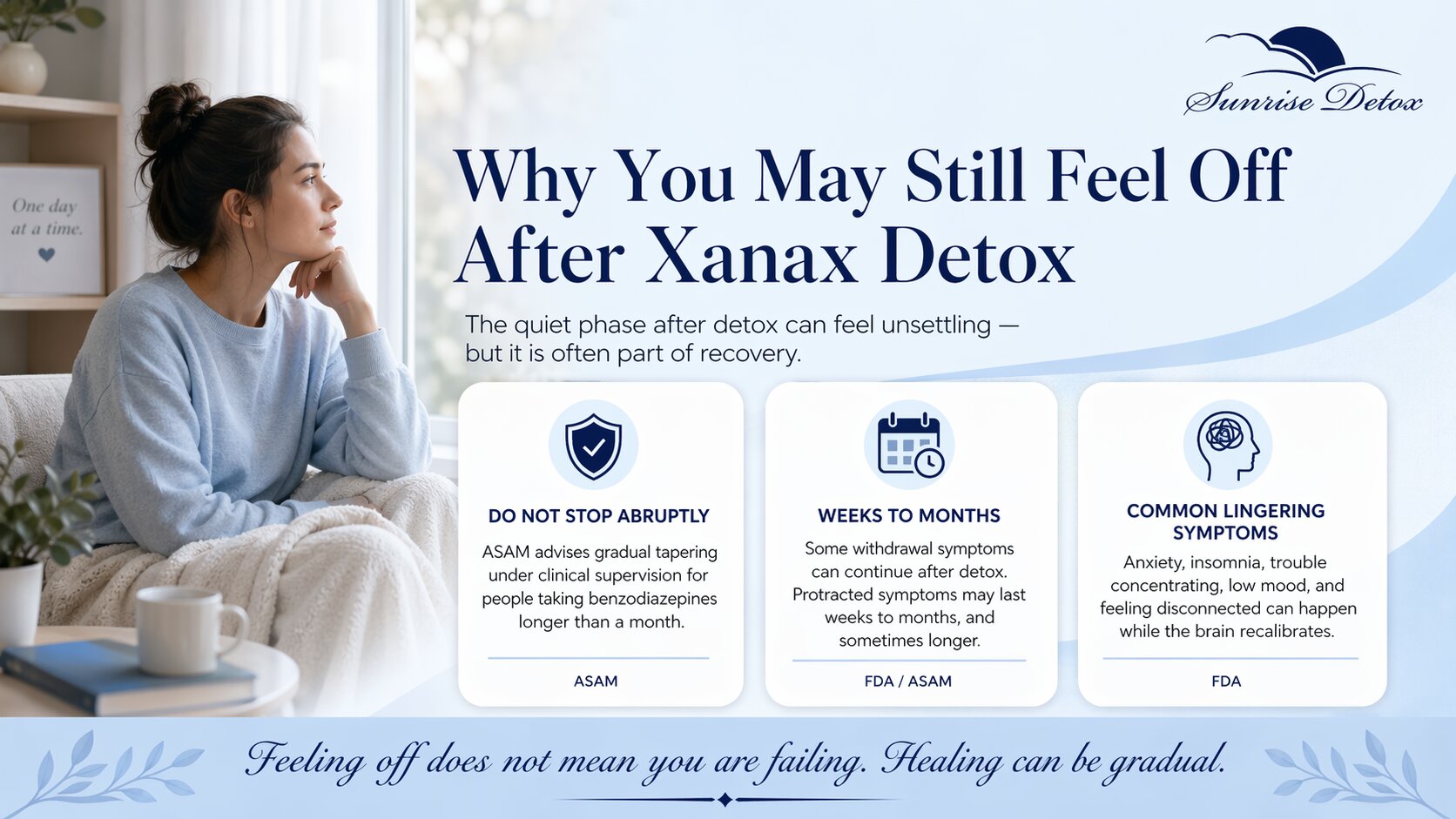
Your brain is recalibrating after relying on something external to manage how you feel.
That recalibration phase doesn’t feel good.
It feels empty.
But empty doesn’t mean permanent.
You’re Relearning How to Regulate Without a Shortcut
Benzos are powerful because they give your brain a shortcut to calm.
Take that away, and your system has to relearn how to get there on its own.
That takes time.
And during that time, you might notice:
- You don’t relax as easily
- Your stress tolerance feels lower
- Small things feel bigger than they should
It’s frustrating, especially if you’re used to functioning at a high level.
But this isn’t you failing.
It’s your brain rebuilding a skill it hasn’t had to use in a while.
The People Who Push Through This Phase Do One Thing Differently
They stop expecting it to feel better right away.
That’s it.
They don’t measure progress by how good they feel day to day.
They measure it by whether they’re still showing up.
Still staying.
Still choosing not to go back, even when it would be easier.
That shift in mindset matters more than anything else.
Because this phase isn’t about feeling good.
It’s about getting stable.
What Comes Back Feels More Real Than Before
This doesn’t happen overnight.
But slowly—almost quietly—things begin to change.
You start noticing moments like:
- Handling stress without shutting down
- Feeling calm without needing a reason
- Laughing, and not questioning if it’s real
Those moments don’t feel intense.
They feel steady.
And steady is what lasts.
That’s the part people don’t expect—that what comes back isn’t the same as before.
It’s more reliable.
Less fragile.
Actually yours.
A Moment That Stays With Me
I remember sitting with someone about two months out.
He said, “I thought I’d feel amazing by now.”
Then paused.
“And I don’t. But I also don’t feel like I’m falling apart anymore.”
That’s the shift.
It’s not dramatic. It’s not a breakthrough moment.
It’s subtle.
But it’s real.
If You Feel Stuck Right Now
Let’s not sugarcoat it.
This phase can feel frustrating, slow, and honestly… disappointing.
Especially if you expected to feel better by now.
But feeling stuck doesn’t mean you are stuck.
It means you’re in the middle.
And the middle is where most people either turn back—or push through.
Not because they feel strong.
But because they understand this part is temporary.
You Still Deserve Support Here
A lot of people think support is just for detox.
Like once you’ve gotten through the physical part, you’re supposed to handle the rest on your own.
That’s not how it works.
This phase—this quiet, disconnected stretch—is where support actually matters most.
Because it’s not obvious.
There’s no emergency. No clear signal that you need help.
Just a slow drift that can pull you back if you’re not careful.
If you’re still figuring out how to move forward—or even exploring how to quit Xanax safely in a way that doesn’t leave you navigating this alone—having support can make the difference between staying stuck and moving through.
FAQ: The Questions People Have in This Phase
Why do I feel worse emotionally after detox?
Because your brain is adjusting to functioning without a substance it relied on. Emotional regulation takes time to rebuild, and the gap can feel uncomfortable.
Is it normal to feel disconnected months later?
Yes. Many people experience a period of emotional flatness or disconnection. It doesn’t last forever, but it can take time to shift.
Does this mean I made the wrong decision?
No. Questioning your decision is common during this phase, especially when things don’t feel better yet. It’s part of the adjustment—not a sign you should go back.
How long does this phase last?
It varies. Some people notice improvements within a few weeks, others take a few months. Progress is gradual, not immediate.
Will my anxiety ever go back to normal?
It won’t go back to exactly how it was—but it can become more manageable and stable over time, without needing a substance to control it.
Do I really need support after detox?
Yes. This phase is often where people struggle the most quietly. Support helps you stay grounded and keep moving forward.
You’re not the only one who’s felt this way after detox.
Even if it feels quiet. Even if it feels isolating.
There’s a version of this where things stabilize. Where you don’t feel like you’re constantly managing yourself.
And you don’t have to figure that out alone.
Call (856) 276-0873 or explore your options for treatment in Cherry Hill to learn more about our Benzodiazepine Detox services.